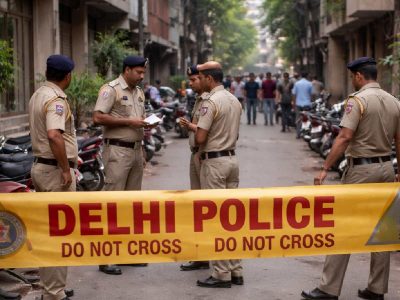

Delhi commuters are already getting a taste of the traffic nightmare expected during the BRICS Summit, with motorcade rehearsals causing prolonged delays and several people complaining of taking hours to cover distances that normally take minutes.
The summit is scheduled to be held at Bharat Mandapam on September 12 and 13, but traffic restrictions linked to the movement of foreign delegations and dignitaries are expected to begin from September 10 and continue until around September 14, officials said.
The Delhi Traffic Police conducted a motorcade rehearsal on Wednesday evening, regulating traffic at 22 diversion points between 7 pm and 10 pm. More than 35 roads are expected to be affected during the summit period.
Several commuters took to social media to flag the difficulties caused by the rehearsal, with many saying traffic restrictions had already turned routine journeys into hours-long ordeals.
The impact is expected to be particularly pronounced for commuters travelling between Noida and central Delhi, east Delhi and central areas, as well as those travelling from Dwarka towards Dhaula Kuan, the airport and south Delhi.
The traffic police has prepared an elaborate plan for the movement of heads of state, foreign delegations and other dignitaries, with nearly 4,800 traffic personnel deployed for the summit arrangements.
22 diversion points: Traffic will be regulated at 22 identified diversion points during the motorcade rehearsal and VIP movements.
35+ roads affected: Major roads likely to see restrictions include Mathura Road, Sardar Patel Marg, Shanti Path, Janpath, Ashoka Road, Barakhamba Road, Tolstoy Marg, Africa Avenue Road, Niti Marg, Panchsheel Marg and APJ Abdul Kalam Road.
Noida-east Delhi impact: Commuters travelling from Noida and east Delhi towards Pragati Maidan, central Delhi and other parts of the city could face delays due to restrictions around key connecting roads.
Dwarka-Dhaula Kuan route: Commuters from Dwarka and west Delhi heading towards Dhaula Kuan, the airport and central Delhi are also likely to encounter congestion and diversions during VVIP movements.
South Delhi concern: The movement of the Egyptian delegation between its hotel in Saket and central Delhi could put additional pressure on already congested stretches of south Delhi, particularly during peak hours. Traffic police had earlier flagged the issue and suggested shifting the delegation’s accommodation to central Delhi.
Airport and railway passengers: People travelling to airports, railway stations and inter-state bus terminals have been advised to leave early and factor in additional travel time. The Metro has been recommended wherever possible.
Real-time navigation: Traffic police have held meetings with online map service providers, which will coordinate with them during the summit and incorporate restrictions, diversions and alternate routes into their platforms in real time to help commuters navigate affected areas.
Cab aggregators alerted: Meetings have also been held with online cab aggregators and they have been advised not to keep pick-up and drop-off points in restricted or controlled areas during VVIP movements.
Bus diversions: Bus routes may be diverted during the movement of dignitaries, while Metro services will remain operational at all stations.
Parking restrictions: Roadside parking within 200 metres of roads under traffic restrictions will not be permitted, and motorists have been advised to use designated parking facilities.
Traffic officials said restrictions would be imposed or relaxed depending on the movement of VVIP convoys, with normal traffic being temporarily diverted or halted wherever required to facilitate the movement of foreign delegations.
With the restrictions expected to continue for several days, traffic police have urged commuters to check advisories before beginning their journeys and avoid affected routes wherever possible.
For daily commuters, however, Wednesday’s rehearsal has already provided a preview of what lies ahead.
“BRICS has not even started yet, and we are already taking hours to cover short distances,” was the common refrain among commuters caught in the disruptions during the rehearsal.