“Acche se hi baat kiya tha usne (He was fine when we last spoke),” said Bhupendra Jahaj, recalling his last conversation with his son, Arpit, shortly before the Satya Niketan PG collapsed.
Arpit Jahaj, 19, was a first-year student at Atma Ram Sanatan Dharma College, University of Delhi. He had come to Delhi from Dewas, a small town near Indore in Madhya Pradesh, to pursue higher education. The first person in his family to do so, Arpit was living in a PG in Satya Niketan while studying at the college.
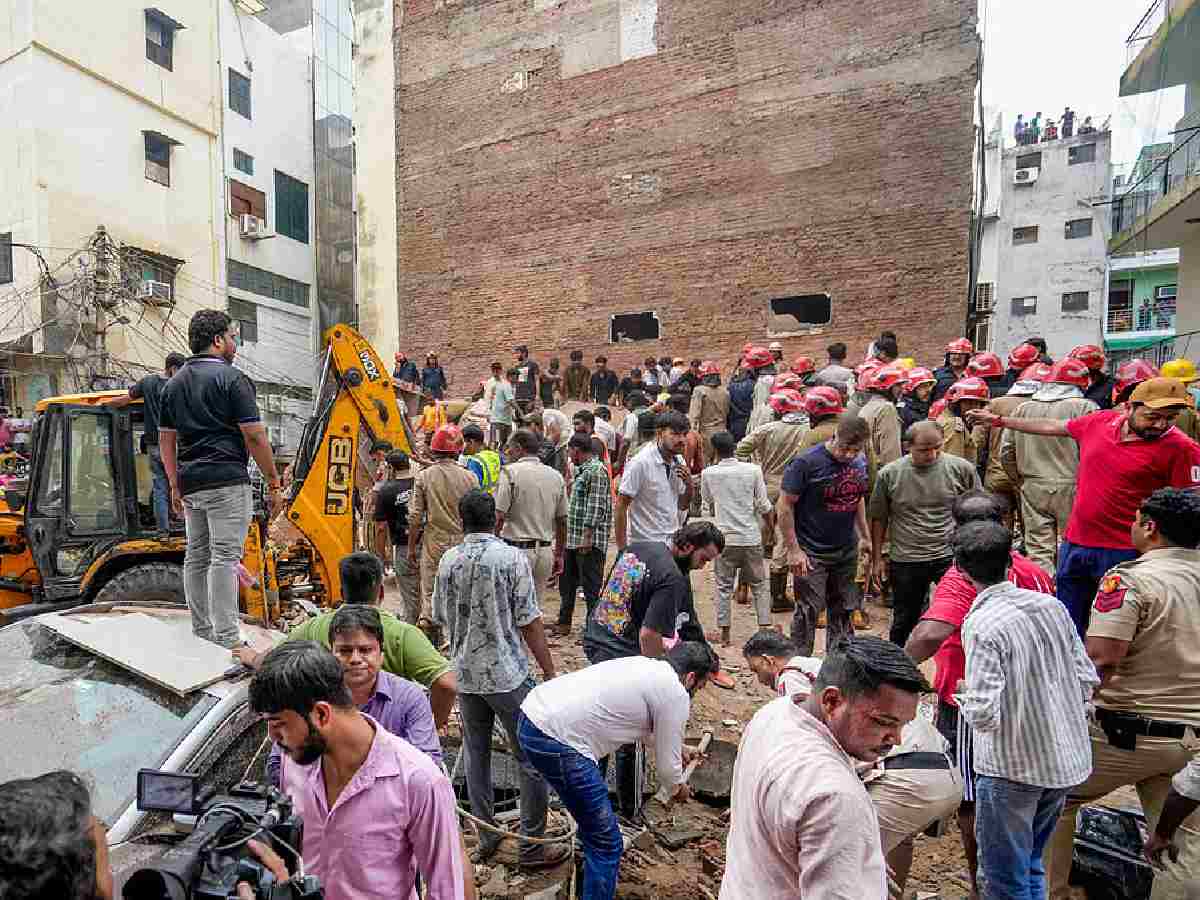
On September 6, when the Satya Niketan ‘Hostel Daze’ PG building collapsed at around 1.30 pm, Arpit’s family began trying to reach him. His father, Bhupendra, and uncle, Arjun Jahaj, spent hours searching for him and trying to find out where he had been taken.
“I had spoken to Arpit around noon that day, just an hour before the collapse. Arpit sounded fine during the call and spoke normally,” Bhupendra said.
The search continued through the night.
“Our ordeal continued through the night as we tried to look for Arpit,” Arjun said. The family said they also found it difficult to get clear information from the hospital authorities.

Bhupendra said AIIMS authorities initially told the family that Arpit was not there. His body, however, had been brought to the hospital at around 3.30 am.
The family was informed at around 9 am on September 7.
“They said the body had been found and that they could collect his body from the hospital,” Bhupendra said.
The family donated Arpit’s corneas before taking his body home for the last rites. He is survived by his parents and an elder sister.
A search for answers
Arpit’s room was on the third floor of the five-storey Hostel Daze PG. On September 7, Delhi Police said the owner of the building, identified as Hariram Gupta, had been apprehended from Rajasthan’s Bhiwadi area. A police case has been registered and a magisterial inquiry ordered, while several officials have been suspended in connection with the incident.
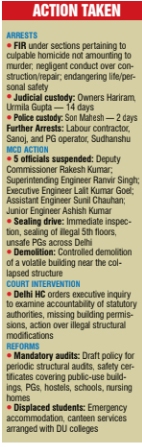
Police identified the deceased as Abhishek Kumar, 20, from Uttar Pradesh; Yuvraj Soni, 20, from Chhattisgarh; Pawan, 17, from Uttar Pradesh; Arpit Jahaj, 19, from Madhya Pradesh; and Akshat Singh Yadav, 18, from Madhya Pradesh. All five were students. A labourer, Surinder Singh, 75, also died in the collapse. The seventh deceased, also believed to be a labourer, remained unidentified.
The injured were identified as Asgar Ali, 30; Neeraj Bawa, 19; Aditya Kumar, 19; Nitish Chib, 19; and Mohd Ayan, 18.
Arpit’s family said they had received no communication regarding compensation or condolences from the government.
“We have still not received any communication regarding compensation from the government. Neither government authorities nor Delhi University have contacted us to offer condolences or support. But we do not want any of that, we just want our son back. No amount of compensation can bring him back or make up for this loss,” Bhupendra said.
The family also questioned why it took several hours to receive clear information about Arpit after the collapse.
Students on the ground
Arpit’s friends reached the AIIMS Trauma Centre on the afternoon of September 7. After moving between the main AIIMS campus and the Jai Prakash Narayan Apex Trauma Centre, they eventually reached the emergency block.
“I have lost too many friends in the disaster to count,” one student said, stifling his tears as his friends gathered around to console him.
Two students from Motilal Nehru College remained at the site through the night, helping with rescue operations, coordinating information and searching for their friends.
Aryaman Kapoor, a third-year Commerce student at Motilal Nehru College, worked through the night, attempting to coordinate between emergency responders, the college administration and families searching for missing students.
“My own friends Abhishek, Pawan and Yuvraj were inside. Abhishek was in critical condition, but overnight he passed away, and Pawan is gone as well, as is Yuvraj,” he said.
Kapoor said there was no proper system for coordinating information among the police, college authorities and families, leaving students to fill the gap themselves.
“I was there during the rescue operation through the night trying to coordinate details with the police and the college because there was no proper coordination system in place. We had to gather photos from their friends, contact the HODs and principals, and share emergency details directly with the police to help identify the victims,” he said.
Kabir Khan, a second-year Political Science student at Motilal Nehru College, also stayed at the site during the rescue efforts. He said the collapse raised questions about the accommodation available to students in the area.
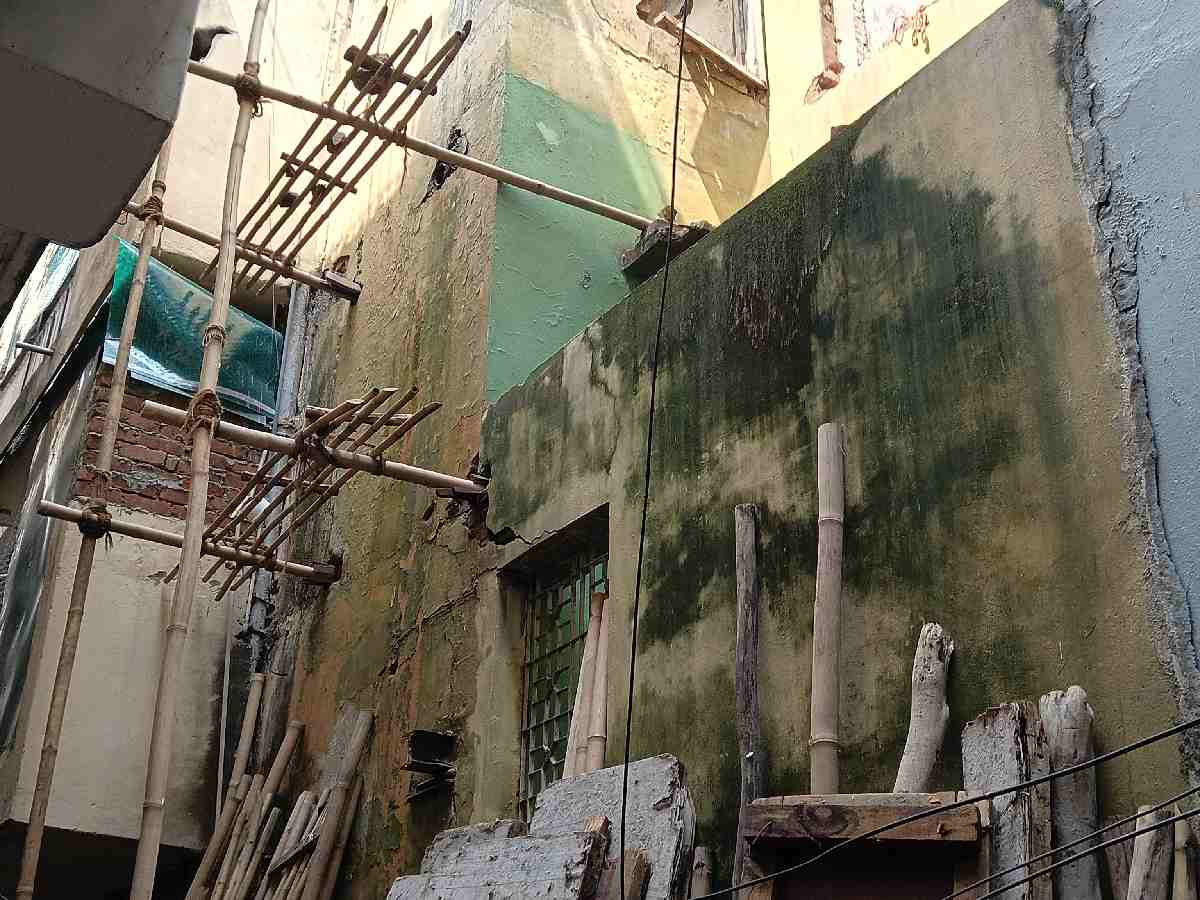
“I saw my batchmates and a junior perish in front of my eyes, and all I can think about is that if someone passes a competitive exam to study at a top university like DU, the least they deserve is proper, safe accommodation. Instead, students are forced to live in overcrowded, low-budget PGs with poor safety standards, where five or six beds are stuffed into a single room,” he said.
Families still waiting
Among those who died were also a labourer and an unidentified man. During the Patriot’s visit to AIIMS, the family of Purushottam Lal was looking for him, believing he could be the unidentified victim.
“They are not letting us go inside to check if the body is indeed his. He had gone for work at Satya Niketan, at this building itself, but there has been no communication from the authorities. We got to know that he had been shifted here through media personnel and volunteers who informed us that all recoveries had been sent here to AIIMS,” said Lal’s nephew, a resident of Humayunpur village.
For families like the Jahajs and Lal’s, the hours after the collapse became another ordeal: finding information, locating their loved ones and navigating a system that they said often left them dependent on volunteers, students and media personnel for answers.
For them, and for others affected by the tragedy, the measures put in place in its aftermath have come too little, too late.