The alleged gang rape of a 17-year-old girl at Astha Kunj Park near Lady Shri Ram (LSR) College for Women has once again brought the question of women’s safety into focus across Delhi University (DU).
The incident prompted heightened security concerns at LSR, which temporarily shifted classes online. Students also raised concerns about lighting, policing and safety around the college and surrounding areas. The college later resumed offline classes and announced a student security council to coordinate with the administration and police.
Many students, however, feel the concerns go beyond one incident or college.
Women say safety is shaped by what happens on the campus as well as on the roads outside, when travelling to metro stations, waiting for autos, returning to PGs or walking through poorly lit stretches after classes.
Complaints and policing
Kanika, 21, a student at Motilal Nehru College, said the presence of police near the college does not necessarily mean students feel supported when they report harassment.
“Whenever students complain, they [the police personnel] never really listen properly. Their sitting outside does not mean students automatically feel heard,” she said.
For Kanika, the concern is not simply about whether police personnel are visible around the college. It is about whether students believe that approaching them will lead to meaningful action.
The roads surrounding colleges can become particularly uncomfortable after classes. Students walking towards public transport or taking autos often have to navigate crowded roads, unfamiliar people and stretches where they feel exposed.
Shweta, 20, who regularly travels between college and her accommodation after evening classes, said safety concerns have changed the way she plans her routine. “I have started checking the time before leaving college because I know which routes become uncomfortable later. Sometimes the safest option is not the shortest route,” she said.
For students like Shweta, the concern can influence decisions that would otherwise have nothing to do with safety. Staying late for a society meeting, spending extra time in the library or attending an evening event raises questions about how safely a student can return home.
Rina Choudhary (name changed), 21, an LSR student, said the impact of safety concerns can extend beyond how students travel and affect how they participate in college life. “There are things students quietly give up because they are worried about safety, staying back for a discussion, attending an evening event or even taking time to help a friend. You may still do these things, but you first think about how you are going to get back. That should not be the hidden cost of being a woman student in Delhi,” she said.
Journey outside
For many students, the campus itself is only one part of their daily movement.
A South Campus student, who asked not to be identified, said the difference between feeling protected inside college and travelling through the surrounding neighbourhood can be significant. “Inside college there are guards and people around. The problem starts when you leave. You have to think about who is standing outside, who is looking at you and how you are going to get home,” she said.
The concern becomes particularly relevant in areas where students depend on autos, buses or pathways to reach their accommodation. A college can maintain security within its boundary, but students cannot remain inside those boundaries throughout the day.
The Astha Kunj incident has brought this issue into sharper focus because of its proximity to LSR. The response showed how quickly concerns about a nearby public space can affect students inside a college.
Also Read: After Astha Kunj, SC orders audits of parks, metro stations across Delhi-NCR
Anousha 22, an LSR student, said students have increasingly developed their own informal ways of staying safe while travelling. “Students have become very good at creating their own safety systems, sharing live locations, calling friends while travelling, checking who is around and making sure someone knows when we reach. But if students are doing all of that just to move through their everyday surroundings, we have to ask what the actual security system is doing,” she said.
Cameras and surveillance
CCTV cameras have increasingly become part of the security infrastructure across Delhi University.
Some students find that cameras provide reassurance because they can potentially offer evidence if an incident takes place.
Nancy Patel (name changed), 22, said the presence of cameras gives her some confidence in situations where there may otherwise be no evidence. “If something happens, at least there is a record. That makes me feel slightly safer,” she said.
But for Shubhangi (name changed), 21, the expansion of surveillance also raises questions about privacy and transparency. “Safety is important, but there should also be a limit. If cameras are everywhere, students should know where they are and why they are there,” she said.
The two views highlight a tension within campus security. Students may want cameras to document harassment, but they also want clarity about what is being recorded, who can access the footage and how surveillance is being used.
At Jesus and Mary College, cameras that were initially installed around examinations have become part of a wider surveillance system. For students, this raises a broader question about where the boundary between security and constant monitoring should lie.
A camera may help establish what happened after an incident, but it cannot replace streetlights, public transport, police response or a functioning complaint mechanism.
Safety or moral policing?
The debate becomes more complicated when safety measures begin influencing how women are expected to behave.
Students are often advised to avoid isolated places, return before it gets late or travel in groups. While such precautions may be intended to reduce risk, some students question why the responsibility for preventing harassment repeatedly falls on women.
A Gargi College student said the advice women receive often focuses on changing their own behaviour rather than addressing the behaviour of those who harass them. “We are repeatedly told how we should behave to remain safe. But there is much less conversation about changing the behaviour of the people who harass us,” she said.
The distinction matters because rules introduced in the name of safety can sometimes become restrictions on movement, socialising or personal choices.
Students say they do not necessarily oppose precautions. What they question is whether safety should require women to give up their freedom.
Problem with reporting
For some students, the concern begins when they have to decide whether to report an incident.
Shweta said the decision can depend on whether a student believes the institution will actually respond. “Sometimes you think, what is the point of complaining if nothing is going to happen? You don’t want to explain the whole thing again and then be told that it is not serious enough,” she said.
A formal complaint mechanism may exist, but students need to know where to go, whom to approach and what happens after a complaint is filed. Sometimes even after filing the complaint, students receive no response, Shweta said.
The response to one complaint can also influence whether another student decides to report.
Kanika said students pay attention to what happens after someone speaks up. “People notice what happens after someone complains. If they see that nothing changes, the next person is less likely to report,” she said.
This can create a cycle in which students who lose confidence in the complaint process become less likely to use it, making some incidents less visible to the institutions responsible for addressing them.
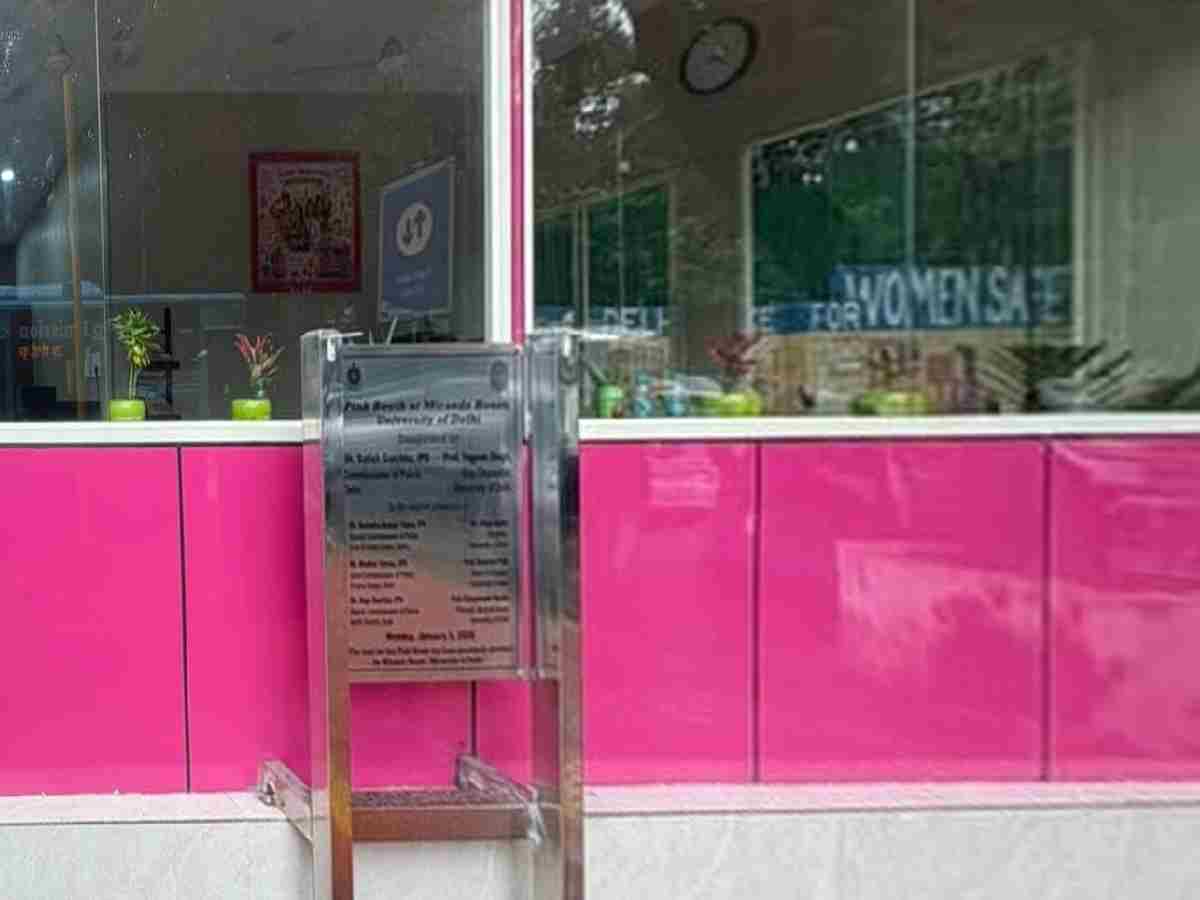
The university administration has introduced several measures intended to improve women’s access to security, including increased patrolling, police booths and dedicated facilities such as the pink police booth at Miranda House.
Safety without conditions
The response to the Astha Kunj incident shouldn’t be more restrictions, say students.
They want functioning streetlights, reliable public transport, accessible police personnel and complaint systems that respond when students seek help. They also want clear limits on surveillance and safety policies that do not become another form of control.
Kanika said the difference between security infrastructure and actual safety is what students experience after leaving the college gate. “I don’t want my college to tell me that I am safe because they have cameras. I want to actually feel safe walking home,” she said.
That may be the simplest measure of whether a security policy is working.
Not simply how many cameras are installed or how many police personnel are deployed, but whether a student can stay late for a society meeting, study in the library, or take an auto home without calculating the risk at every step.