
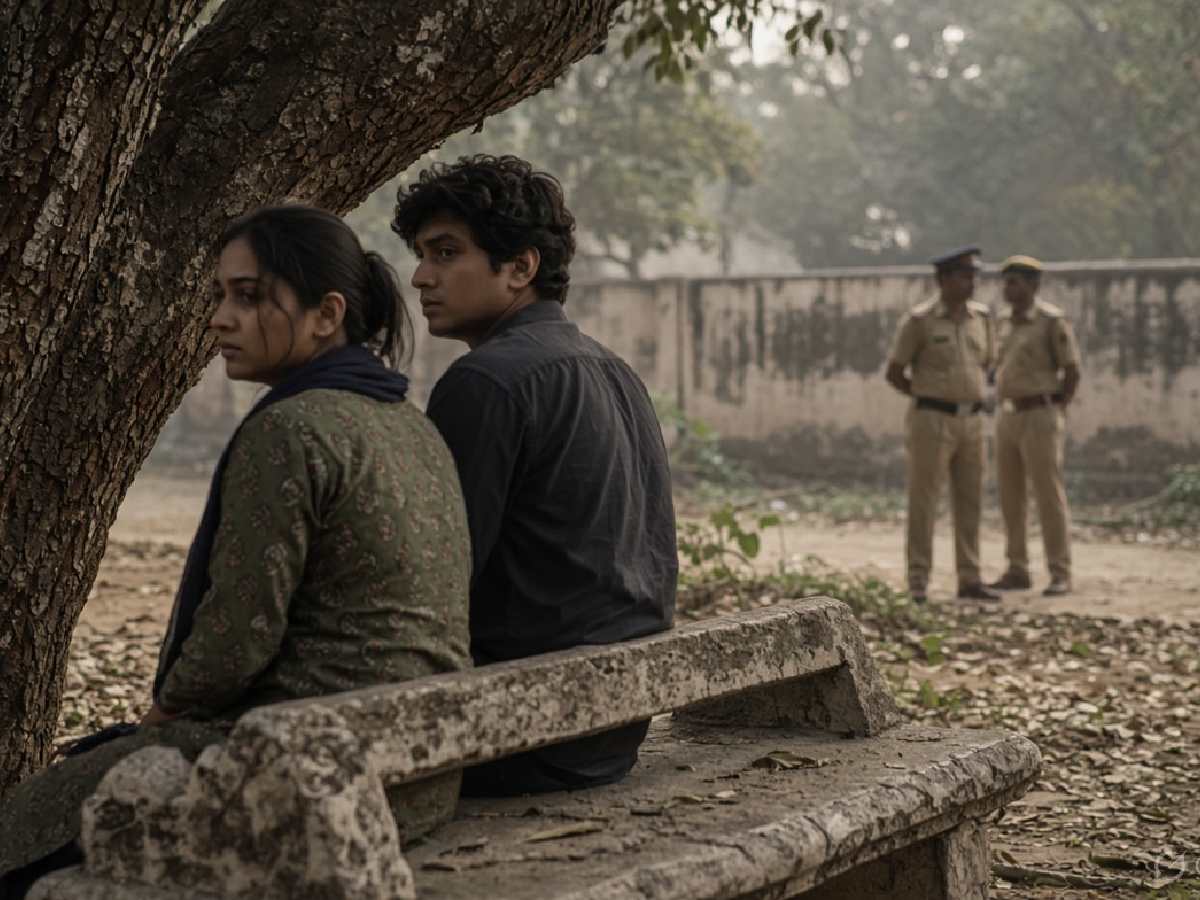
They dress in khaki like cops, sometimes even with nameplates. They roam the Capital’s major parks. They wait behind a tree or a wall, then they look for young couples, who are easy prey for them. This has been the pattern in Delhi’s parks for decades.
They were at it again at Astha Kunj Park in South Delhi. Three men posing as policemen approached a 17-year-old girl and her friend after a visit to Kalkaji Mandir, threatened them with “action”, separated them and allegedly gang-raped the girl. The case, registered under the Bharatiya Nyaya Sanhita and the POCSO Act, has drawn attention to poor lighting, unmanned gates, collapsed boundary walls and the near-absence of CCTV in a large public park. It should also be read as an older message: Delhi’s parks are still not safe places for young people to sit together.
‘Extorted Rs 500 in 90s’
After reading about the Astha Kunj incident, S Wadhawan, a South Delhi businessman, was carried back to the early 1990s. “I was with my would-be wife at Mahavir Sthal, talking and gossiping. Suddenly, from nowhere, about four guys came up to us. They alleged we were involved in shady activities. We were speechless and trembling. After a couple of minutes, they said that if we paid Rs 500, they would not arrest us. We settled. Since then, we have stopped going to any park other than the local one.” This is not the story of one couple. Countless Delhiites have similar horror stories to share.
Talkatora Garden, Buddha Jayanti Park, Mahavir Sthal and dozens of other green spaces still draw couples from across Delhi-NCR because they offer trees, quiet and a little distance from crowded streets. Once they settle on a bench, a man or several men in khaki, or in plain clothes claiming to be police, accuse them of obscenity, threaten to call their parents and demand money to “settle” the matter.
“This racket has operated for decades. The sums are often small — a few hundred to a few thousand rupees. But the method is consistent. Fear of social stigma does most of the work. Many victims pay and leave without filing a complaint,” says Pritam Dhariwal, a social worker in New Delhi.
The pattern is documented. In October 2017, five men posing as officers approached two couples at Buddha Jayanti Park. They abused them, threatened to inform their families, produced a pistol when the couples refused to follow them, and took cash, identity cards and a motorcycle’s registration papers. Police later arrested the accused. A senior officer confirmed that an FIR for extortion and impersonation of a public servant was registered. One of the victims later said similar incidents were common in the park and went unreported out of a sense of shame.
Recent cases in Delhi, Noida
A decade ago, earlier, in August 2015, two men in plain clothes approached a married couple in Japanese Park, Rohini, identified themselves as police officers, questioned them, and demanded Rs 2,000 or they would “arrest them in a false case and defame the woman”. Real officers happened to pass by. The couple called out. The impersonators were arrested on the spot.
The same logic appears beyond the older parks. In December 2025, Noida police arrested three men who had been photographing couples in parks near corporate offices in Sector 62 and threatening to circulate the images unless they paid Rs 1,000-2,000. The accused introduced themselves as “staff”. Officers said complaints had been coming in for months, but most victims never filed FIRs because the amounts were small and the embarrassment huge. The same men were also involved in phone snatching.
More organised gangs have come close to impersonating police personnel by wearing the khaki. Earlier this year, Delhi Police Crime Branch arrested members of a honey-trap racket that created fake dating-app profiles, lured men to flats, then burst in with one member in a police uniform, accusing the victim of exploiting a woman and demanding lakhs as “settlement”. One accused was caught still wearing the fake uniform. The fear of a rape case, like the fear of parents being informed in a park, is the leverage for criminals.
Also Read: Between classrooms and counselling rooms
Contrast with Mumbai
“The contrast with Mumbai is so clear. On Marine Drive in the evening, hundreds of couples sit along the sea wall. They hold hands. Nobody routinely walks up, claims official authority, and extracts money. The difference is not climate or culture in some essential sense. It is whether parks are treated as public places or as sites where intimacy itself is treated as a potential offence,” says Kamaljit Singh, a photojournalist who has worked in both cities.
Delhi has not made that shift. Impersonators still move freely. Lighting and surveillance in many DDA parks remain inadequate, as Astha Kunj has shown again. Beat officers and guards sometimes treat couples as a “problem” rather than as citizens using a park.
A park is not a courtroom. Sitting together is not an offence. Threatening arrest without identification, demanding cash, photographing people and invoking parents are the methods of a protection racket dressed in the language of morality.
Until impersonators are actually caught and prosecuted, young couples in Delhi will continue to pay in money and in fear for the right to sit under a tree. The city will remain the city it has been for decades