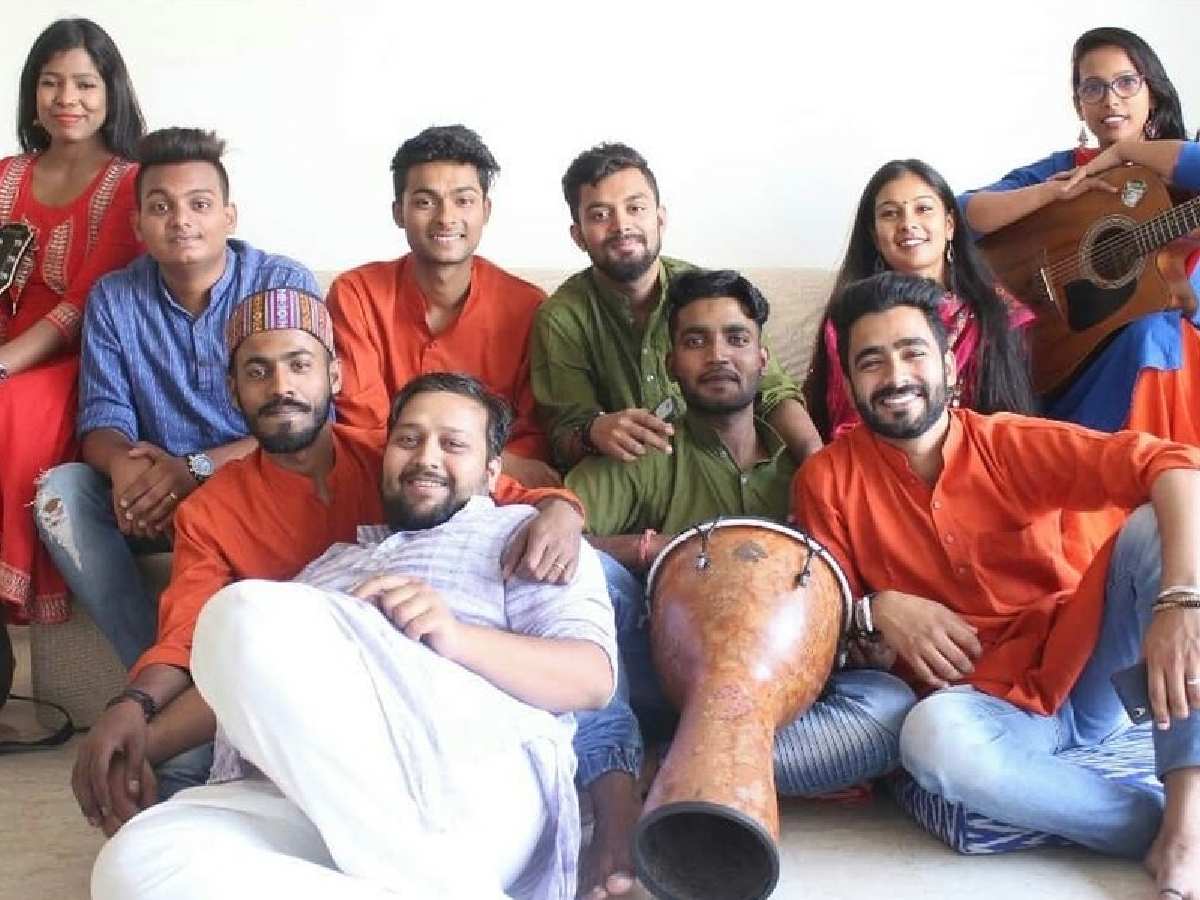
For a child who has never attended a formal music class, learning to sing or play an instrument can feel unfamiliar. Access to trained teachers, instruments and a space to practise is often limited, particularly in schools and communities where creative education receives little attention.
Manzil Mystics, a Delhi-based non-profit organisation, has been working to address this gap by taking music into government schools and low-income communities. Its work goes beyond teaching children songs. The collective uses music to make learning engaging, encourage self-expression and introduce children to subjects not always discussed in classrooms.
The idea took shape around 2011, when Anurag, the founder and chief executive of Manzil Mystics, began thinking about how music could serve a purpose beyond entertainment. His engagement with Kabir’s poetry and philosophy influenced this approach.
“I started looking at music beyond an art form or expression. I wanted to understand how songs could communicate ideas, encourage people to reflect and question things they have always believed in,” Anurag says.
Also Read: The Delhi Nehru helped shape
Anurag’s journey into music took shape against the backdrop of a challenging life. While pursuing studies, he joined the Manzil Welfare Society in 2009. His time there brought him closer to music and got him thinking about the role it could play beyond performance.
The name Manzil Mystics emerged in 2011. A few months later, he received a full scholarship to study in the United States. The experience introduced him to the professional side of the music industry, including marketing and other aspects of running a music-based initiative. It also shaped his understanding of how music could engage society.
That thinking eventually became central to Manzil Mystics, using music not only as an art form but also as a medium for education and social change.

Taking music into schools
The collective began working with schools in 2014. Its initial efforts focused on bringing structured music classes to children with limited opportunities to learn music. The idea was to make music a regular part of their learning experience rather than an occasional activity reserved for annual functions or special events.
“In government schools, where teachers and resources are often stretched across several subjects, music education does not always receive the same attention as academic learning. Manzil Mystics works with schools and communities to create spaces where children can sing, learn meaningful songs and engage with music collectively while learning constitutional values,” said Anurag.
The classes also give children the opportunity to participate without the pressure of formal examinations. Singing in a group, learning lyrics, and performing before others help build confidence and communication. For children who may hesitate to speak in a classroom, music offers another form of expression.
Also Read: Chawri Bazar tragedy: inspected in June, collapsed in November
The collective’s approach is not limited to teaching children to reproduce a tune. It uses songs to introduce ideas and encourage discussion.
The work has also involved training and developing music facilitators who can take these sessions into schools. This requires more than musical ability. Facilitators need to understand how to work with children, communicate ideas and create an environment in which students feel comfortable participating.
Kabir in the classroom
Kabir’s poetry is an important part of Manzil Mystics’ work. The collective uses his verses to introduce children and communities to questions about everyday life, equality, belief and human relationships.
The programme is divided into four parts: Understanding Kabir – Satsang, Exploring Kabir – Samvaad, Celebrating Kabir – Sangeet and Living Kabir – Swadhyaya. Each has a different focus, but together they connect listening, discussion, singing and reflection.
“Satsang is about finding meaningful truths. Samvaad is about dialogue, asking questions, and unlearning and relearning. Sangeet brings the poetry into music, while Swadhyaya is about reflecting on what we have learnt and putting it into practice,” Anurag explains.
For him, the intention is not simply to introduce children to a poet or teach them traditional compositions. It is to use the poetry as a way of thinking. The verses can raise questions about social divisions, material needs, and how people treat one another.
Conversations on gender
Manzil Mystics has also used music to address gender-related issues. An early campaign, developed after Anurag’s interaction with women’s rights activist Kamla Bhasin, used songs to bring subjects such as menstruation, women’s experiences and responsible citizenship into public discussion.
The team worked on lyrics, composition and production, using music to communicate subjects that are often difficult to discuss openly. The intention was to make the conversation more accessible and encourage people to engage with questions around gender and equality.
Also Read: Strike at JNU: 500 contract workers demand fair wages, job security
The organisation’s later work in this area includes WeBhor, which uses music to engage with gender equality, menstrual and reproductive health and women’s rights.
For the collective, the format matters. A song can reach people in a way that a lecture or written message may not. It can also give people a shared starting point to discuss experiences that are otherwise kept private.
Work behind the music
Manzil Mystics’ work also involves preparing young musicians for the practical demands of a career in the arts. The organisation believes that musical talent alone is not enough to sustain a professional practice. Musicians also need to understand communication, technology, finances and the business side of their work.
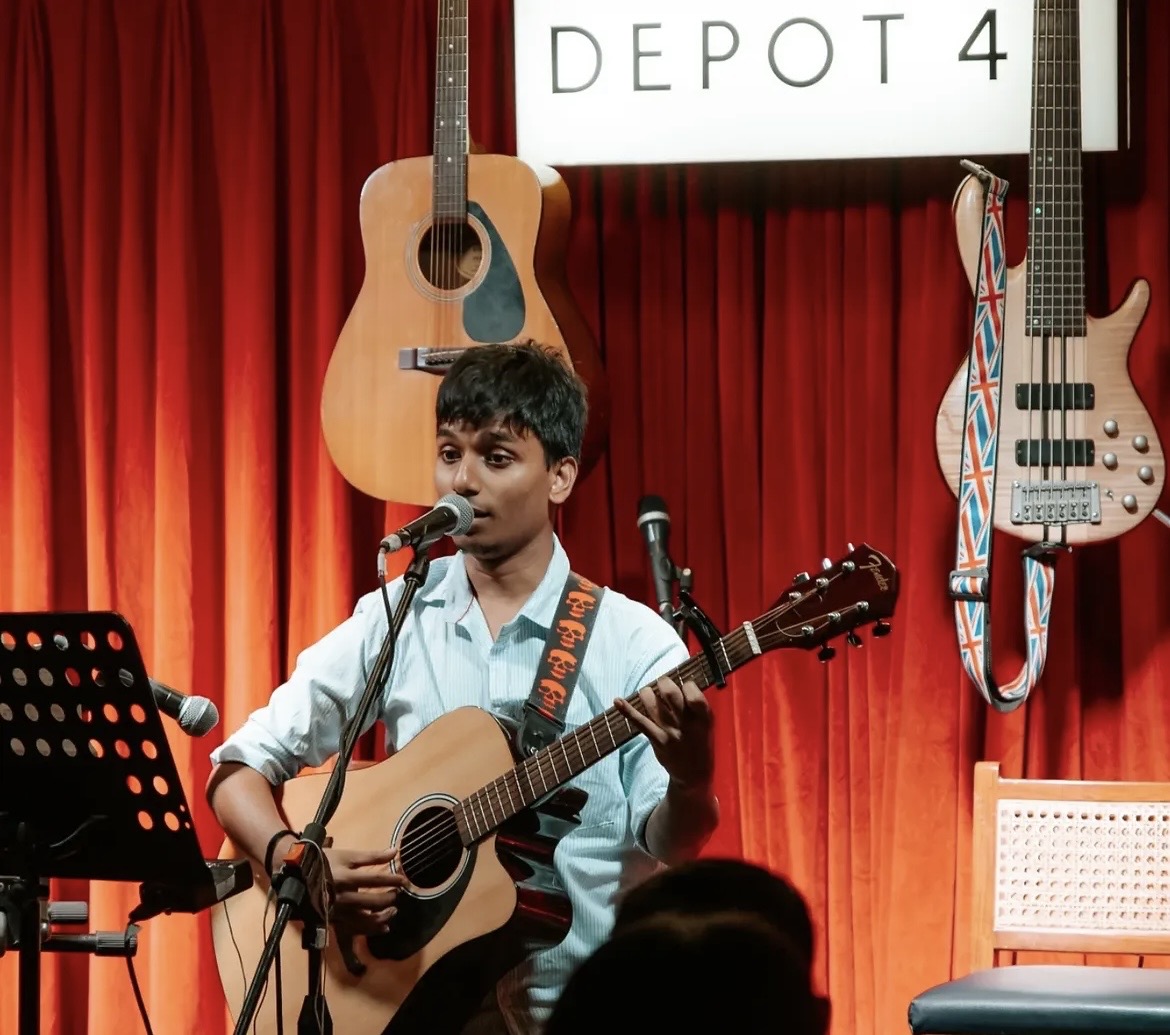
Its fellowship programme combines music training with compulsory learning in subjects such as mathematics, English, computers and communication. Fellows are introduced to pre-production and post-production, recordings, artist management along with practical tasks such as writing professional emails, preparing invoices and working with spreadsheets, technology and social media, encouraging fellows to pursue anything according to their interests etc.
The emphasis is on helping young musicians manage the work that happens outside a performance. They may know how to sing or play an instrument, but building a career also involves approaching venues, communicating with organisers, managing payments and understanding how music is recorded and distributed.
Also Read: JNU hostels: seepage, broken windows, and a missing audit
Raghav, 25, was among the first batch of fellows. He is now programme lead at Manzil Mystics, where he manages community-related work and the Performing Arts and Media Academy (PAMA). When he received an opportunity from Manzil Mystics, he said a multinational had offered him a job around the same time. But he chose the music fellowship, a decision that has shaped his work and career so far.
The early years were demanding. To cover his expenses, Raghav worked as a gig worker from 5 AM to 9 AM, attended the fellowship and did school-related work from 10 AM to 6 PM, and performed at cafes between 7 PM and 10 PM.
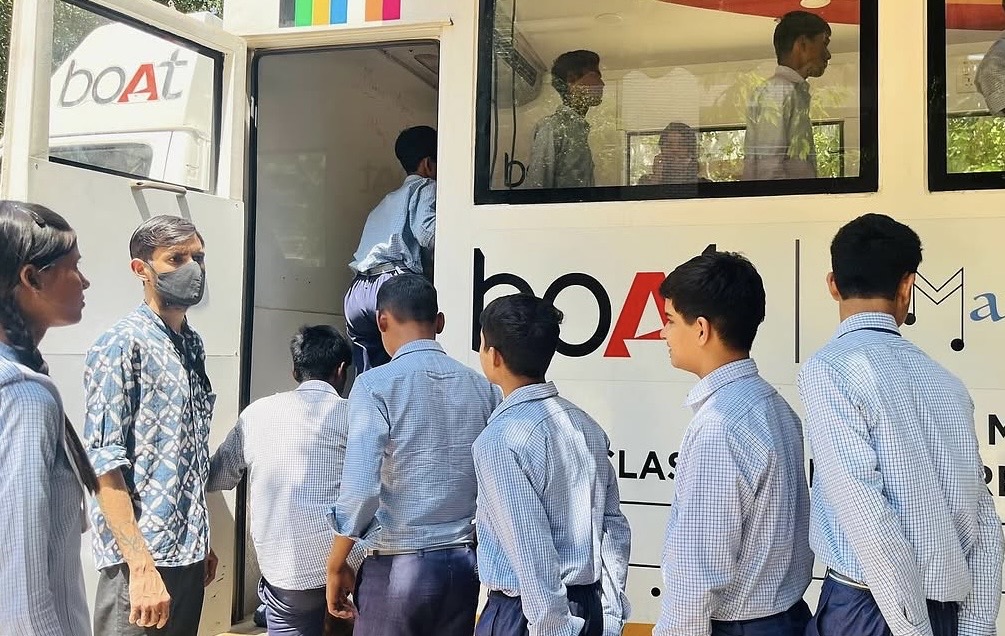
He gradually moved from being a fellow to taking on greater responsibility. He now works as a programme lead, coordinating with schools, children and communities, and contributing to the collective’s music-based programmes. His work has also involved Kabir sessions and the Music Bus, which takes music activities to different spaces.
The fellowship gave him exposure to areas of music production beyond performing. He learnt about pre-production and post-production and gained experience in organising and managing programmes.
“If I had accepted the job at the multinational, I would have missed out on the experiences I have had here. I learnt things beyond music, and I got the opportunity to work with children and communities,” Raghav says.
Fellow to a bandleader
Arya, who joined the second batch of the fellowship for 2024-26, came to music through theatre. His interest in music grew during the programme, prompting him to explore his family’s roots in Uttarakhand and the region’s musical traditions.
He began travelling to the mountains and remote villages with his guitar, learning about local songs and oral traditions. He became interested in music associated with everyday life, including folk traditions like songs connected to sowing and harvesting. His exploration also introduced him to traditional instruments from Himachal Pradesh such as the hudka and hudki, damau and ransingha.
“Wherever I go, I learn their music and oral traditions, and in return I try to teach them something which I learn through exploring,” he says.
The experience changed the way he approached music. Rather than treating folk traditions as material to perform on stage, he began looking at the communities, histories, and everyday practices from which they emerged.
Also Read: Delhi: Proposed e-rickshaw rules spark livelihood concerns
Arya went on to form the Nomadic Birds Collective. The band, which began with 12 members and now has 10, brings together singers, choir performers and instrumentalists, including guitarists, a keyboard player and a drummer.
In around a year and a half, during the fellowship, the group has performed more than 60 shows. Its appearances have included the All About Music festival in Mumbai, where he flew for the first time, as well as performances at libraries such as Kitabein Bolti Hain, which has taken place in South Extension and Sultanpur.
The group has also put together shows independently, taking responsibility for raising funds and organising performances. Recently, they performed at Jawaharlal Nehru Stadium for The Lil Flea Festival, Delhi.
Making space for young musicians
For Manzil Mystics, the journeys of fellows such as Raghav and Arya are part of a larger effort to build a music ecosystem in which young people can learn, perform and develop professional skills. The collective also helps artists build their own profiles and reach audiences through digital platforms.
Its approach recognises that access to music education involves more than placing an instrument in a classroom. Children need teachers and regular opportunities to practise. Young musicians need training, performance spaces and an understanding of the industry. Those who want to pursue music professionally also need the skills to manage the work that comes with it.
For children in schools where music lessons and instruments are not readily available, the first step is access to a class and a space to participate. What follows depends on the opportunities they receive, the skills they develop and the freedom they have to explore their interests.