
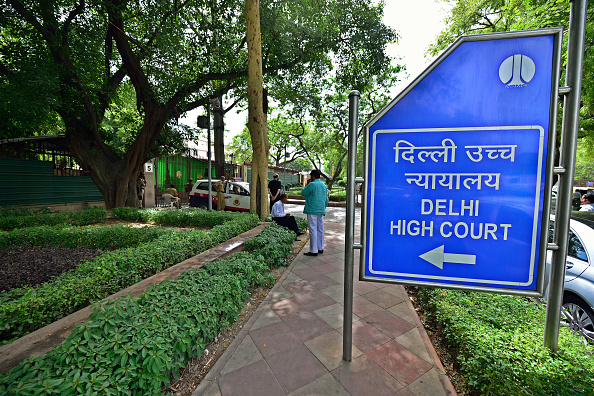
The Delhi High Court has permitted the termination of a pregnancy at approximately 31 weeks in the case of a 16-year-old rape survivor, holding that a constitutional court can consider a request beyond the statutory gestational limit in appropriate circumstances.
In an order dated October 15, Justice Mini Pushkarna allowed the minor’s petition after considering her circumstances and a report from the Medical Board at Lady Hardinge Medical College and Hospital. The Board found that she was physically fit to undergo the procedure but indicated that the baby was likely to be born alive.
The court considered the minor’s dignity, reproductive autonomy and right to life under Article 21 of the Constitution. It permitted termination after examining the medical assessment and the consequences of requiring the minor to continue the pregnancy.
The court directed Lady Hardinge Medical College and Smt SK Hospital to make the necessary medical arrangements and ensure that competent doctors carry out the procedure with appropriate precautions. It also directed the state to bear the expenses of the procedure, hospital stay and postoperative care.
The court ordered the preservation of foetal tissue for DNA testing in connection with the criminal investigation. It further directed the hospital to provide all possible medical assistance if the baby were born alive and addressed the steps to be taken by the child-protection authorities.
Why was court intervened?
The Medical Termination of Pregnancy Act, 1971, as amended in 2021, sets out the statutory framework for terminating pregnancies in India.
Under Section 3, termination is generally permitted up to 20 weeks under specified conditions. Between 20 and 24 weeks, the law permits termination for prescribed categories, including minors and survivors of sexual assault, subject to statutory requirements.
Section 3(2B) provides an exception to the gestational limits in specified cases involving substantial foetal abnormalities diagnosed by a Medical Board. It does not establish a general exception for every pregnancy beyond 24 weeks.
When a pregnancy advances beyond the ordinary statutory limit, a person may seek relief from a constitutional court, depending on the circumstances and applicable law. Article 226 of the Constitution empowers High Courts to issue directions and writs to protect legal and fundamental rights.
Article 21 protects life and personal liberty. The Supreme Court has interpreted this protection to include dignity, bodily integrity and reproductive autonomy.
In the present case, the Delhi High Court considered the minor’s age, the circumstances in which the pregnancy occurred, the Medical Board’s findings and the consequences of requiring her to continue the pregnancy. It allowed the request after considering these factors.
The decision does not create an automatic right to terminate every pregnancy beyond 24 weeks. Each request must be assessed on its facts, the medical evidence and the applicable law.
The legal framework
Supreme Court advocate Prateek Dwivedi explained that the statutory framework remains the same, although a request beyond the prescribed gestational limit may require judicial intervention.
“The statutory procedure and the basic legal framework remain the same. What changes is the legal route that may be required when the pregnancy has advanced beyond the prescribed gestational limit. In such cases, the medical assessment and the court’s consideration of the individual circumstances become particularly important,” he said.
Dwivedi said the Medical Board’s report helps the court understand the patient’s condition and the risks associated with the proposed procedure.
“The Medical Board’s assessment is important because it explains the patient’s medical condition, whether the procedure can be undertaken and what risks may arise. The court considers that report alongside the legal provisions and the circumstances of the case before passing an order. The individual’s fundamental right under Article 21 of the Constitution to life and to live with human dignity is also kept in mind by the courts while considering such matters,” he said.
He also highlighted the need to consider the circumstances of minor survivors.
Lastly, he added, “The physical risks, the psychological impact and the circumstances in which the pregnancy has occurred all need to be considered. The assessment cannot be reduced to the number of weeks alone”.
What if baby is born alive?
The court’s directions address the possibility that the baby may be born alive. The hospital must provide all possible medical assistance, while the relevant child-protection authorities must be informed in accordance with the order.
The court also provided for adoption if the minor and her family wish. Any adoption must follow the prescribed legal procedure; it is not an automatic consequence of the termination order.
The directions do not require the State to raise the child until adulthood. The State’s specific financial responsibility under this order covers the termination procedure, hospital stay and postoperative care.
Separately, the court addressed compensation for the minor. It directed that any compensation released in her favour under the Delhi Victim Compensation Scheme, 2018, be kept in a fixed deposit until she reaches the age of majority.
Earlier judgments
The Delhi High Court’s decision forms part of a broader body of judicial decisions in which Indian courts have considered requests for pregnancy termination beyond the statutory gestational limit.
In A (Mother of X) vs State of Maharashtra, decided on April 29, 2024, the Supreme Court considered the case of a 14-year-old who was approximately 25 weeks pregnant following alleged sexual assault. After the Bombay High Court refused permission for termination, the Supreme Court intervened and allowed the procedure. The case addressed reproductive autonomy and the need to consider the pregnant person’s physical and emotional well-being.
The case remains an important reference point for understanding how constitutional rights may inform termination requests beyond the ordinary statutory framework.
The Delhi High Court also considered a separate case on September 8, 2026, involving a 15-year-old survivor of rape whose pregnancy had advanced to approximately 30 weeks and five days.
The court permitted termination after considering the medical assessment and the circumstances of the case, subject to appropriate precautions and safeguards.
Another Delhi High Court ruling, delivered on October 5, concerned a different 16-year-old survivor whose pregnancy had advanced to approximately 26 weeks. In that case, the Medical Board identified significant health risks and recommended termination, while the court directed LNJP Hospital to arrange the procedure.
These cases involved different medical circumstances and procedural histories.
They should not be treated as identical precedents. Together, however, they show how courts have considered requests beyond 24 weeks by examining the individual circumstances, medical risks and constitutional questions involved.