
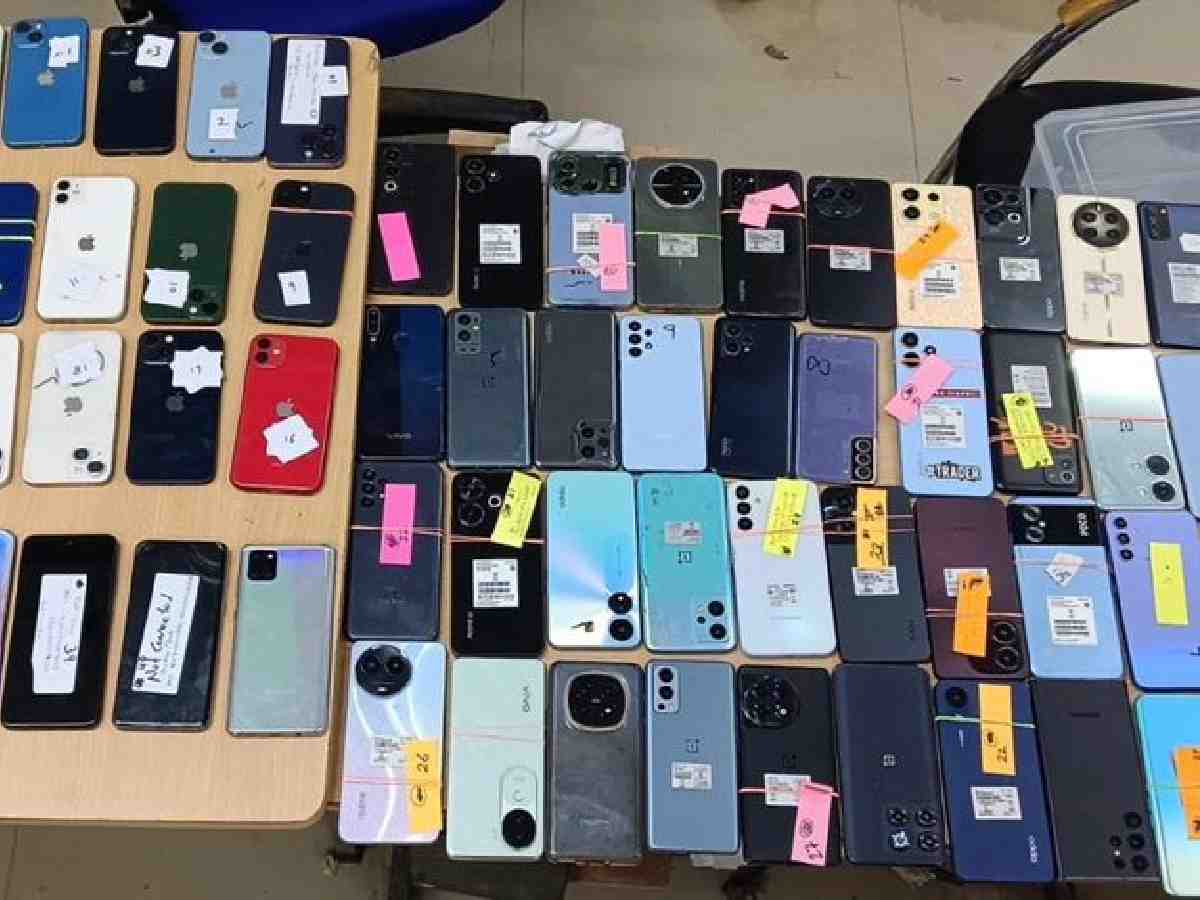
Delhi: In bated breath, Pawan Sharma rang up the phone. It had been an incessant chase to finally land the Uber driver’s number after the man appeared to brush past him. This was his chance. The phone rang once, then twice, before a click confirmed the call had been answered. But the voice on the other end did not sound like the driver who had dropped him off.
“The person on the other line told me initially that he had my mobile and he would give it to me at the earliest if he was around my area. Or, he could directly just send the phone to me through a delivery application, provided I booked it and paid for it,” Sharma said.
From reassurance to ransom
An hour or two later, after constant back-and-forth calls, the situation took a strange turn. The initial warmth faded, replaced by hostility. “I have your phone but the person who actually gave it to me wants money for it. He won’t give it back if you do not send money. If I would have received it, I would have given it to you,” the driver said over the phone.
Sharma recorded all the conversations. Still, the experience left him uneasy.
“Initially he demanded Rs 5,000. It was disgustingly high, but I agreed till the moment my delivery person did not reach the spot. When the delivery person reached, I told him to give him the phone. We had some disagreement for some time, and then he finally agreed to my offer of Rs 1,000. I think at that point, he just wanted whatever amount he could accrue,” Sharma said.
While the negotiation ended with him paying only a fraction of the original demand, Sharma said the psychological impact lingered. “The more frustrating part is the extortion for a comparatively paltry sum. It affects a person’s psyche,” he said.
Why victims rarely complain
What worries Sharma more is how rarely such cases are formally reported. Many victims, relieved to recover their belongings, let the matter slide.
“I am not worried about the Rs 1,000 anymore. While the extortion was harrowing, I never thought about going to the cops since I don’t really know how they will react, considering that I have my phone back,” he said.
It is not just mobile phones. Anything ‘lost’ inside a taxi can effectively turn into a toll to be paid for its return.
A parcel held hostage
Yasmina (name changed) faced a similar ordeal after leaving a parcel of gifts behind in a cab.
“The moment I realised that none of my family members, nor I, was carrying the bag of gifts, I called him up. Initially, the driver did not answer, but after a point the call was answered. I told him that I had forgotten a parcel inside, and he said that he would return it,” she said.
Relieved, she asked him to return it at his convenience and offered to compensate him for his time. “He said that he would return it whenever he was in Delhi, or I could book a porter from Gurugram. After a point, he changed his mind and asked me to just pay him the money whenever he was there. I agreed and checked the amount it would take for a ride from where he was to my location. However, he did not agree to the amount. Threatening to keep the parcel hostage, I agreed to his amount,” she said.
The driver finally arrived two days later. “I had given him around Rs 1,000 for the journey, much more than what was shown on the taxi-hailing application,” Yasmina said. “I had thought that my belongings were gone.”
‘A fairly common way of earning money’
A cab driver, speaking on the condition of anonymity, said such practices were not rare.
“A minority but significant chunk of cab drivers do this, to the point that it has turned into a fairly common way of earning money. Normally, they decide rates based on what gets lost. For example, a regular Android phone might be returned for a maximum of around Rs 8,000. On the other hand, there have been passengers who have paid over Rs 20,000 to get their phones back, especially if it’s an iPhone,” he said.
According to him, the method is usually straightforward. “A person holds the phone hostage, while another negotiates. However, sometimes it’s just a single driver conducting the negotiations while keeping the phone hostage. Having a second person helps, since it makes it easier to run away with the ‘lost’ parcel,” he said.
When police step in
Online forums are dotted with similar accounts. A few years ago, a Delhi resident wrote on Reddit about recovering her lost phone from an uncooperative Uber driver after swift police intervention.
After leaving her device in the cab, the owner watched as the driver ignored ten consecutive calls before switching the phone to airplane mode. The situation changed when she managed to secure the driver’s home address after filing an FIR.
“Thanks a lot for all the help. Filed an FIR, got his address through the police [which was unexpectedly fast], went to his home last night. He made up some story about how someone else must’ve taken it,” the poster wrote.
Accompanied by her brother’s friends to provide a physical deterrent, she confronted the driver at his residence. After initially blaming a “sketchy” family he claimed to have picked up later, the driver relented. In a moment of unintended comedy, he promised to retrieve the phone from the supposed thieves but warned that he could not “guarantee the state of the SIM card”. He returned the device the next morning.
Despite such outcomes, cases of extortion over lost belongings are seldom reported, particularly when drivers eventually return the items and passengers choose to pay up and move on.