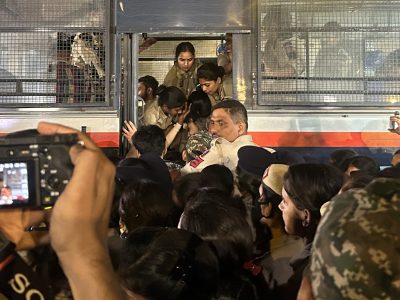
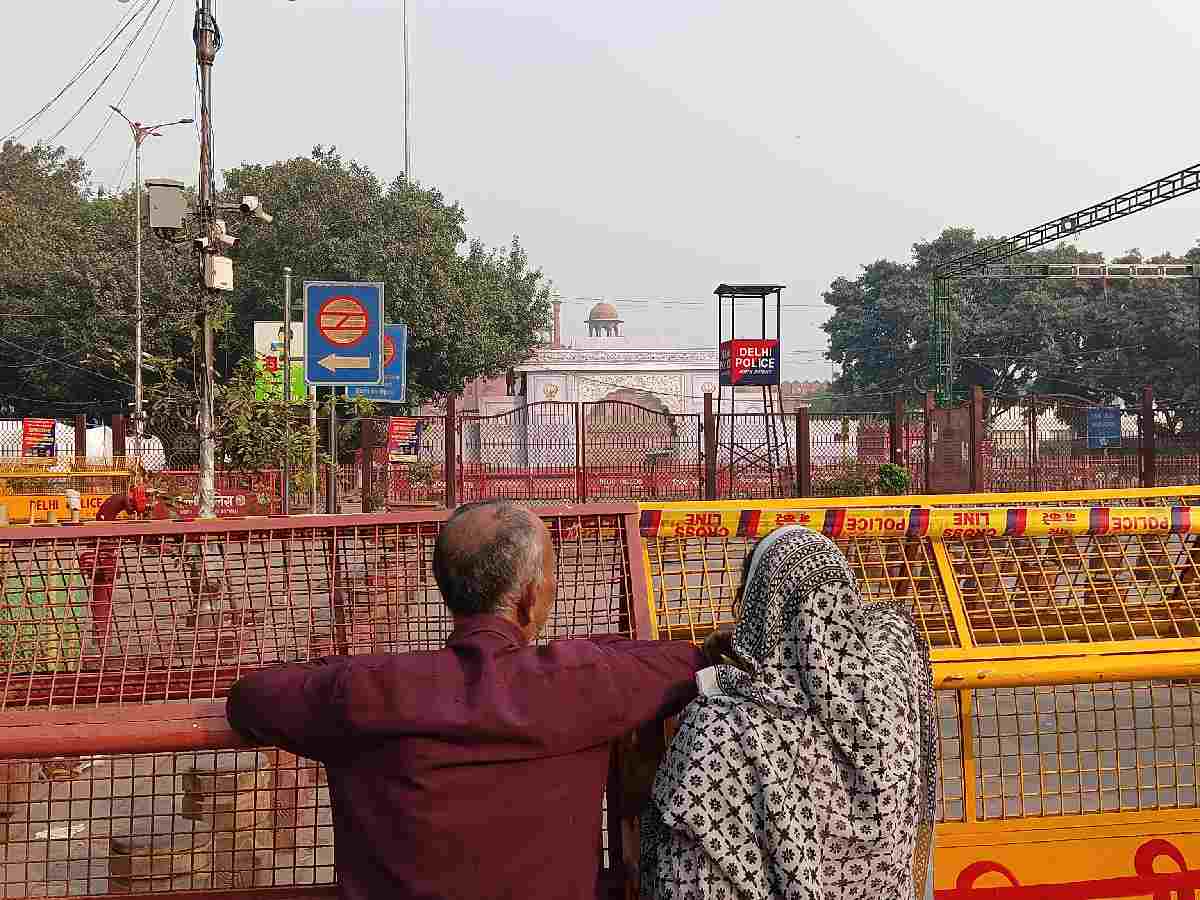
Multiple questions have surfaced regarding Delhi’s law-and-order readiness after the November 10 blast that killed 13 people and injured more than 50. The incident has prompted fresh discussions about how the city’s existing surveillance capacity could be strengthened, with attention returning to inconsistencies within the CCTV network.
Even though Delhi has one of the largest urban CCTV deployments in the country, according to an RTI response, around a thousand cameras — many of which are from the Safe City Project — remain non-functional. This has added to concerns that certain pockets of the city may not be uniformly covered despite substantial investment in infrastructure.
In 2018, the Ministry of Home Affairs launched the Safe City initiative to make metro cities safer and more liveable, particularly for women. The project, conceptualised under the Nirbhaya Fund, aims to plug systemic gaps through better infrastructure, lighting, community capacity-building, and technology-driven surveillance.
According to the ministry, the initiative “involves identification of hotspots for crime against women and deployment of various components, including infrastructure, technology adoption, and capacity building in the community through awareness programmes, which will enable safety for women”. The plan envisioned enhanced lighting, accessible support services, and AI-enabled CCTV systems designed to track offenders and support quick-response protocols.
As part of the effort, thousands of cameras with artificial intelligence features were to be deployed in high-risk areas. Their seamless functioning, however, depends on the installation quality, maintenance, and integration across districts and units.
Varying coverage levels
According to the RTI reply from Delhi Police to the Patriot, a total of 19,431 CCTV cameras have been installed across the capital, including 10,000 under the Safe City Project. A significant proportion is functioning smoothly, but some continue to remain dormant, resulting in uneven coverage in certain sections of the city.
The North District, where the blast occurred, has the highest concentration of cameras, particularly under the Kotwali police station. The blast site also falls under this jurisdiction. Despite this density, surveillance around the area faced challenges due to a mix of functional and non-functional cameras.
Neighbouring police stations also host varying numbers of CCTV units: Lahori Gate (26), Kashmere Gate (96), Sadar Bazar (24), Subzi Mandi (129), Bara Hindu Rao (20), Timarpur (22), Wazirabad (17), Burari (109), Civil Lines (25), Roop Nagar (81), Maurice Nagar (11), Sarai Rohilla (24), and Gulabi Bagh (20). This distribution illustrates broad coverage, though not always consistent performance.
In 2025, Shahdara District had 1,558 installed cameras, of which only 32 were operational during the reporting period. The South District recorded 1,829 installed cameras, with repairs handled by the annual maintenance contractor upon request. Installations for this district were undertaken through the P&L Unit.
However, other districts reported significantly higher functionality rates. As of May 20, the Outer North District had 736 cameras installed, with 695 operational. The South East District had 971 cameras, with 941 working. Rohini District recorded 1,904 cameras, with 1,828 operational. The New Delhi District had 2,872 cameras installed, with 2,802 of them operational. Dwarka District reported 1,730 cameras, of which 1,631 were functional.
Also Read: Delhi Red Fort blast: eyewitnesses recount scene of horror
As of the same date, all 539 cameras in the Outer District were operational. In the North-West District, 645 out of 652 were working. Some districts also provided further granular details in the RTI documents.
Safe City delays
Specialised units reported strong operational rates. The Metro Unit had 240 functional cameras, while the Railway Unit had 109, all of which were reported to be working. The South-West District had 1,097 functioning cameras. The West District reported 1,356 installed cameras, which are maintained by the P&L Unit. The IGI Airport unit, spanning both IGI Airport and Domestic Airport police stations, had 15 cameras in place.
However, officials confirmed that cameras installed under the Safe City Project remain non-operational. “We have still not started operating the CCTVs under the Safe City project since we need to give our police officers proper training. Since that remains to be done, almost none of the CCTV cameras under the Safe City project are working,” a police official said.
According to the RTI response, maintenance responsibilities are shared among multiple private contractors. The Central District is maintained by Innovatiview, while surveillance data integration is handled by the Centre for Development of Advanced Computing (C-DAC). The layered structure means activation and upkeep depend on coordination between several entities.
Despite these challenges, Delhi Police data indicates a decline in serious crimes during the first quarter of 2025, highlighting that while surveillance gaps exist, overall crime patterns are influenced by multiple factors.
Maintenance challenges
The Public Works Department has also recorded a notable rise in CCTV-related complaints. Until November 14, officials recorded 184 complaints — a sharp increase compared to zero in the previous month. Typically, monthly figures remain in double digits; however, the first half of November saw an unusual spike.
Residents report that some cameras have remained non-functional for over a year, despite repeated requests for repair. “The cameras are not working, and the camera box is emitting a very noisy sound. Very loud sounds are emanating from it, preventing me from sleeping at night. It is a huge problem,” said Jung Singh of Tilak Nagar.
In Kasturba Nagar, two residents lodged complaints on the same day about similar issues. “The CCTV installed at F-7, Road No. 5, Andrewsganj has not been working for the past year, yet neither BEL nor PWD has taken any action,” said resident Ajay Kumar Tiwari.
Ritu Singh also wrote to authorities, stating: “The maintenance team never comes, and that has led to the CCTVs not functioning for over two years.”
All three complaints were filed on November 1, adding to the department’s peak-period workload and indicating clusters of malfunctioning cameras concentrated in specific neighbourhoods.
Blast details
On November 10, 2025, a Hyundai i20 car bomb detonated near the Red Fort, killing 13 people. The driver was identified via DNA as Dr Umar Nabi, a 28-year-old from Qazigund in South Kashmir and an employee of Al-Falah University in Faridabad.
Investigators believe the explosion was premature, with no shrapnel used, suggesting Nabi may have panicked while assembling a vehicle-borne improvised explosive device (VBIED) using online instructions.
The plot centred on three doctors from South Kashmir working at Al-Falah University.
Dr Muzammil Ahmad Ganaie (alias Musaib) was arrested after 360 kg of ammonium nitrate was recovered from his rented accommodation, with a total of 2,900 kg found across the university campus. Dr Muzaffar Rather remains at large, reportedly in Afghanistan, with a Red Corner Notice sought through Interpol. Investigators say the trio travelled to Turkey in 2021 and were in contact with a Jaish-e-Mohammad handler in Pakistan.
The probe began with the arrest of three men in Srinagar on 18–19 October 2025 for pasting JeM posters. Their interrogation led to Maulvi Irfan Ahmad, a former paramedic turned preacher, who has been accused of radicalising the doctors and helping them acquire chemicals.
Eight people have been arrested to date, including Dr Shaheen Sayeed from Lucknow, who investigators say was aware of the group’s logistics, and Dr Adeel Rather, Muzaffar’s brother, from whom an AK-56 rifle was seized. Authorities believe the plot was timed around the anniversary of the Babri Masjid demolition on December 6.
Al-Falah University, a 76-acre campus established in 1997, allegedly served as the module’s base. Police have seized three vehicles belonging to the accused and are probing whether more VBIEDs were prepared. A multi-state operation continues as agencies piece together the wider network.