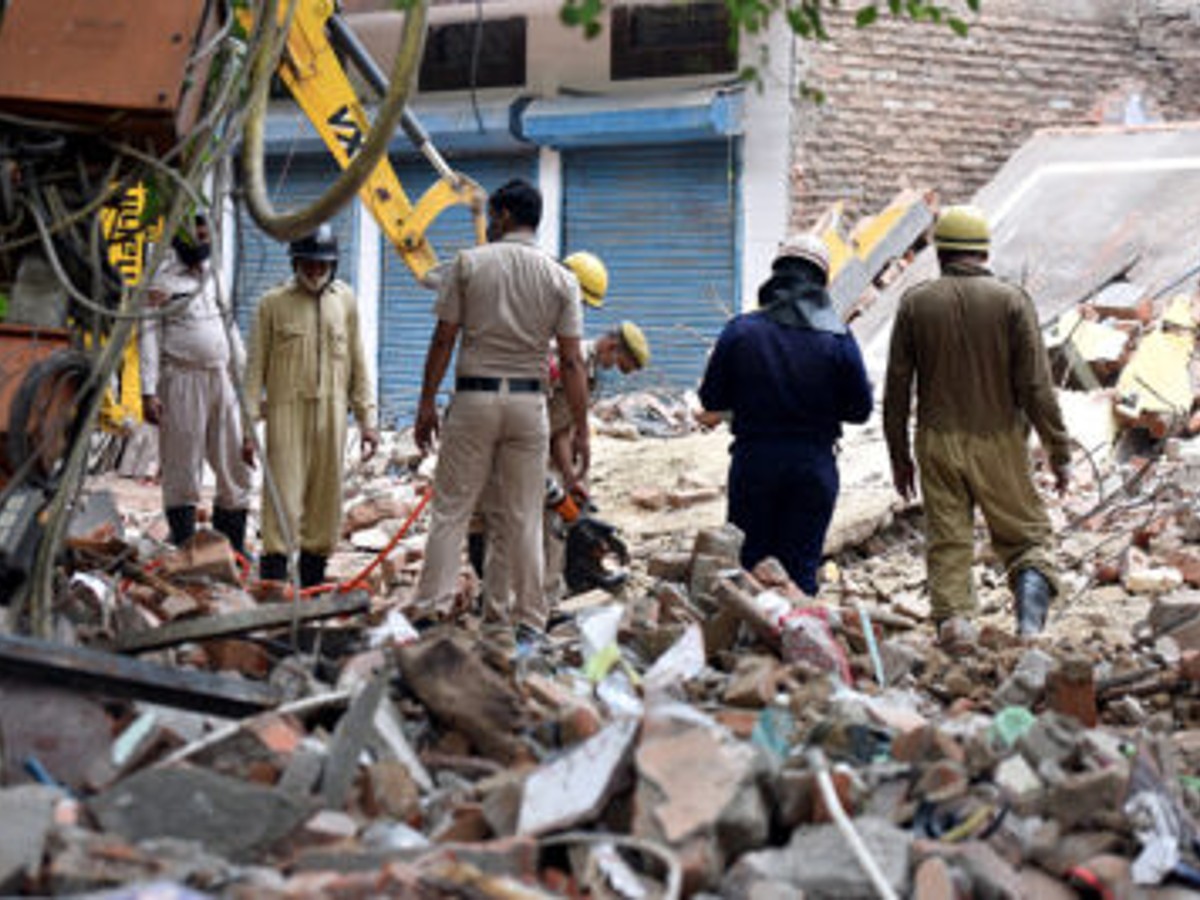
A four-storey building collapsed in north Delhi’s Subzi Mandi area early on Tuesday, though no casualties were reported as the structure had been declared unsafe and evacuated in advance, officials said.
According to the Delhi Fire Service (DFS), a call about the incident was received at 3.05 am. Five fire tenders were rushed to the congested Punjabi Basti lane, where the building came crashing down with a loud noise.
“Since the building had already been declared dangerous by the Municipal Corporation of Delhi (MCD), it was vacant at the time,” a DFS official said.
During the operation, fire personnel also rescued 14 people stranded in an adjoining structure.
The incident comes against a backdrop of rising cases of building collapses in the capital. DFS data accessed by Patriot shows a sharp increase in distress calls this year. Till April 20, the service had received 27 calls related to collapses—up from 12 during the same period in 2024, marking a 55.5 per cent jump.
With the exception of February, every month of 2025 has logged more collapse-related calls than last year. In January, February, and March, the DFS recorded 23, 25, and 25 such calls respectively, compared to 16, 30, and 21 in 2024.
The human toll has been higher as well. As of April 20, 15 people have lost their lives in collapse incidents this year, nearly double the eight fatalities recorded during the same period in 2024.
Also Read: Crumbling Delhi: Why instances of building collapse have spiked
The longer-term trend is no less troubling. In 2022–23, the capital reported 349 collapses that killed 43 people and injured 315. In 2023–24, the number of collapses rose to 371, though fatalities declined to 23 and injuries to 171.
Urban planners say the proliferation of unauthorised colonies and ageing structures has made Delhi increasingly vulnerable to such incidents—a ticking time bomb in the words of one expert.
(With inputs from PTI)