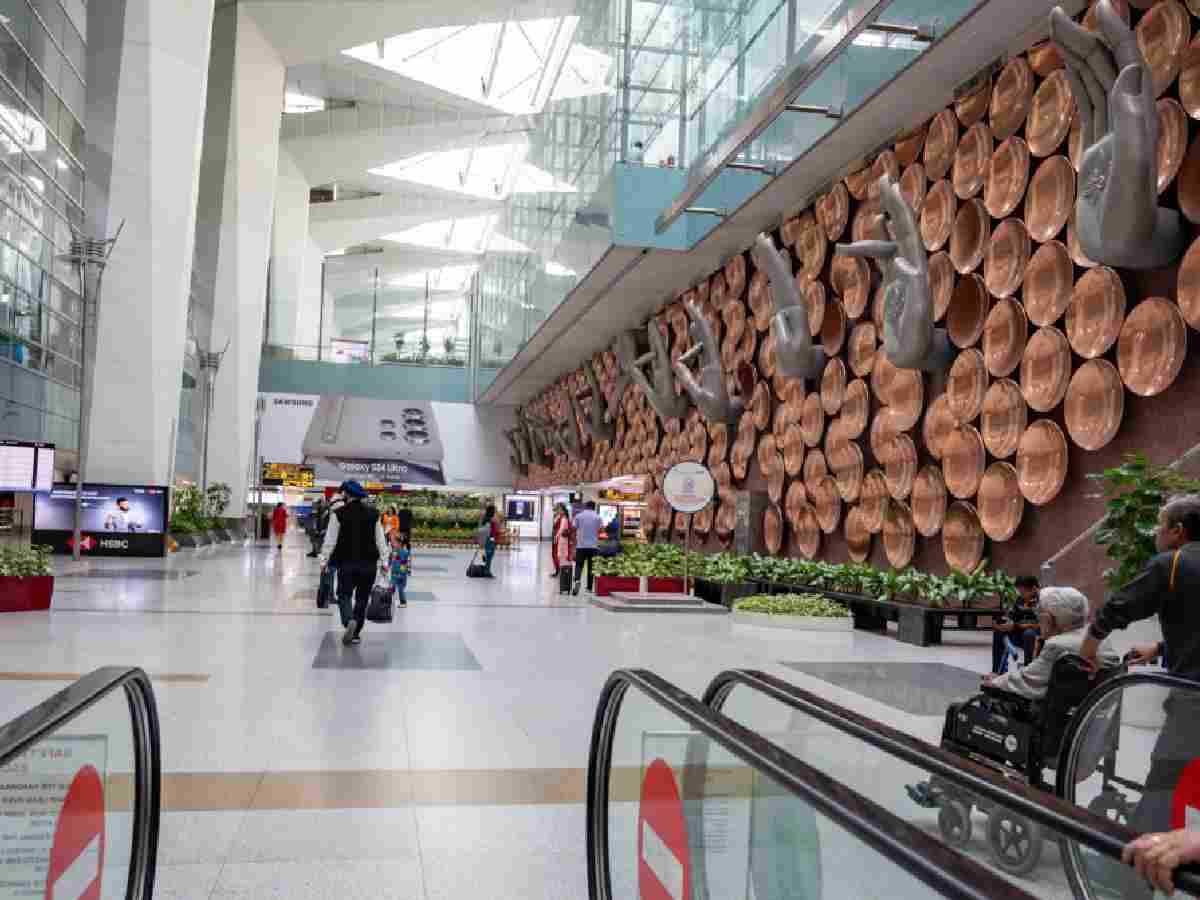
Delhi airport: The Delhi International Airport Limited (DIAL), managed by GMR, has introduced several upgrades aimed at reducing delays caused by winter fog. These include employing Artificial Intelligence systems and advanced predictive analytics to help mitigate issues arising from low-visibility conditions.
A key part of the plan is the Airport Predictive Operations Centre (APOC), which integrates live weather data, forecasts, and operational information into a single platform. This enables the airport to adjust runway use, aircraft sequencing, and gate assignments more quickly when visibility drops.
DIAL is also testing fog forecasts generated through the Winter Fog Experiment (WiFEX), a long-running research initiative conducted by the Indian Institute of Tropical Meteorology (IITM) in Pune, the India Meteorological Department, and DIAL. The system reportedly predicts fog with about 85% accuracy up to 36 hours in advance, giving teams more time to prepare.
Also Read: Delhi’s groundwater salinity rises sharply, placing the capital in a high-risk category
Data on temperature, humidity, wind profiles, aerosols, pollution particles, radiation, microphysics of fog droplets, and visibility changes are collected using instruments such as LIDARs, ceilometers, radiation sensors, aerosol counters, and remote sensing towers.
On the infrastructure side, the Airports Authority of India and DIAL have completed installing a CAT III Instrument Landing System at the Dwarka end of runway 10/28. All three main runways (10/28, 11L/29R, and 11R/29L) can now support CAT III approaches from both directions. This is expected to allow around 30 landings per hour in poor visibility and shorten the time required to return to regular schedules after fog clears, from roughly six hours to around two.
Videh Kumar Jaipuriar, CEO of DIAL, said: “Fog can’t be prevented, but these changes – better forecasting, the APOC, and full CAT III coverage on all runways – should mean fewer delays and quicker recovery when visibility is low.”
The upgrades are intended to limit disruptions for passengers and airlines during Delhi’s fog season.