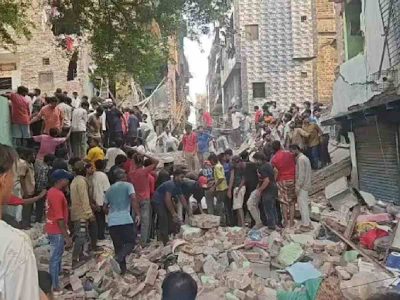
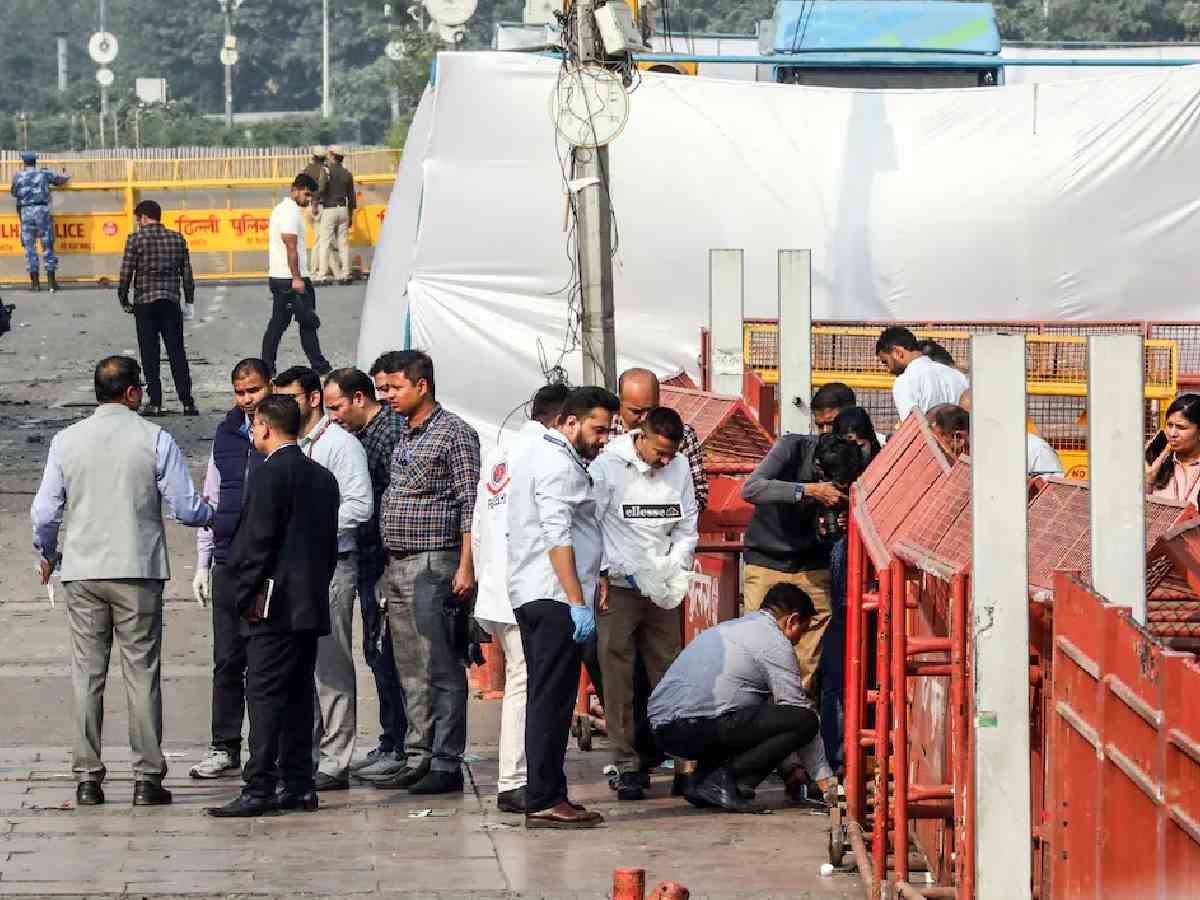
Delhi Blast: A CCTV footage sourced from inside the Red Fort metro station offers a stark glimpse of the moments immediately before and after the car blast that killed 13 people and injured several others, an official said on Saturday.
The visuals extracted from internal surveillance cameras show routine commuter movement inside the station when a sudden, violent tremor shakes the premises at the precise moment the explosion occurred at the nearby traffic signal.
Objects inside the station can be seen rattling, while passengers are visibly jolted as shock reverberates through the structure.
The footage also shows some commuters instinctively rushing further inside the station, seeking safety as the impact of the explosion becomes apparent.
Officials said investigators are examining the new visuals to better understand the intensity of the blast and its immediate effect on structures surrounding the Red Fort.
The Lal Quila metro station has remained closed since the day of the incident.
The Delhi Metro Rail Corporation has been issuing daily updates. On Thursday, it announced that the station will remain shut until further notice, owing to the ongoing security review and investigation.
Security agencies continue to analyse multiple CCTV inputs from the blast site, surrounding areas and the metro station to piece together a comprehensive sequence of events leading up to the detonation.
Read more
Shanti Van: Delhi’s quiet refuge that still echoes Nehru’s ideals
As you walk into Shanti Van, the fragrance of flowers fills the air, lifting your mood almost instantly. The gardeners are nowhere to be seen; even the peacocks, usually visible across the lawns, have taken shelter from the thin November chill. Only the sound of your footsteps breaks the silence — along with the faint hum of Ring Road traffic beyond a low stone wall that separates two worlds, divided by time and sixty years of history.
The marble feels cold as winter settles over the Capital. Someone has left a small string of marigolds along the edge, already browning at the tips. Another visitor has placed a single rose, its petals the colour of old blood. There is no nameplate, no grand inscription — only the words: Jawaharlal Nehru, 1889–1964.