
As you walk into Shanti Van, the fragrance of flowers fills the air, lifting your mood almost instantly. The gardeners are nowhere to be seen; even the peacocks, usually visible across the lawns, have taken shelter from the thin November chill. Only the sound of your footsteps breaks the silence — along with the faint hum of Ring Road traffic beyond a low stone wall that separates two worlds, divided by time and sixty years of history.
The marble feels cold as winter settles over the Capital. Someone has left a small string of marigolds along the edge, already browning at the tips. Another visitor has placed a single rose, its petals the colour of old blood. There is no nameplate, no grand inscription — only the words: Jawaharlal Nehru, 1889–1964.
Among the regular visitors is Ajay Soni, a businessman from East Delhi. He often comes here for morning walks, like many others from his neighbourhood or the nearby walled city. “I visit because it’s a well-maintained and peaceful place. I have nothing to do with Nehruji — I don’t come here because of him,” he says.
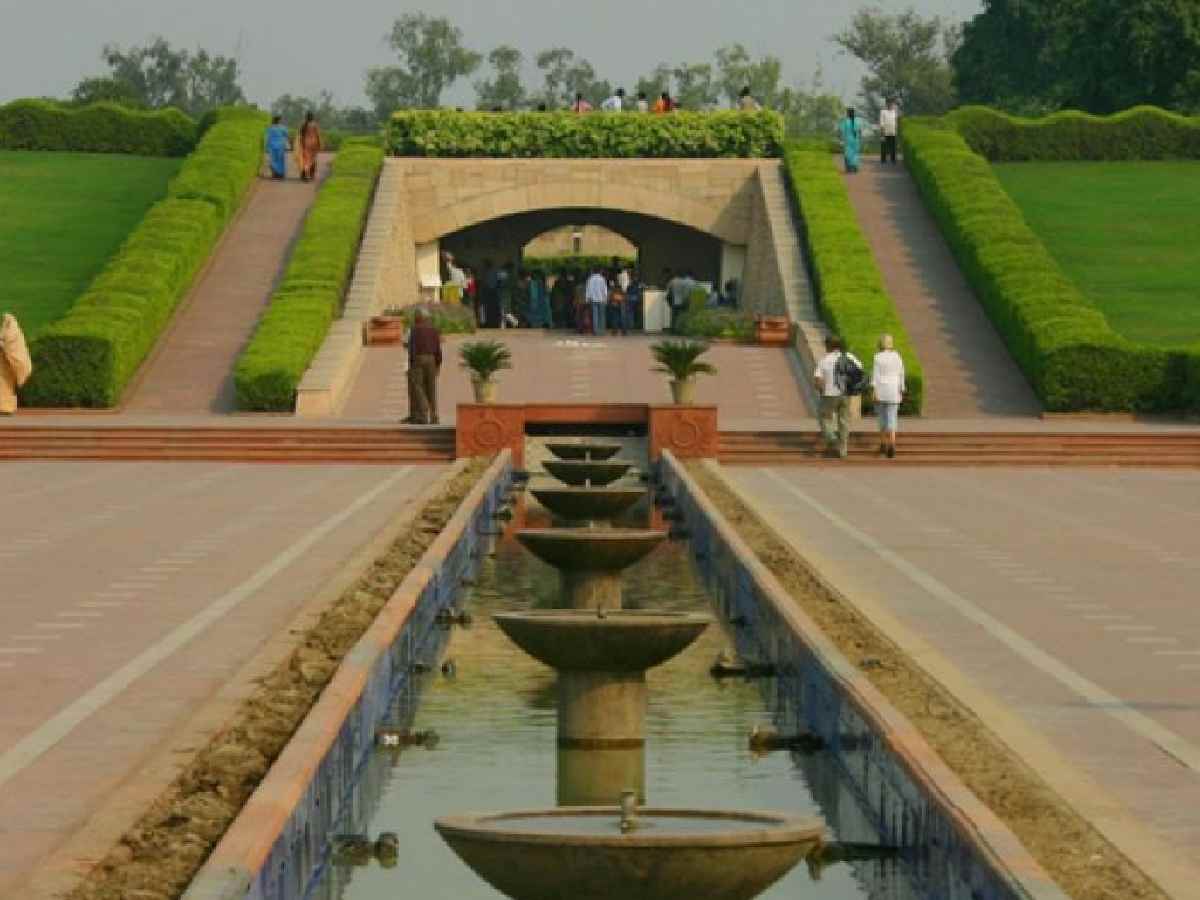
You sit on a bench, watching as a few people practise yoga. Your thoughts wander to the man who shaped India’s destiny from 1947 to 1964 — still discussed, even after six decades, as though he had never left. A breeze stirs the peepal leaves overhead, making a sound like dry paper turning — perhaps pages from Glimpses of World History or The Discovery of India, written in the dim light of Dehradun jail. You almost imagine him walking under these very trees in his achkan and rose, pausing to turn over a fallen leaf, as though it might reveal the pattern of the universe.
Shanti Van was built in 1964 after Nehru’s death, on the site where his last rites were performed. The name, meaning ‘forest of peace’, reflects the inclusive and contemplative outlook he carried throughout his life. Spread across nearly 53 acres in the heart of Delhi, the memorial is a living landscape of trees and birds. At dawn, the air fills with chirping; by day, squirrels dart among the rose, jasmine, and marigold blooms. It remains one of the most tranquil spaces in a city that rarely pauses to breathe.
Nehru’s samadhi is a simple platform of black stone. For nearly two decades, inter-faith prayer meetings held here on November 14 and May 27 have included Bible passages read by Brother Solomon George, who often comes and sits quietly for long stretches. The stillness, he says, offers deep comfort to the soul. Many others visit Shanti Van simply to spend a few moments in its calm.
Maintained by the Central Public Works Department, the memorial is planted with neem and peepal trees — both chosen for their symbolic ties to Nehru’s love of Indian culture and nature. Its design is intentionally understated, blending seamlessly with the landscape. There are no grand structures or ornate embellishments here; only open grounds, dense greenery, and quiet dignity.
Shanti Van mirrors Nehru’s principles of peace, simplicity, and harmony. The Yamuna’s faint murmur nearby and the rustle of leaves lend the place a meditative rhythm. Visitors often leave with a sense of stillness — until, stepping back onto the road, they re-enter the world of movement, sound, and noise.