
Delhi Crime: A strange concern has gripped the Delhi Police and other law enforcement agencies. Once associated largely with parties, methamphetamine has now become widespread among the city’s youth, valued for its quick and powerful high.
Between May and July this year, the Directorate of Revenue Intelligence (DRI) has reported multiple seizures of methamphetamine, or crystal meth, in the national capital. On July 21, officers nabbed a foreign national who had hidden 3.81 kg of crystal meth inside an unstitched cloth.
An initial check of her luggage revealed nothing unusual, but a detailed search of the coach uncovered an unclaimed bag concealed in the rear compartment. Inside, six folded salwar suits contained cardboard inserts with polythene-lined cavities. Field tests confirmed the crystalline substance to be methamphetamine. The woman was arrested under the Narcotic Drugs and Psychotropic Substances (NDPS) Act while travelling from Delhi to Bengaluru.
Bus routes under the scanner
The Delhi–Bengaluru bus route has appeared repeatedly in these seizures. On June 25, DRI officials seized 1.78 kg of methamphetamine from another foreign woman along the same route.
The national capital has also figured in busts along the Delhi–Mumbai corridor. On June 19, a Nigerian woman was intercepted near Mumbai after a 50 km surveillance of her bus. Officials recovered 2.56 kg of methamphetamine hidden inside oats packets and juice cartons, along with 584 grams of ecstasy tablets. The intended recipient of the drugs was also apprehended.
Also Read: Delhi Zoo partners with Vantara to strengthen animal care
Earlier, on May 28, 7.49 kg of crystal meth was seized from another foreign national travelling on the Delhi–Bengaluru route. The drugs were concealed in cornflakes and boxes of chips.
Interestingly, all these Delhi-linked seizures occurred only between May and July. From January 2024 until April 31, 2025, Delhi did not feature as an origin or transit point in the methamphetamine trail, which remained centred largely in the North Eastern states.
Understanding the drug
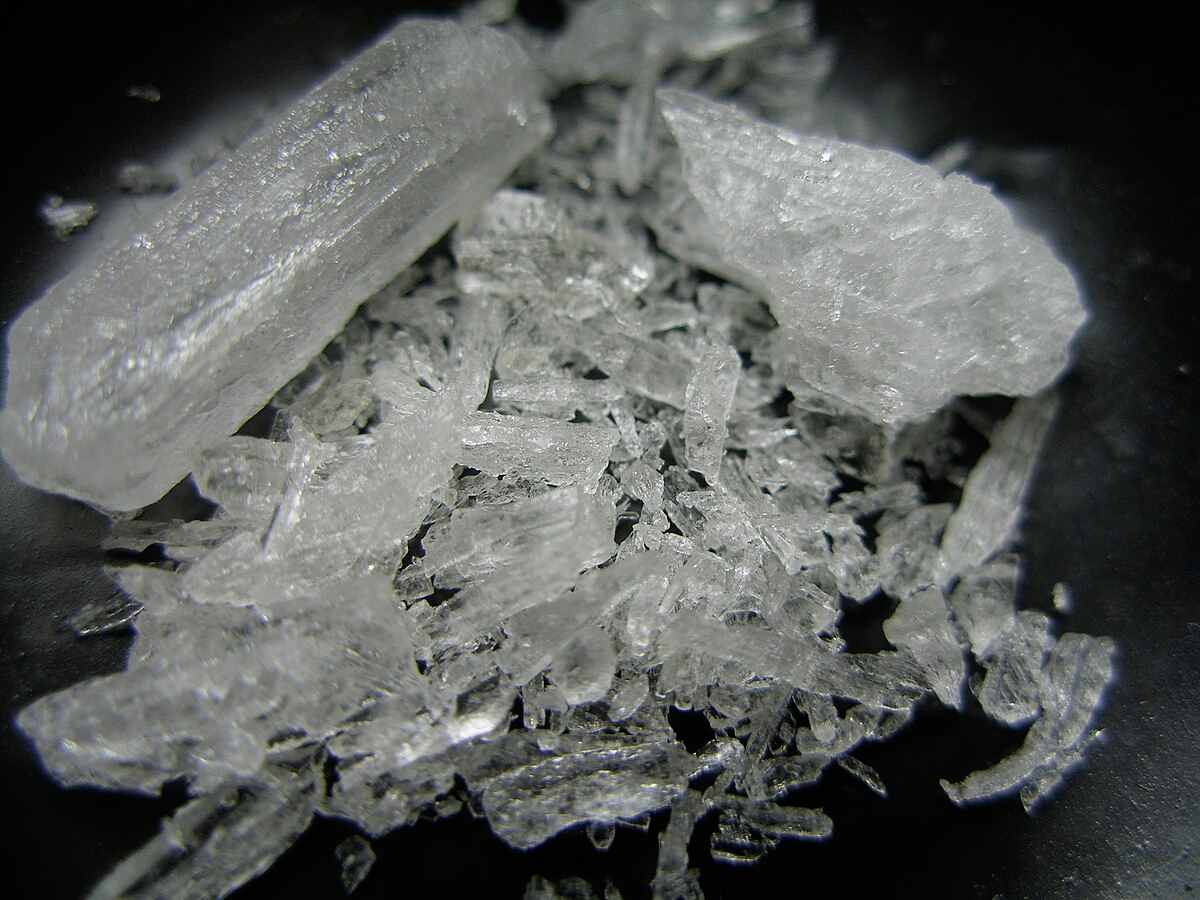
Methamphetamine and crystal meth are the same substance, also known by street names such as ice, tina, or blue glass. A psycho-stimulant in the amphetamine group, methamphetamine has limited medical use, primarily in treating ADHD, but carries a high risk of addiction.
Crystal meth is usually found in powder or crystalline form. It has a bitter taste, strong odour, and is produced through chemical recipes using ingredients such as pseudoephedrine or ephedrine, lithium batteries, and drain cleaners. Production typically takes two days, often in makeshift labs set up in homes or abandoned sites, posing serious risks of explosions and toxic fumes.
Globally, over 24 million people are estimated to use methamphetamine, according to the Foundation for a Drug-Free World. Chronic use can cause severe health problems including “meth mouth” (tooth decay), psychological dependency, and long-term neurological damage.
A growing concern among Delhi’s youth
Officials warn that methamphetamine use is rising among students and young people in the capital. A senior enforcement officer said, “Most of the seizures that we make, more often than not, these are solicited and sold to students, or other young people. These are all sold to people who are looking for a quick and sustainable high. This has, in essence, turned into an intrinsic issue that we are dealing with now owing to how accessible these substances have become.”
The official explained that affordability is a major factor. While cocaine sells for around Rs 10,000 a gram, methamphetamine costs roughly Rs 3,500 a gram, even at sub-par quality. Manufacturing the drug is also cheaper and requires less space and equipment.
He added that many young users choose methamphetamine because its effects are similar to cocaine, while also providing a distinct psychotropic buzz.
Chemsex and public health risks
A recent survey by doctors at the All India Institute of Medical Sciences (AIIMS), Delhi, highlights another alarming trend: the use of methamphetamine during chemsex — sexual activity under the influence of potent drugs.
The study, conducted by the National Drug Dependence Treatment Centre, found methamphetamine, Yaba (a methamphetamine–caffeine mix), and ice (crystalline methamphetamine) to be the most commonly used drugs in such contexts. Other substances included MDMA (ecstasy), poppers, and cocaine.
Dr Siddharth Sarkar, who led the study, said drug use during sexual activity is becoming increasingly common in India, particularly among men who have sex with men. The survey of 136 participants found that 33.8% engaged in chemsex. Alarmingly, nearly half of them reported participating in slamsex — injecting drugs immediately before or during sexual activity. Seven of these participants tested positive for HIV.
Also Read: From Independence to now: the legacy of North and South Blocks
Two-thirds of those engaging in chemsex reported that their partners also used drugs, underlining the broader public health risks of the practice.