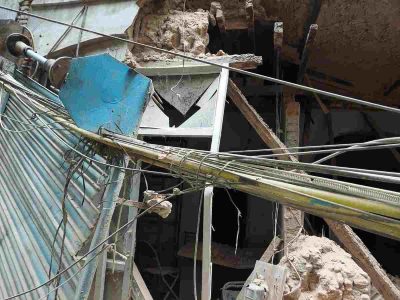
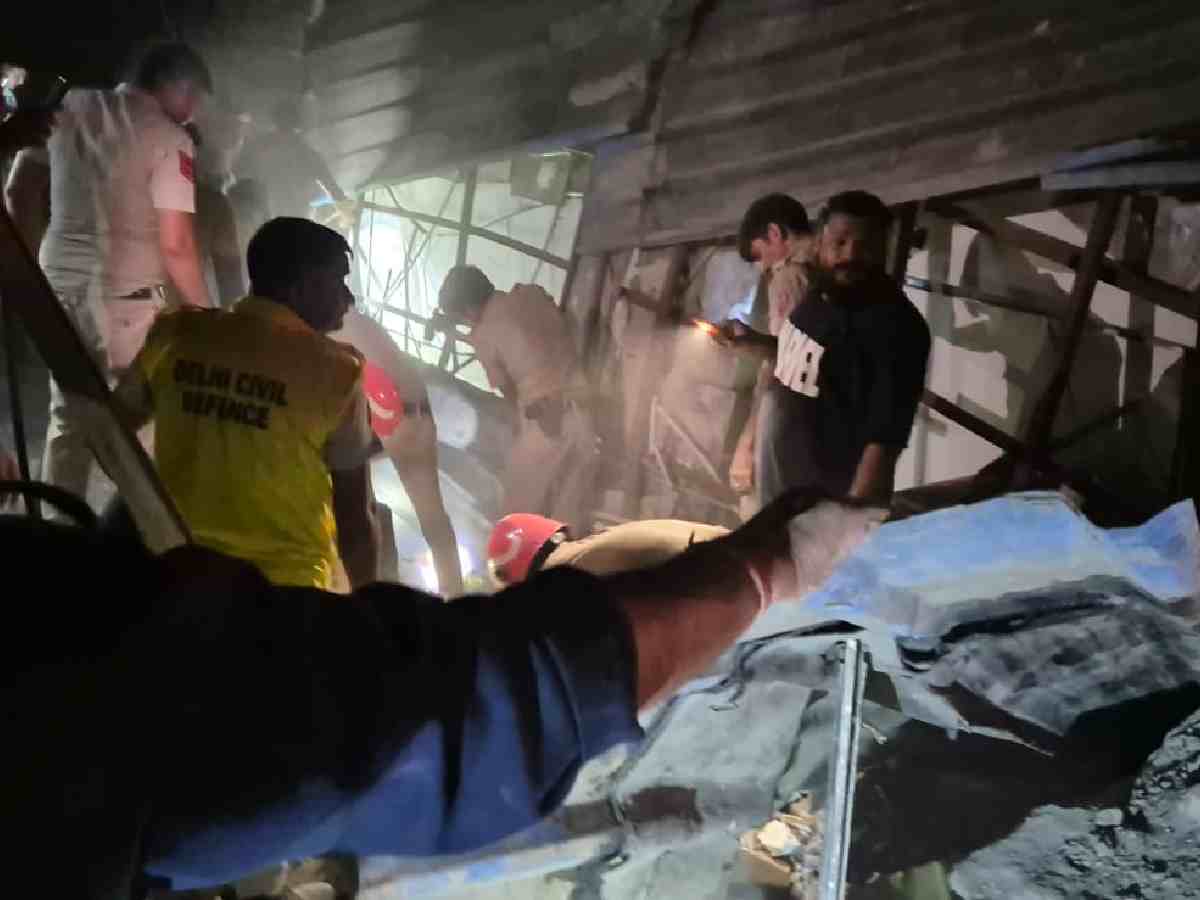
The collapse of a building in Saidulajab on May 30, in which six persons were killed, may not be an isolated incident, say experts, citing recent data. Across Delhi’s unauthorised colonies and urban villages, buildings routinely rise beyond sanctioned limits, often without approved plans, structural audits or adequate foundations, officials say, placing the lives of lakhs of people in severe risk, they add.
Delhi Fire Services (DFS) records show that the department received 76 calls related to house collapses in the first five months of this year – 17 in January, 10 in February, 15 in March, 20 in April and 14 in May. The department recorded 544 such incidents in 2025 and another 464 in 2024. A total of 46 people lost their lives in building collapses between January 2024 and December 2025.
The long-term picture is equally grim. Between 2022 and 2023, 349 collapses resulted in 43 deaths and 315 injuries. The following year, 34 fatal collapses and 213 non-fatal ones claimed 23 lives and left 171 injured.
In August last year, seven people died when a building collapsed in Jaitpur’s Hari Nagar area. A month earlier, six people, including a toddler, were killed when a four-storey residential structure gave way. In April 2025, 11 people, including four children, died in another collapse in North East Delhi’s Mustafabad.
Urban planners say the pattern has remained largely unchanged despite repeated tragedies.
Poor construction materials are a key factor, observes architect Pradeep Sharma.
“Buildings in unauthorised colonies deteriorate faster due to poor materials and lack of regulation. A 20-year-old building in such areas can collapse, unlike those in authorised colonies, where guidelines ensure durability,” he says.
Pushkar Pawar, urban planner and former MCD official, says, “These buildings often violate regulations by using substandard material and ignoring spacing requirements. Some submit plans for three-storey buildings but construct five, overloading foundations designed for less.”
May 30 incident
In Saidulajab, the six-storey structure, where two additional floors were allegedly being constructed atop an existing building, came crashing down beside a dining mess frequented by postgraduate students, including doctors and engineers. Locals said the building housed offices and co-working spaces on its lower floors, while construction activity was underway above.
Civic officials said the structure stood in an unauthorised colony where no new construction should have been permitted in the first place. A civic official noted that there were no approved layout plans or building plans in this area, describing it as an unauthorised colony that has developed on agricultural land.
In the hours after the collapse, the Municipal Corporation of Delhi (MCD) suspended two of its engineers, the Delhi government ordered an inquiry, and Chief Minister Rekha Gupta promised that strict action would be taken against all unauthorised constructions.
Yet a visit to the site showed several similar multi-storey buildings in the area where fresh construction was underway.
Symptom of bigger problem
DFS officials confirmed that most collapses occur in unauthorised colonies due to rapid, unregulated additions of floors. Referring to the Mustafabad incident, one official said, “The land was unsuitable for multi-storey buildings.”
An MCD official, speaking anonymously, admitted, “These incidents will continue due to the prevalence of unauthorised colonies, which ignore building byelaws.”
In June 2020, based on high court directives, the three erstwhile municipal corporations fixed a deadline of six months for obtaining a structural safety certificate for high-risk buildings and older structures that came up before seismic provisions were incorporated into Delhi’s building by-laws. But six years later, compliance remains low.
In 2019, a five-year action plan was made, but it was never implemented. The official noted that there were millions of buildings in Delhi, but the corporation did not even have enough empanelled structural engineers, meaning even high-risk buildings failed to comply with structural safety norms.
The Tejendra Khanna Committee, set up in 2006 to look into various aspects of unauthorised construction and misuse of premises in the city, found that 70 to 80% of structures had violated building norms. Unauthorised colonies and urban villages formed the bulk of these unplanned enclaves.
The 357 lal dora habitations – so named because the British once inscribed them within red lines on maps to distinguish populated villages from agricultural land – continue to face the challenge of planned urbanisation.
In 1957, administrators exempted these spaces from regulation under the Delhi Municipal Act, and six years later, the erstwhile MCD decreed that these areas need not adhere to building regulations. Consequently, Lal Dora areas remain chaotic and underserved by civic utilities.
‘Not concerned’
A senior MCD official says that the scale of illegal construction undertaken without following unified building byelaws is so large that it poses practical problems in ensuring compliance.
The official explained that many times notices are issued, but people do not respond. Taking harsh measures, such as cutting off electricity or water supplies, leads to public outcry. Because the scale of the problem is so large, it ultimately requires a political decision and a citywide policy. The official highlighted that the buildings at risk of collapse represent only a fraction of those that have been served repair notices.
“We have sent almost 500 repair notices to multiple buildings in Delhi. Many of them are based in Old Delhi and we have asked the owners to get their premises repaired but most of them are not concerned about it. Most do not have the money to pay for the repairs, and they keep pleading with us to not break their houses. Other landlords ask us to demolish their properties in the area because they have been put for rent and the tenants refuse to leave while paying rents as low as Rs 50,” he said.
Some argue that the civic authority’s unwillingness to demolish houses has led many to collapse, resulting in casualties.
According to the Delhi Disaster Management Authority (DDMA), buildings in all the districts are effectively under strain owing to the national capital falling under Seismic Zone IV, which makes it susceptible to earthquakes. High-rises, densely-packed residences, unauthorised colonies and old houses run the risk of toppling over any time.
Concerns are raised regarding the condition of the buildings, especially during the monsoon season.
Also Read: 21 killed in fire in south Delhi hotel, several foreigners among those dead
“The cement becomes loose during rainfall and this eventually leads to the buildings collapsing. It is mostly seen in older buildings or properties where subpar material has been used. If it is the latter, it does not matter if the building is a few months old or a couple of years old. It is very unpredictable and can collapse at any time,” an MCD official from the building department says.
According to the DDMA, buildings in North, Central and East Delhi districts are most susceptible to collapse. The districts of North and Central Delhi contain major chunks of Old Delhi, or the Chandni Chowk area. The area contains multiple buildings which have seen the Mughal era, the British period and independent India of today. These buildings, however historic, have not been repaired for the longest time.
Many of the neighbourhoods continue to witness building collapses, highlighting persistent concerns over civic neglect and pending repairs, among other issues.