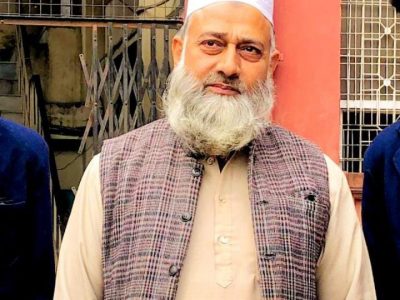
Maqsood Ahmed, a biology teacher at the historic Anglo-Arabic Senior Secondary School at Ajmeri Gate, is more than just an instructor. Media-shy and deeply committed to his students, Ahmed has quietly emerged as a source of support for underprivileged students in Delhi-6, one of the city’s oldest and most densely populated areas. Through hard work, persistence, and a strong sense of social responsibility, he has helped several students from economically weaker backgrounds access higher education opportunities.
Born and raised in Shamli in western Uttar Pradesh, Ahmed joined the Anglo-Arabic School in 1992. The institution itself has a long and layered history. Founded in 1696 as Madrasa Ghaziuddin by a Mughal nobleman, it has evolved over centuries and produced several notable alumni, including Urdu poet and screenwriter Akhtar ul Iman, former Chief Election Commissioner SY Quraishi, and former Delhi University Pro-Vice Chancellor Prof AN Kaul. Despite its legacy, the school continues to largely serve working-class and lower-income families from Old Delhi.
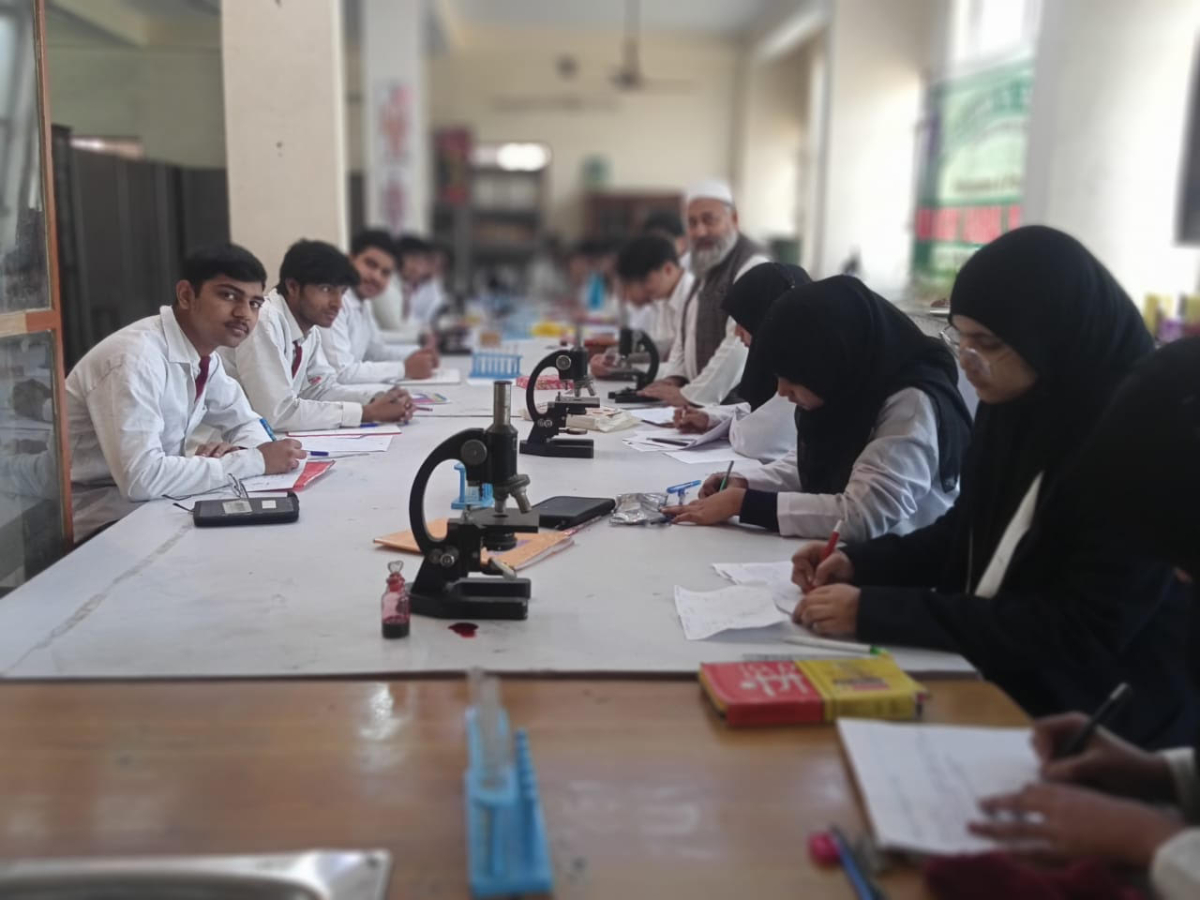
As a biology teacher, Ahmed is known among students for simplifying difficult concepts and encouraging curiosity inside the classroom.
Also Read: When Delhi burns, these trees bloom even brighter
Beyond the classroom
Outside school hours, Ahmed’s work continues in the narrow lanes of Suiwalan in Delhi-6, where he runs a coaching initiative under the Allama Rafiq Trust, which he founded. The institute offers free coaching in biology and mathematics to students preparing for competitive examinations such as NEET, IIT-JEE, Bank PO, and other entrance tests.
“In a city where private coaching can cost tens of thousands of rupees every year, often far beyond the reach of working-class families, Ahmed’s decision to teach deserving students free of cost is remarkable,” says Ashish Verma, a social worker based in the Sita Ram Bazar area.
“Most of the students I teach either study at Anglo-Arabic or come from schools across Old Delhi,” Ahmed says. “Many belong to families that struggle even to continue their children’s schooling.”
Several of these students are first-generation learners. Their parents work as rickshaw pullers, tailors, shopkeepers, or labourers, and often view education as their children’s primary chance at upward mobility.
Ahmed says academic teaching alone is not enough.
“He identifies talented but financially constrained students, mentors them personally, and provides study materials, emotional support, and motivation,” says Rajesh Sharma, a shopkeeper and social worker from the Minto Road area.
“His approach is holistic. He conducts extra sessions and closely tracks students’ progress.”
Breaking cycles
According to Ahmed and local residents, more than 25 students from economically disadvantaged backgrounds have qualified for medical, engineering, and other competitive courses through his guidance over the years.
Residents point to examples of students from modest households in areas near Jama Masjid and Sita Ram Bazar securing admission to medical and engineering colleges.
Ahmed’s daily routine often stretches from school hours into late-night doubt-clearing sessions for students.
“If I am doing something for children from economically weaker sections of society, I must give full credit to my wife and friends, who have always supported me,” he says.
Ahmed says his own struggles while seeking educational guidance shaped his outlook on teaching and mentorship.
“He believes talent is evenly distributed, but opportunity is not,” says a colleague familiar with his work. “By removing financial barriers, he tries to create a more level playing field.”
Institutional support
Ahmed credits much of his work to the support of Professor Kehkashan Daniyal, Secretary of the Delhi Education Society, which manages the Anglo-Arabic School.
“Her encouragement and commitment to inclusive education have been extremely important,” Ahmed says.
The broader ecosystem around Ahmed’s work also includes vocational programmes, library facilities, self-study spaces, skill-development courses, and occasional charitable medical camps organised through the Allama Rafiq Trust.
The trust’s activities are aimed at addressing both educational and social challenges faced by economically weaker communities in Old Delhi.
Dr Zaid Ahmed of Tibbia Ayurvedic and Unani College recalls studying under Ahmed during his school years.
“While studying at Anglo-Arabic School, he taught me biology,” he says. “Later, while preparing for medical entrance examinations, I joined his coaching classes, which helped me immensely. Maqsood Ahmed sir represents an older and nobler tradition of teaching.”
Continuing challenges
Despite the success stories, challenges remain. Residents point to overcrowding, limited infrastructure, financial stress, and social pressures — particularly around girls’ education — as continuing obstacles for many families in Old Delhi.
Sustaining free coaching programmes and arranging study material also require constant support and resources.
Even so, those familiar with Ahmed’s work say his efforts demonstrate how individual teachers can influence entire communities over time.
In the crowded lanes of Old Delhi, amid traffic, markets, and historic neighbourhoods, Ahmed continues to teach quietly, helping students prepare for examinations while attempting to expand educational opportunities for families that often have limited access to them.
Read More: Delhi’s sweetest secret: 300 mango trees in Shalimar Bagh