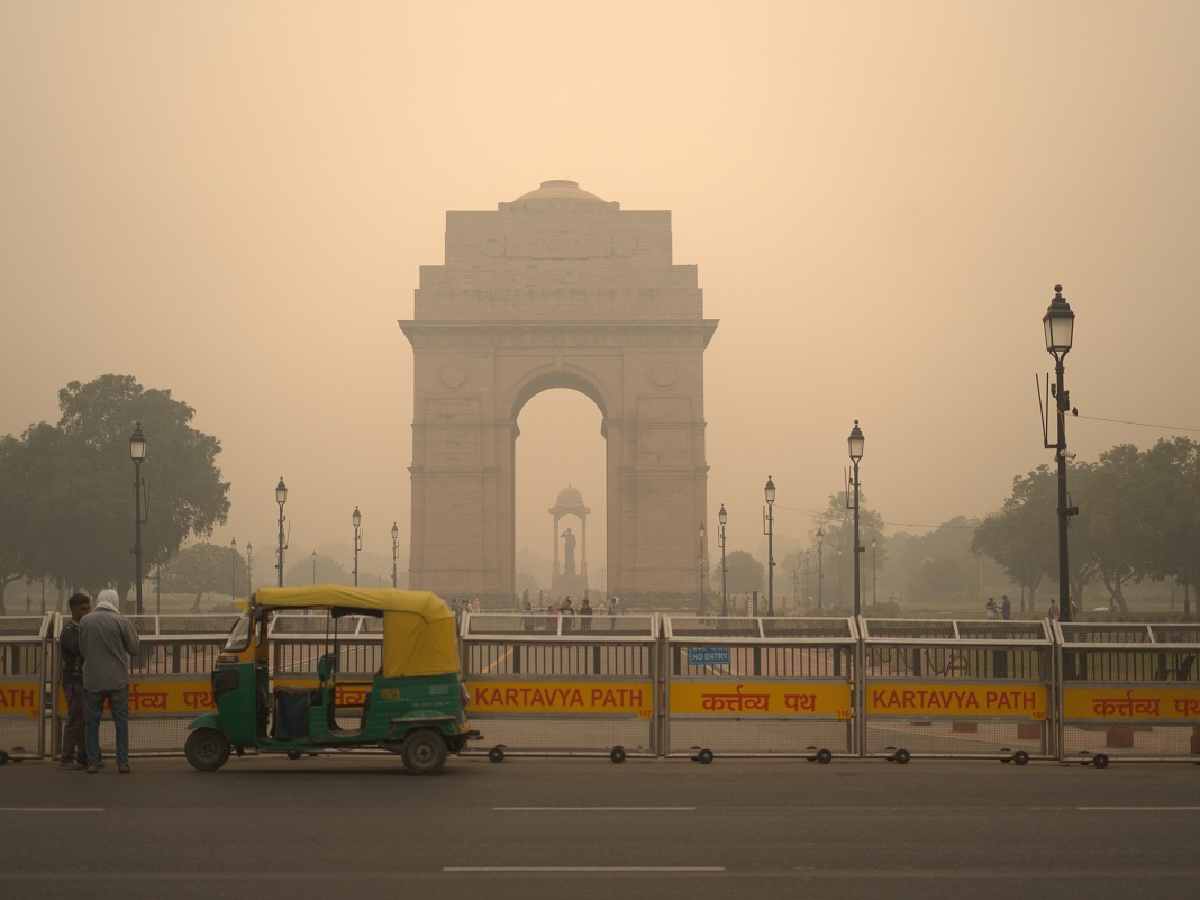
Delhi has long carried the ignominious label of being one of the most polluted capitals in the world. Its residents wake up to toxic smog, children are raised on inhalers, and monuments that once embodied grandeur now stand corroded under layers of soot. While policy and enforcement failures often take centre stage in debates on Delhi’s air crisis, experts stress that the roots of the problem lie equally in flawed infrastructure planning. Unless Delhi’s roads, waste systems, industrial zoning, and urban spaces are reimagined, the fight for clean air will remain a losing battle.
The urgency was underscored earlier this month when Delhi slipped 25 places to rank 32nd among 48 cities with populations over 10 lakh in the Centre’s Swachh Vayu Sarvekshan 2025 rankings. Just a year ago, the capital had shared the seventh spot with Ahmedabad, reflecting significant deterioration in official clean-air efforts. A central panel has now directed authorities in Delhi and neighbouring Noida to take immediate corrective measures after finding both regions lagging in pollution-control fund utilisation.
Red Fort under siege
The worsening air quality is not only endangering human health but also eroding Delhi’s cultural heritage. A recent Indo-Italian study has revealed that the iconic Red Fort, a 17th-century monument built by Emperor Shah Jahan, is suffering accelerating damage due to toxic air.
Researchers found that black crusts of pollutants are steadily forming on the sandstone walls, eating away at the structure’s integrity and aesthetic beauty. The study, Characterisation of red sandstone and black crust to analyse air pollution impacts on a cultural heritage building: Red Fort, Delhi, India, is the first comprehensive investigation into how urban air pollution is degrading the fort.
The findings highlight how Delhi’s environmental crisis is also a cultural one. The Red Fort, which has stood as a proud symbol of India’s history for centuries, is now becoming a victim of modern neglect. If pollution can bring down the walls of Shah Jahan’s fort, it is also a chilling reminder of what it is doing to the lungs of millions of Delhi’s residents.
How infrastructure fuels pollution
Experts argue that Delhi’s chronic pollution cannot be understood without examining its infrastructure. Poor road design that leads to endless traffic jams, weak enforcement of construction dust regulations, mismanaged landfills, and shrinking green spaces have all combined to create a city gasping for air.
“Delhi’s pollution is not just an environmental issue; it is the outcome of decades of weak infrastructural planning,” explained Pushkar Pawar, Town Planner with the Municipal Corporation of Delhi (MCD). He believes that without a fundamental rethink of how the capital builds and maintains its urban systems, any hope of clean air will remain elusive.
Choked roads, choked lungs
Among the most visible sources of pollution in Delhi are its traffic-clogged roads. Vehicular emissions account for a significant share of PM2.5 levels, particularly in winter. Congested intersections, poor signal management, and chaotic road design lead to constant idling and stop-start driving, which not only wastes fuel but also spews noxious fumes into the atmosphere.
“There is no city in the world that can fight vehicular pollution without robust public transport,” Pawar said. He noted that while Delhi’s metro system is world-class, the network is undermined by weak last-mile connectivity. “Buses are inadequate, feeder services are patchy, and pedestrian facilities are virtually non-existent. That is why people continue to rely on private cars and two-wheelers, which makes transport one of the largest contributors to pollution.”
Also Read: Over 17,000 fire calls made to DFS, Delhi’s 24 locations sit on timebombs
Currently, Delhi operates just over 13,000 buses, far short of the 20,000 needed for its population. At the same time, nearly 1,000 new vehicles are added to the city’s roads every day. Without serious investment in buses, cycling infrastructure, and pedestrian-friendly pathways, vehicular emissions will continue to climb.
Construction dust and outdated codes
Another major contributor to Delhi’s foul air is the dust rising from unregulated construction activities. Large housing projects, flyovers, and roadworks often operate without basic dust-control measures such as barricading or sprinkling water. Trucks ferrying construction material frequently leave their loads uncovered, turning city streets into dust bowls.
“Outdated building codes are a huge problem,” Pawar observed. “We need stricter dust-control rules, mandatory site barricading, prefabricated construction methods, and strong penalties for non-compliance.” Unless modernised regulations are enforced consistently, every new construction site will simply add to the particulate matter in the air.
Waste mismanagement and toxic landfills
Delhi generates more than 11,000 tonnes of waste daily, and much of it ends up in overflowing landfills like Ghazipur, Bhalswa, and Okhla. These sites are infamous not just for their towering size but also for the frequent fires that engulf them, releasing toxic gases such as methane, carbon monoxide, and dioxins.
“These landfills are not just waste sites; they are gas chambers,” Pawar warned grimly. “Without modern waste-to-energy plants and scientific landfill design, these sites will continue to poison Delhi’s air.” Poor segregation practices and insufficient infrastructure for waste processing have turned these landfills into permanent pollution hotspots.
Industry too close for comfort
The city’s weak industrial zoning is another structural flaw. Polluting factories are often located near densely populated neighbourhoods, exposing lakhs of residents to hazardous emissions every day. Despite repeated relocation drives and court orders, enforcement remains lax.
“Mixed land use in sensitive areas is a recipe for disaster,” Pawar said. “We need strict zoning laws and clear buffers between industries and homes. Otherwise, residents will continue to live in the shadow of pollution.”
A city starved of green
Delhi’s rapid urban expansion has come at the cost of its green cover. Trees, which act as natural air filters, are being cut down for road widening, new housing, and commercial projects. The shortage of greenery has also intensified the urban heat island effect, leading to the faster formation of secondary pollutants such as ozone.
“Green cover is not optional beautification—it is essential infrastructure,” Pawar insisted. “Without trees and urban forests, Delhi loses its natural ability to absorb particulate matter and filter the air.” Expanding green belts and creating urban forests could provide a critical line of defence, but such projects remain low on the priority list.
The cost of policy paralysis
Delhi’s struggle with pollution is worsened by bureaucratic inefficiency. Although significant funds have been allocated for clean-air projects, much of it lies unspent. Initiatives such as smog towers, waste-to-energy plants, and green mobility schemes have either stalled or failed to deliver results.
“The money exists, but the pipeline is clogged,” Pawar remarked. “Unless accountability improves, these funds will remain underutilised, and the people of Delhi will keep paying the price.”
The promise of infrastructure revamp
Despite the grim picture, experts believe that targeted infrastructural reforms could make a tangible difference in the short term. Redesigning roads to reduce congestion, expanding the bus fleet to reduce reliance on private cars, enforcing strict dust-control measures at construction sites, and upgrading landfill management could all provide quick wins.
Revamping infrastructure would not only improve air quality but also bring long-term benefits such as reduced health costs, better productivity, and enhanced liveability. For a city where respiratory diseases spike each winter, such reforms could literally save lives.
The long road ahead
For long-term sustainability, Delhi will need to think beyond piecemeal fixes. Developing satellite towns with strong transit links could reduce the daily inflow of commuters into the capital. Eco-sensitive zoning could keep polluting industries away from residential clusters. Smart city practices, such as intelligent traffic management systems, renewable energy integration, and green building norms, must become the new normal.
Expanding urban forests, restoring water bodies, and ensuring compact, walkable neighbourhoods are equally critical.
“The future of Delhi depends on whether policymakers put environmental sustainability at the heart of planning,” Pawar warned. “Every new project, whether a flyover, metro line, or housing colony, must be evaluated for its impact on air quality. Clean air is not a luxury; it is a basic right.”
A city at a crossroads
Delhi’s air pollution crisis is the cumulative result of decades of neglect, poor planning, and misplaced priorities. The city now finds itself at a crossroads. On one hand, it can continue with token measures that bring little change. On the other, it can embrace bold reforms that reimagine its infrastructure for sustainability.
The slipping of Delhi in the national air rankings and the darkened walls of the Red Fort are stark reminders of what is at stake. If nothing changes, the city will continue to choke, its monuments will continue to corrode, and its children will continue to suffer. But if Delhi acts decisively, the Capital could yet reclaim its skies, its heritage, and its health.