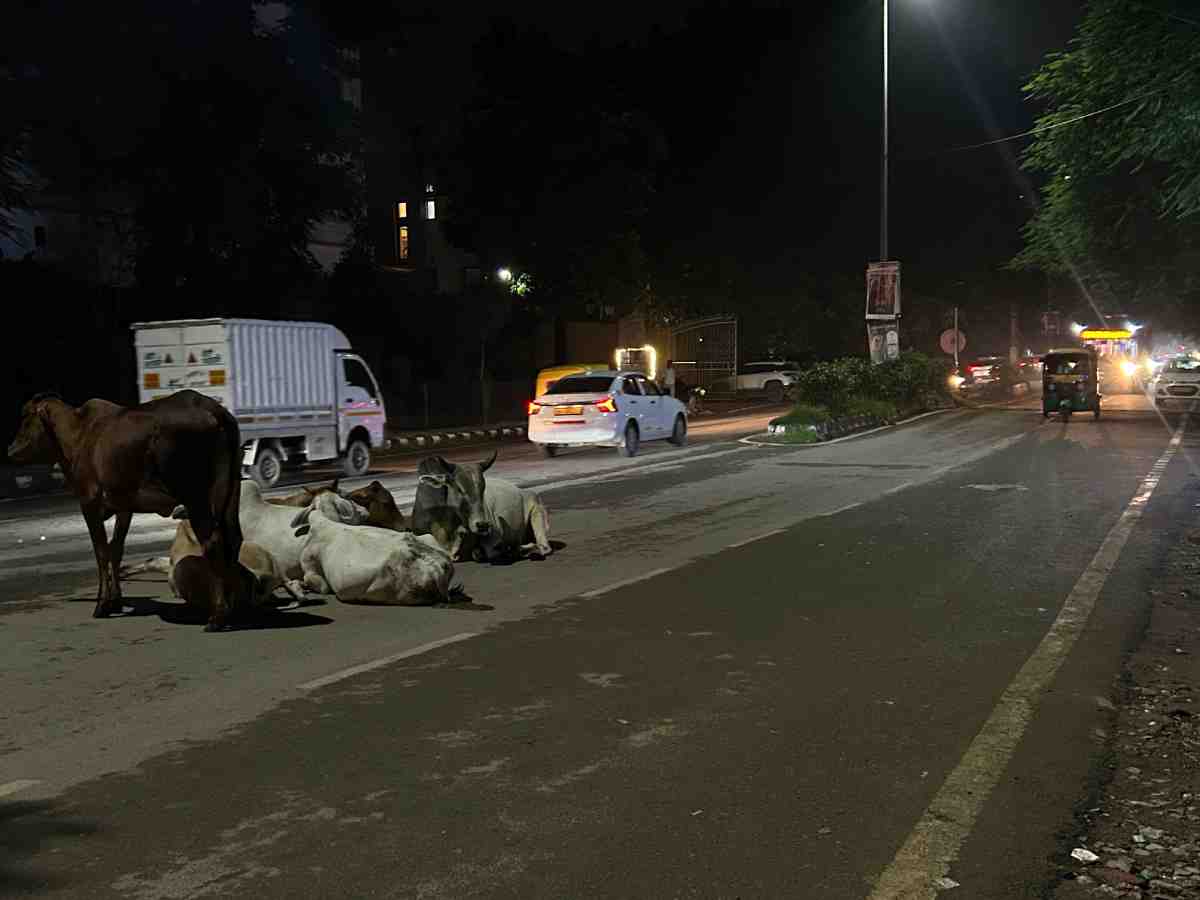
Delhi’s stray cattle problem often begins with another civic failure: uncollected garbage. Open dumps and discarded food draw cattle from open areas into traffic lanes and residential colonies in search of food.
For residents, this means blocked roads, frequent accidents and cattle wandering through public spaces. The Municipal Corporation of Delhi’s (MCD) standard response is to impound the animals and move them to a gaushala. However, the shelters receiving them face a different set of problems, including inadequate fodder, limited resources and delays in government funding.
The issue reached the Delhi Assembly during its Monsoon Session this month, when several MLAs raised concerns under Rule 280 about garbage-prone areas and cattle roaming the city’s roads.
BJP MLA Harish Khurana alleged that illegal dairy owners milk cows before abandoning them on the roads. He called for strict action against such owners and the formation of a special committee to examine the root causes of the problem.
Other legislators accused MCD staff of showing apathy towards cattle involved in road accidents and urged the civic body to take immediate corrective measures.
Assembly Speaker Vijender Gupta referred both matters to the Assembly’s Special Committee on the MCD. He directed the civic body to submit detailed action taken reports and asked the MCD Commissioner to appear before the committee to explain the proposed corrective measures.
Calling the stray cattle situation “alarming”, Gupta sought details about Delhi’s gaushalas, their capacity, arrangements for rescued cattle, the impounding process and action against those abandoning cattle on public roads, the report said.
Plans to overhaul shelter system
The Delhi Government has separately indicated that the city’s cattle shelter system needs an overhaul.
Chief Minister Rekha Gupta chaired a high-level meeting with officials from the MCD and the Animal Husbandry Department and announced plans for a “model gaushala”. The project has been allocated Rs 40 crore to improve veterinary care and dairy management infrastructure.
The MCD has also identified three parcels of land in Kirari, Ghogha and Bhalswa to help address the stray cattle problem. Processing plants are already under construction on two of the plots, although officials have said that no final plan has yet been prepared.
Meanwhile, existing gaushalas continue to receive cattle rescued from the streets, many of them in poor health.
Cattle feeding on waste
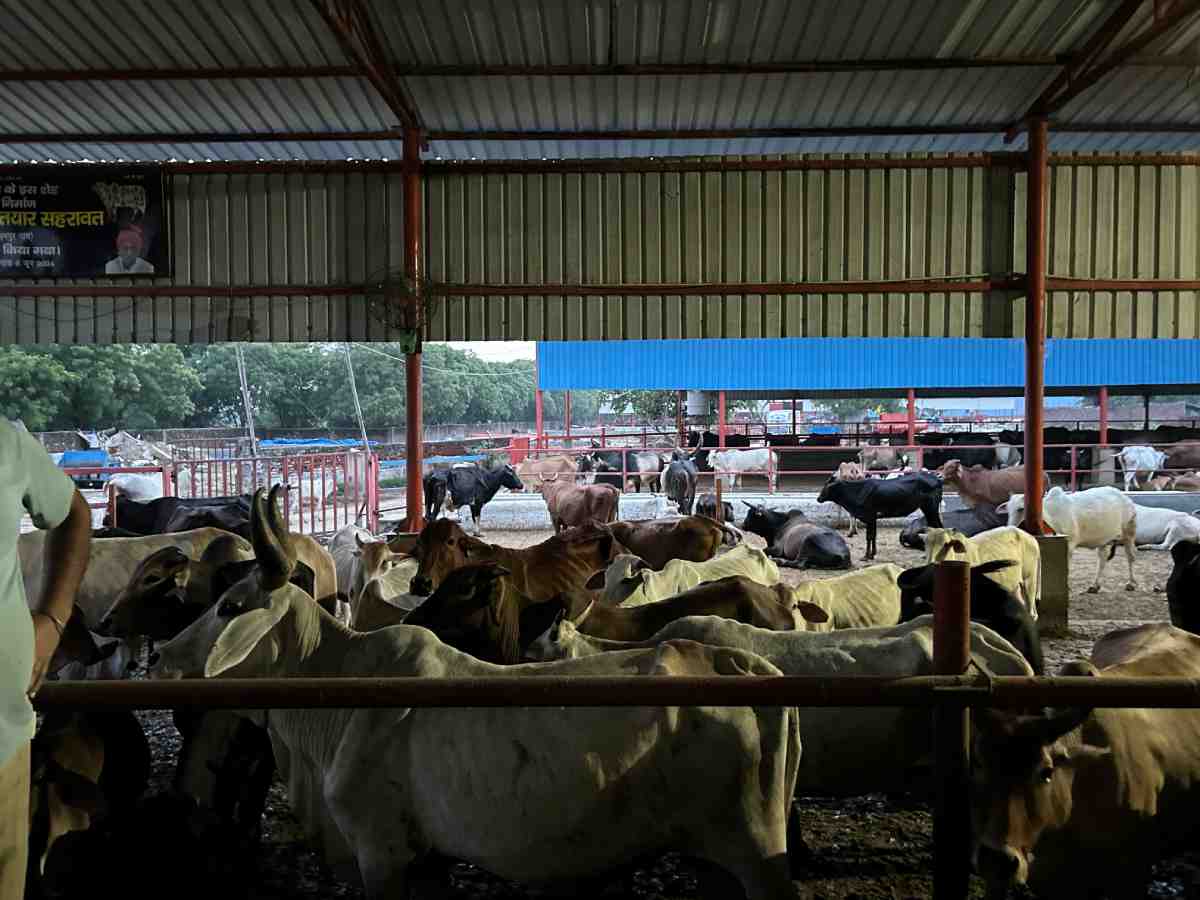
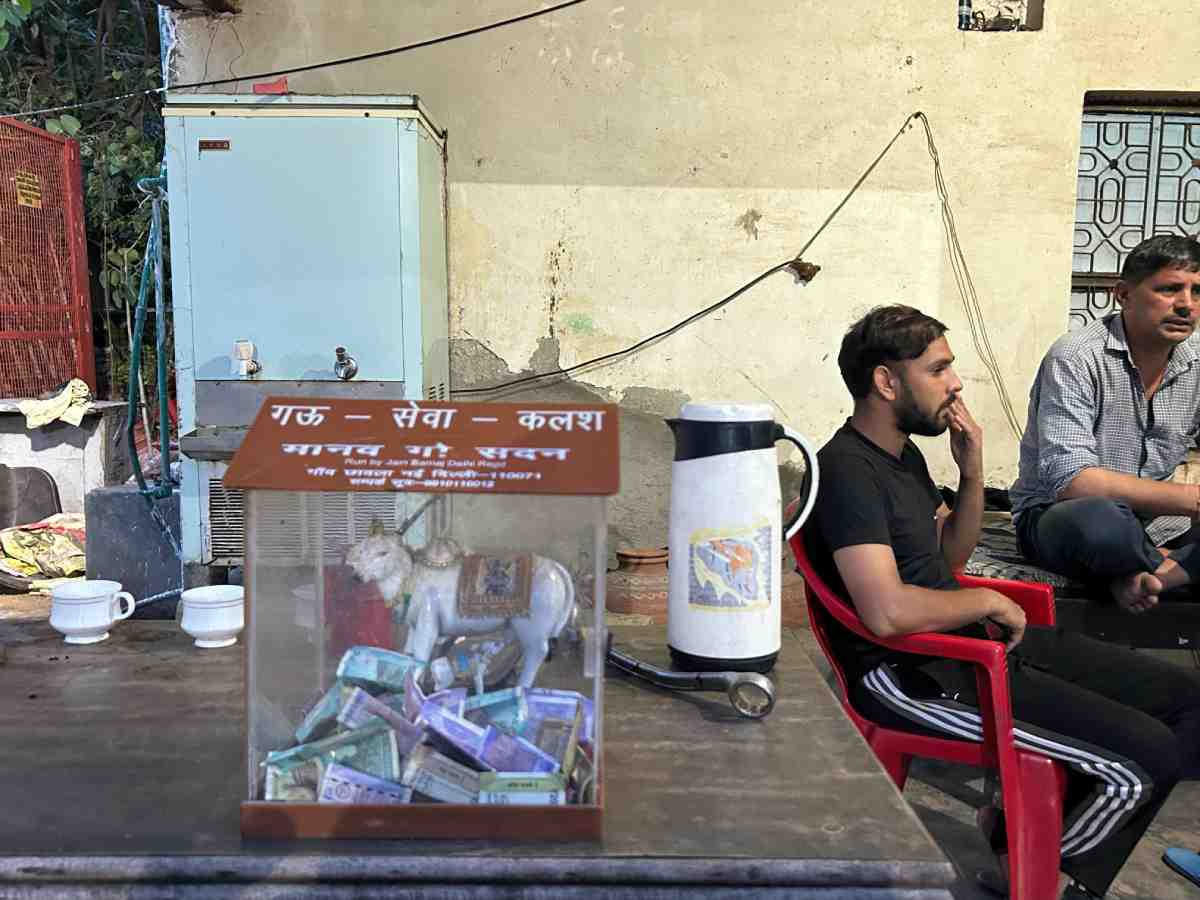
At Manav Gosadan Gaushala in Rewla Khanpur, workers said a large number of cattle continue to arrive, particularly those rescued from the roads.
Gaushala manager Dhananjay Singh said cattle that have fed on mixed waste frequently arrive with serious digestive problems, with plastic posing the greatest threat.
“Once a cow has eaten plastic, it cannot eat grass properly. The intestine gets filled with plastic, and the animal needs proper treatment,” Singh said.
Some animals, he added, are barely alive by the time they reach the shelter. “Sometimes, when they enter the gaushala, they are already in a very bad condition. Some are almost dead on the way.”
Manav Gosadan is one of four government-recognised gaushalas in Delhi. The MCD and the Delhi Government fund the shelters, which are run by individual NGOs.
An investigation by Newslaundry found that the four shelters had a combined capacity of 19,838 animals, although it also found a mismatch between the stated capacity and the actual number of cattle at some facilities.
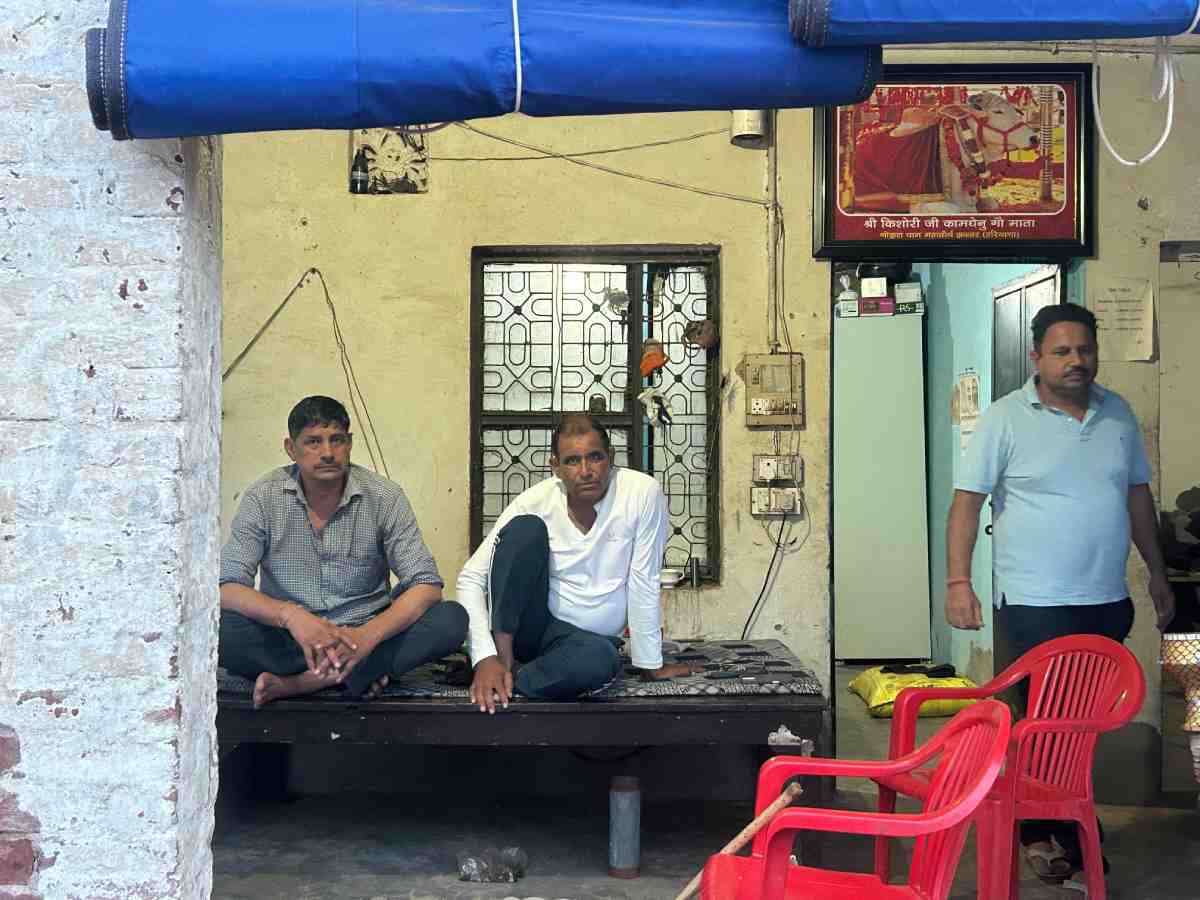
Raj Kapoor, 52, a supervisor at Manav Gosadan, said the facility receives around 500–550 cows every month, depending on the number of stray cattle picked up from the roads. The shelter is operating within its capacity, he said, but funding remains one of its main concerns.
According to Kapoor, the land on which the facility operates is held on a 99-year lease.
“The Delhi Government and MCD give Rs 40 per day per cow, including medicine and labour. Nothing extra is given for fodder,” Kapoor said.
He said the funding shortfall directly affects what the animals are fed. “There is no fund. Bhusa is also not available here,” he said.
Only a small number of cows at the shelter produce milk, and yields remain low. Some produce around 10–12 litres, much of which is fed to the calves instead of being sold, workers said.
The cattle at Manav Gosadan are largely strays that survived by eating waste on the streets. Workers said caring for them is considerably different from looking after healthy dairy cattle. Since most animals arriving at the shelter are not healthy enough to produce milk, the gaushala cannot rely on milk sales to offset its operating costs, they added.
Funding delayed for months
Workers said delays in government payments pose another challenge.
Assistant supervisor Rajesh Kumar, 49, said the gaushala currently employs around 70 workers. When government funds are delayed, the shelter sometimes has to obtain fodder on credit from its bhusa supplier, with the outstanding amount accumulating over several months.
“Sometimes, the money comes after three or four months,” Kumar said, adding that the pending amount is cleared once the funds arrive.
Singh said the facility must continue feeding and caring for the cattle even when the money intended for their upkeep has not been disbursed. The gaushala consequently depends on informal credit arrangements with suppliers to cover the period between the sanction and disbursement of funds.
Kumar also pointed to what he described as a disparity in funding. According to him, Rs 120 is provided for dog management, while cows receive Rs 40.
One truck covers an entire zone
The MCD’s role begins with impounding cattle found on the roads.
At the civic body’s South Zone office in Green Park, Veterinary Officer Dr Prem Lata Singh said the department impounds cattle and sends them to different gaushalas.
Complaints are attended to as quickly as possible, she said, although the response can be delayed because of the limited availability of trucks. She added that MCD headquarters had not issued any direction to release a report on the number of cattle impounded or handed over to gaushalas.
The department’s limited transport infrastructure restricts the number of animals that can be moved at a time. Dr Singh said the South Zone has two trucks for transporting cattle, but only one is currently operational.
The working truck can normally carry seven or eight cattle. If the animals are larger, it can transport around five. The truck can carry only two heavy bulls at a time.
As a result, the number of cattle transported each month varies. Dr Singh said the department can move around 100 or more cattle a month, depending on the number requiring removal.
With only one operational truck serving the entire South Zone, the bottleneck begins before the cattle reach a shelter. The limited transport capacity determines how quickly the MCD can remove animals from the roads, even as the gaushalasreceiving them contend with inadequate resources and delayed funds.