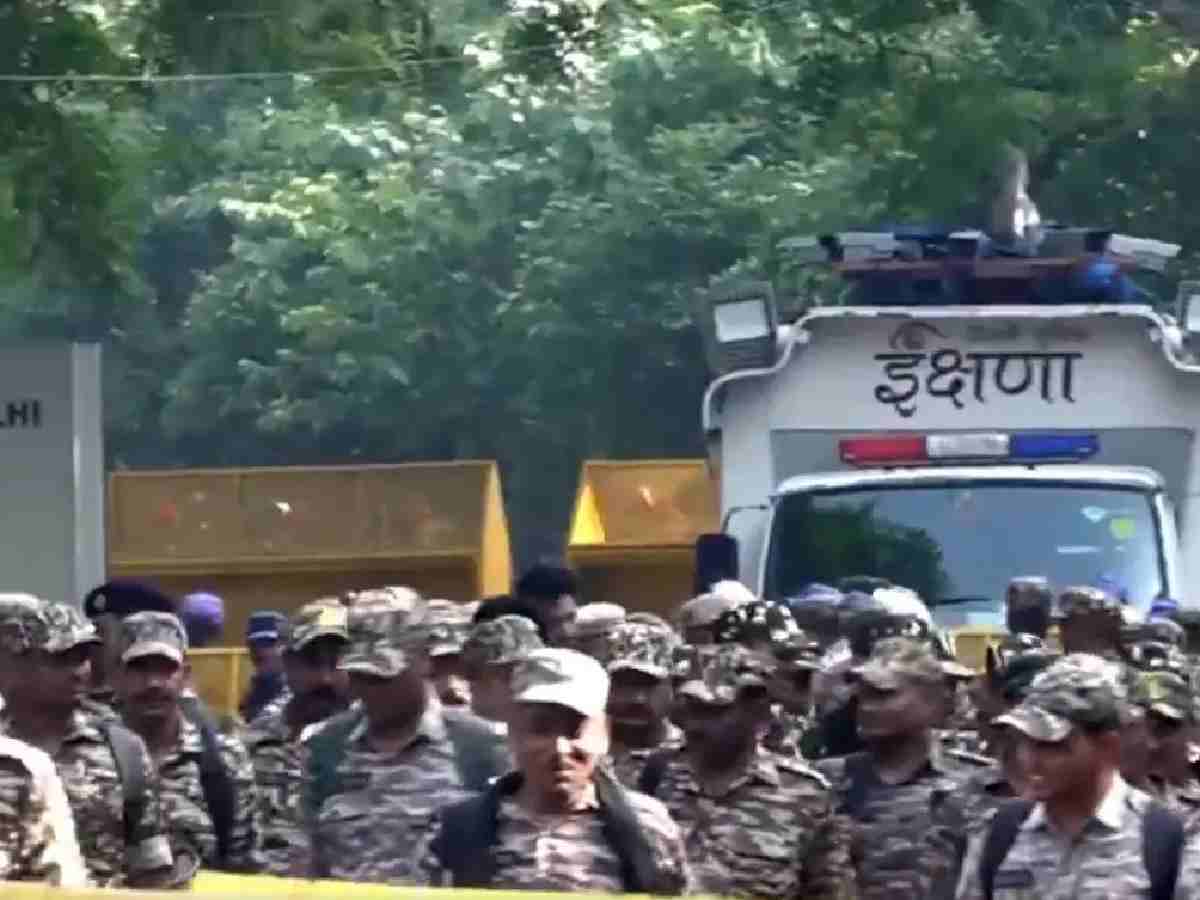
Fortress Delhi: Dipke, Rathee among 500 protesters detained; ‘worse than Emergency’ says Kejriwal
DL-LD CJP PROTEST
02:57 PM, 10 Oct 2026 1008 Words
(Eds: Combines related stories)
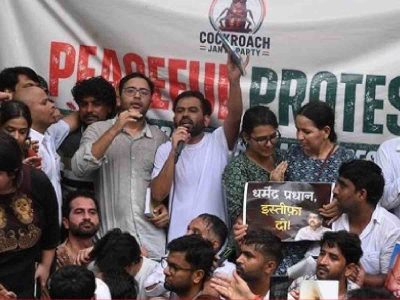
New Delhi, Oct 10 (PTI) The national capital was turned into a fortress on Saturday as police launched a sweeping crackdown, detaining CJP leader Abhijeet Dipke, YouTuber Dhruv Rathee and nearly 500 protesters, foiling their bid to reach Jantar Mantar, while the Opposition denounced the situation as “worse than the Emergency.”
Dipke and two other CJP leaders, Saurav Das and Ashutosh Ranka, were detained by Delhi Police from inside the aircraft as soon as their flight from Mumbai landed in the national capital. The CJP leaders had arrived here to lead the protest against Chief Election Commissioner Gyanesh Kumar.
In a video shared by the CJP, Dipke could be heard telling police officers who entered the aircraft, “We are here to be arrested, come and arrest us.”
Before the detention, police personnel told the CJP leaders that they did not have permission to hold their protest at Jantar Mantar.
Dipke said CJP leaders were being detained as if they were criminals. He said that even former prime minister Indira Gandhi did not do this, adding that the current situation amounted to a “dictatorship”.
Former chief minister of Kerala Pinrayi Vijayan, former Tripura chief minister Manik Sarkar and CPM MP John Brittas were also detained by police.
Rathee was detained from his residence in Gurugram’s Sector 56 on Saturday ahead of the CJP’s proposed protest at Jantar Mantar. Rathee, who lives abroad, had come to join the demonstration against the CEC.
Around 1 pm, scores of protesters hurled stones at security personnel near the Akashwani Bhawan on Imtiaz Ali Marg after jumping barricades, injuring two police personnel. The protesters were quickly detained by security personnel.
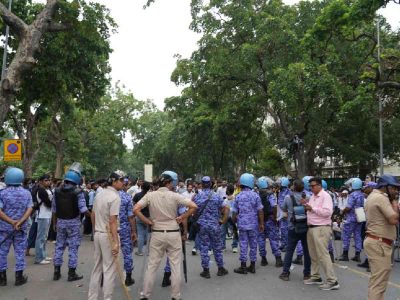
Waves of barricades lined the streets ahead of the CJP protest, with the deployment of over 30,000 police and paramilitary personnel, the closure of 45 metro stations and intensive checks at the city’s border points, railway stations, bus terminals, hotels and other sensitive locations.
In a pre-recorded video message released soon after his detention, CJP leader Dipke said the organisation’s in-charge, Ajinkya Shinde, would lead its protest at Jantar Mantar. The CJP asserted that the protest would continue nationwide, with or without its leaders.
The massive security arrangements were put in place after Delhi Police denied permission for the demonstration against the CEC, citing inadequate notice and concerns over compliance with rules during an earlier protest.
The city was dotted with police pickets, with intensive checking of vehicles. A large number of police personnel also checked the identity cards of people moving around.
The partial lockdown-like situation was marked by the closure of 45 metro stations, traffic diversions and heavy barricading along 30 road stretches in the areas around Jantar Mantar. Delhi’s borders were also tightly secured, with heavy police deployment. Police personnel also used steel spikes on some roads to prevent forced entry without inspection of vehicles.
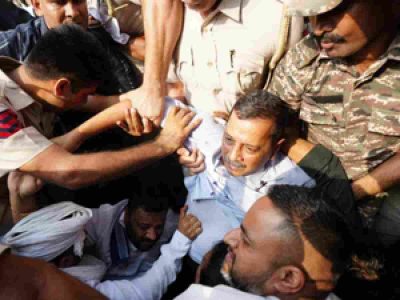
A large number of police personnel detained small groups of protesters from Jantar Mantar and nearby areas, including Connaught Place and Minto Bridge. Some lawyers trying to march towards Jantar Mantar were also detained.
AISA president Neha Bora marched towards Dilli Haat after several protesters were detained in and around Jantar Mantar.
Calling on people to join the gathering, Bora said in a post on X, “Delhi Haat becomes Jantar Mantar today! see you there!”
Bora along with Dipankar Bhattacharya, Prashant Bhushan, and Yogendra Yadav was subsequently detained near INA market.
Police officers said that more than 500 protesters were arrested by noon. Regular announcements were being made by police at Jantar Mantar, instructing people and mediapersons not to gather in one place.
The police also picked up a few protesters who managed to reach Jantar Mantar.
Several journalists, meanwhile, claimed that they were detained. Reporters alleged that they were detained despite displaying their press identity cards, and that their official phones were seized by police personnel before they were taken to detention buses along with other protesters.
Visuals circulating showed journalists displaying their press identity cards from inside the buses.
Top leaders of the Aam Aadmi Party (AAP), including Arvind Kejriwal, who openly supported the CJP, also failed to reach Jantar Mantar.
Kejriwal, who had earlier announced that he would join the protest along with his family members, alleged that the security clampdown in central Delhi to prevent the protest and detain CJP leaders was “worse than the Emergency”.
The AAP alleged that Delhi Police had turned Kejriwal’s residence into a fortress ahead of the CJP’s protest at Jantar Mantar.
BJP president Nitin Nabin accused Congress leader Rahul Gandhi, Kejriwal and the CJP of attempting to destabilise the country with the backing of foreign forces.
He asserted that the government would deal sternly with their “ill intentions”, while party workers would foil their design on the ground.
The Congress, which has demanded the resignation of the CEC, alleging vote theft, claimed that the “PM-HM duo is extremely nervous and rattled” by a peaceful protest of youth, and said the current regime has “officially waged war against its own people”.
Security was tight in Central Delhi with more than 120 companies of Central Armed Police Forces assisting Delhi Police in managing the situation.
Personnel were deployed at strategic locations, while mock drills were conducted at several places to assess preparedness and response mechanisms.
Authorities also monitored social media platforms for attempts to mobilise people for the protest. More than 200 content creators were reportedly under scrutiny as police examined online posts and messages linked to the proposed gathering.
The CJP has called the proposed demonstration against the CEC over allegations of voter-list manipulation during the Special Intensive Revision (SIR) of electoral rolls and changes relating to Form 6, used for voter registration