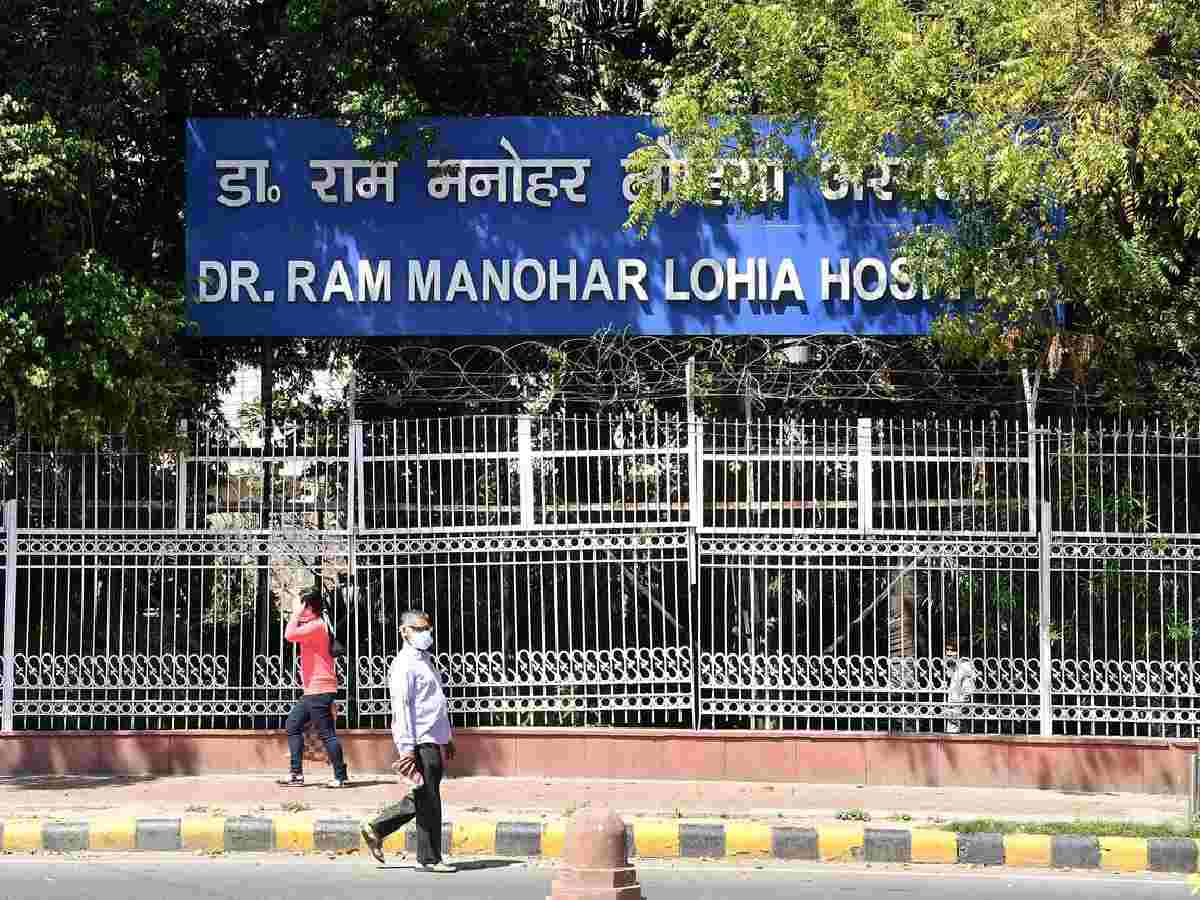
At Dr Ram Manohar Lohia (RML) Hospital, one of the country’s premier central government-run institutions, patients and their families are being pushed into an unexpected and distressing position: arranging even the most basic medical supplies for surgeries. From gloves and gowns to drapes, disinfectants, and life-saving drugs, essentials that should be readily available in the hospital’s operation theatres have run alarmingly short.
For families already reeling under the stress of medical emergencies, the demand to purchase supplies from outside shops has translated into crushing financial strain. Instead of the promised “free treatment” at a government facility, many say they are now burdened with expenses that run into thousands — often making critical procedures unaffordable.
A hip surgery that became a financial ordeal
Ashwini Kumar, a 62-year-old resident, learned this the hard way. After slipping in his bathroom and fracturing his hip, he was brought to RML Hospital in the hope of receiving timely surgery. Instead, his attendants were told that they would need to arrange surgical scissors, gloves, drapes, and gowns on their own. The total bill, they claim, was around Rs 35,000.
“When we asked why such a large sum was needed, doctors made it clear that without these items, they would not be able to operate,” one of Kumar’s family members recalled. To their shock, hospital staff even suggested transferring the patient to Safdarjung Hospital, which reportedly had the necessary supplies. “It felt as if we were being abandoned,” the attendant said.
In the end, Kumar’s family had to take him to Safdarjung Hospital as they could not afford to pay such a huge amount.
Shortages across operation theatres
What Kumar’s family faced is not an isolated instance. Multiple insiders at RML confirmed that the crisis extends far beyond a single department. Orthopaedics, trauma care, and even general surgery theatres are all struggling with severe shortages.
Critical supplies such as surgical gloves, disposable gowns, IV fluids, and oxygen masks are unavailable in adequate numbers. Equally concerning is the lack of essential drugs like heparin and succinylcholine, both indispensable during life-saving interventions.
Doctors further report that even basic consumables — bandages, cotton rolls, surgical hand wash, hydrogen peroxide, and sodium hypochlorite — have disappeared from hospital shelves. “These are the absolute minimum requirements for any surgical unit,” one doctor said, expressing frustration at the prolonged shortage.
A child’s surgery delayed by costs
The crisis has had particularly harsh consequences for children. In one case, a 13-year-old Class VI student from Ganesh Nagar fractured his right forearm after falling in school. Doctors at RML advised urgent corrective surgery to prevent permanent deformity.
But just before the operation, his father — a roadside vendor earning barely enough for daily survival — was handed a list of supplies to purchase. The items, including surgical gloves and essential medicines, cost Rs 4,300. “We always thought government hospitals were supposed to be free,” the father said, visibly shaken. “But instead, we were told nothing would proceed unless we bought everything ourselves.”
According to surgeons, the boy’s fracture had healed incorrectly. Without timely intervention, he risked chronic pain, reduced strength, and a lasting disability. Yet the procedure went ahead only after his family somehow scraped together the money for gloves, gowns, and medicines.
Hidden costs multiply
The family’s ordeal did not end there. They were later told to buy a new implant, priced at Rs 12,600, because such devices were not available at the hospital. “I travelled all the way from Ballia believing that treatment in a central government hospital would be free. Instead, I ended up spending over Rs 17,000,” the father said, clutching receipts in frustration.
Also Read: At 7 Jantar Mantar, echoes of India’s freedom and forgotten glory
His story mirrors that of many others. A 33-year-old security guard battling complications from a failed femur implant also had to wait for weeks, visiting the outpatient department multiple times, only to be told that surgery could not proceed until supplies were arranged privately.
Doctors speak of daily struggles
Hospital staff admit they are struggling too. On average, four to five trauma surgeries are performed daily in RML’s operation theatres. With store shelves empty for over a month, doctors are left dependent on patients’ families to fill the gaps. “We want to help our patients, but without gloves, medicines, or disinfectants, our hands are tied,” one surgeon explained.
This shortage not only disrupts routine surgical work but also increases risks for patients. Delays in emergency procedures can mean the difference between recovery and long-term disability — or, in the worst cases, survival and death.
Procurement delays cited as reason
Administrators at RML acknowledge the shortages but blame the hospital’s slow procurement system. According to one official, immediate requirements are being met through short-term local purchases, while larger consignments meant for buffer stock have already been ordered. “We are trying to bridge the gap as quickly as possible,” the administrator assured.
But for patients already in distress, these assurances mean little. The month-long scarcity has forced them to spend money they can ill afford. Many arrive at RML expecting relief from private hospital bills, only to find themselves paying out of pocket for the very basics.
A growing burden on patients
The hidden expenses are proving devastating, particularly for daily wage earners, small vendors, and migrant families who form a large share of RML’s patient base. For them, every rupee spent on gloves, gowns, or bandages is a day’s meal foregone.
“If even in a government hospital, poor patients must arrange their own gloves and bandages, then where are they supposed to go?” asked a weary attendant outside the operation theatre, his voice echoing the sentiment of many others waiting in the same corridor.
For now, families continue to line up at RML’s pharmacies and nearby medical shops, buying supplies in the hope of saving their loved ones. But unless the hospital’s procurement crisis is resolved quickly, the very idea of free treatment in government hospitals risks being reduced to an illusion — leaving the most vulnerable to bear the heaviest burden.
Patriot reached out to the authorities concerned, including the Director and Medical superintendent of the hospital. However, no comment was received at the time the paper went to the press. The online version of the story will be updated as and when Patriot receives their response.