
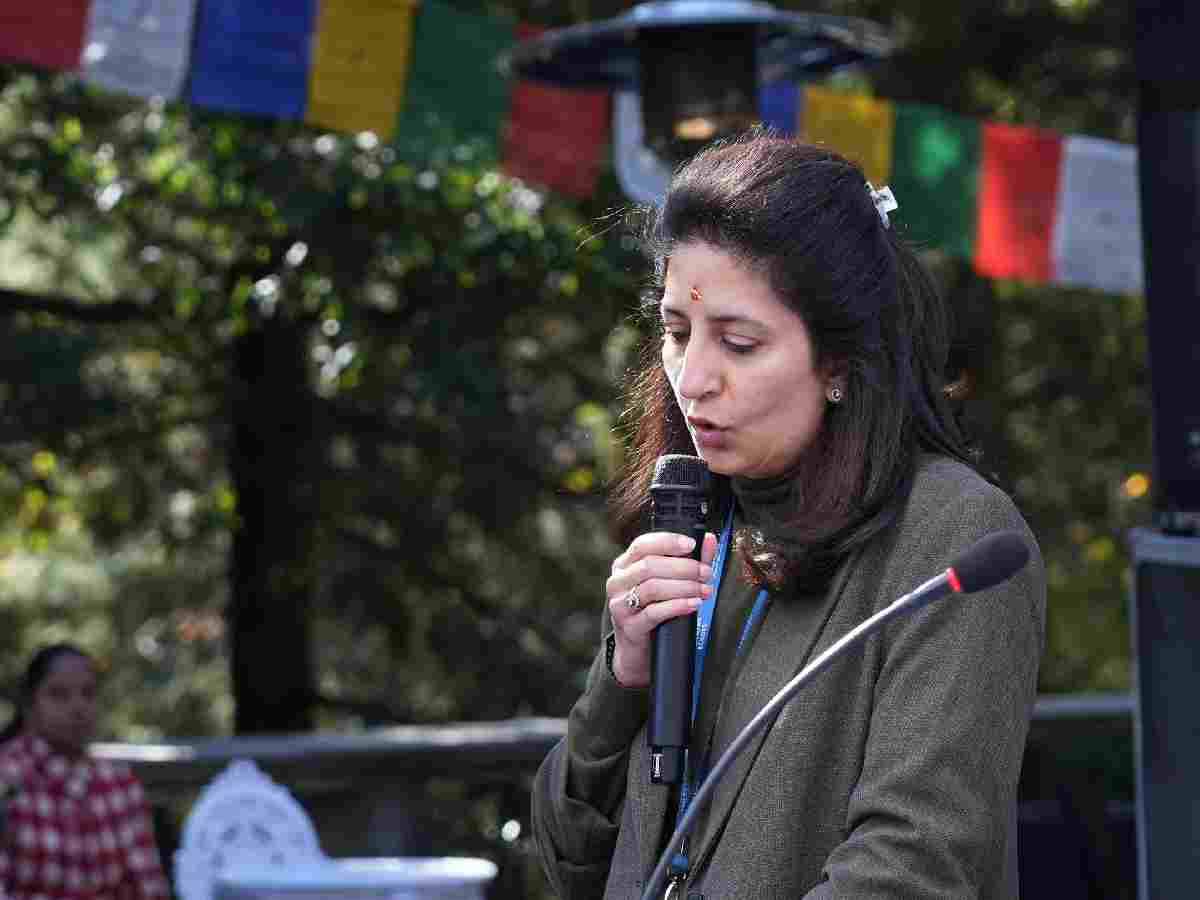
Born in Delhi and raised amid the rolling Kumaon hills of Nainital and the Terai plains of Shahjahanpur, Uttar Pradesh, Janhavi Prasada, 49, has always found herself at the intersection of nature, heritage, and culture. A cultural entrepreneur and storyteller, she has dedicated her life to nurturing Himalayan voices and drawing attention to the fragile ecology of India’s mountains.
“Mountains feed the plains, dictate climatic patterns, and sustain farmers. They are the lifeline, and we need to protect them,” she says. This conviction forms the foundation of all her work—whether through restoration, storytelling, or the arts.
Her commitment to preservation is both ecological and personal. Hailing from the erstwhile zamindar family of Oudh, Janhavi inherited the 145-year-old Abbotsford Estate in Nainital, a property she has painstakingly restored. What could have remained a relic of the past has instead become a thriving cultural space. “Abbotsford is my way of bringing life back into the estate rather than letting it deteriorate,” she explains. “I wanted it to be a micro-hub for people who care about art, literature, nature, and culture.”
Her vision for the estate extends to Café Chica, a warm and intimate hospitality venture that intertwines family recipes, design, and storytelling with the cultural and ecological textures of the Himalayas. Each corner of Abbotsford, she says, tells a story—not just of her lineage but of the land itself.
A festival born of the mountains
It was this seamless blending of heritage, creativity, and environmental consciousness that inspired Janhavi to create Himalayan Echoes—a festival that began as a modest literary gathering and evolved into one of the region’s most distinctive cultural dialogues.
“Nainital is my ancestral home,” she reflects. “I needed to do something meaningful here, and that’s how the literature festival started.”
The first edition was humble—just 50 people and six speakers. But a decade later, Himalayan Echoes has grown into a trans-Himalayan platform connecting thinkers, writers, artists, and activists from India, Bhutan, Nepal, Tibet, and beyond. “Now we’ve had over 300 speakers from all walks of life,” she says, “but I have deliberately kept the audience small—never more than 300—so that interactions remain personal and meaningful connections are formed.”
For Janhavi, the festival is less an event and more an experience. “You are immersed in nature,” she says. “You meet a tribe of people contributing to the preservation of the mountains, and you take something away—a thought, a painting, a book. One small act of mindfulness can make a huge difference.”
Her approach to the festival is intentionally minimalist. “Except for this 10th edition, I avoid screens,” she says. “The scenic beauty of the mountains is enough—we don’t want to cage our audience.” Over the years, Himalayan Echoes has deepened its focus on ecology and sustainability, exploring them through literature, music, food, textiles, and crafts. “It’s now a Himalayan festival in the truest sense,” she adds. “The Himalayas are very important not only for Uttarakhand but for the entire subcontinent.”
Delhi roots and global reach
While the hills ground her spiritually, Delhi remains central to Janhavi’s intellectual and professional journey. “Delhi has always been a seat of learning and policy-making,” she explains. “It’s where you meet diverse minds, exchange ideas, and see innovations. Then I return to the hills to implement as much as I can. Exposure in the hills is often missing, so the city provides that intellectual nourishment.”
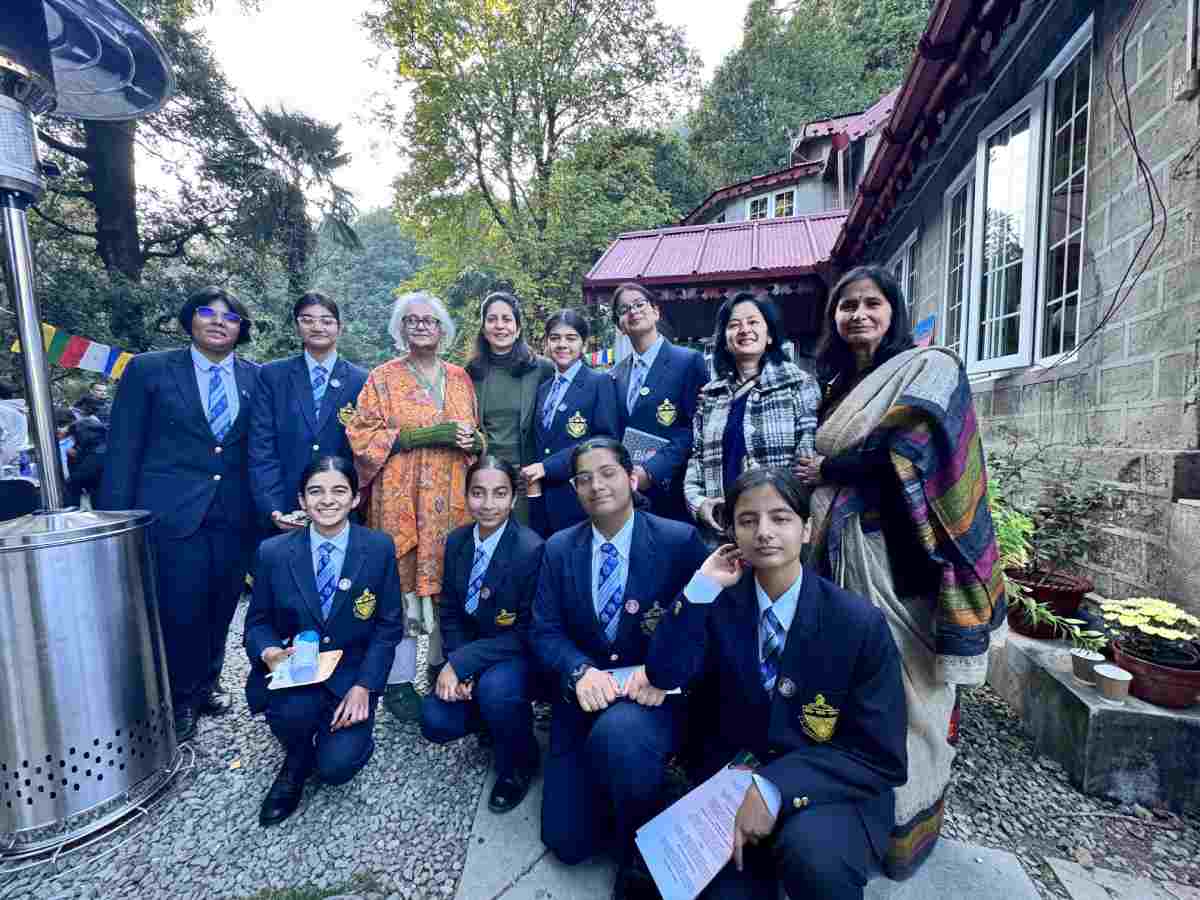
Her environmental and cultural advocacy has also travelled far beyond India. She represented Himalayan Echoes at a conference in Stockholm, discussing the parallels between the Himalayas and the Nordic ice-capped mountains—and their shared significance for global sustainability.
Storytelling and the media lens
Before she turned to heritage and environmental work, Janhavi carved out a vibrant career in media and storytelling. A student of Mayo College Girls’ School, Ajmer, and St Stephen’s College, Delhi, she went on to pursue postgraduate studies in Broadcasting at the Cardiff School of Journalism.
Her early years were spent as a features writer for The Pioneer in 1998, followed by a career in television, producing and anchoring programmes for BBC, HTV Wales, Sony UK, and Channel 57 (USA) while working for ANI.
In 2002, she founded Srijan Media, a production company focused on storytelling, campaigns, and integrated media solutions. Her interests today span photography, food culture, local crafts, and wellness—especially within the Himalayan context.
Janhavi is also the author of Tales of Young Gandhi, a graphic novel published by HarperCollins, inspired by Gandhi’s belief that “wherever you stand, change must come from there.”
Himalayan Echoes 2025: celebrating a decade
The 10th edition of Himalayan Echoes will be held on November 1 and 2, 2025, at the Abbotsford Estate in Nainital—bringing together a diverse assembly of writers, environmentalists, and artists united by their love for the mountains.
Among this year’s speakers are Man Booker Prize Longlisted author Anuradha Roy who will pre-release her upcoming book Called by the Hills – A Home In The Himalaya, Rujuta Diwekar’s first recipe book Mitahara on nutrition and wellness, poet-diplomat Abhay K on his bestseller Nalanda; artist Aditi Singh; sound and nature practitioner Adnan Vahanvaty; art historian Alka Pande; wildlife conservationist Neha Sinha on her book Wild & Wilful and Environmental journalist Gargi Rawat on her book Tiger Season; former Ambassador,Lakshmi Puri debut fiction novel Swallowing the Sun; A musician from the Traditional Performing Arts Division in Bhutan, Leki Tshewang; filmmaker Muzaffar Ali; music scholar Shailaja Khanna; editor Uday Pratap Singh; iconic Vandana Shiva and the masterful Pinki Anand among others.
Also Read: From London to Lutyens’: Thomas Goode brings fine tableware to Indian market
The festival will open on November 1 with a conch-blowing ceremony and Janhavi’s welcome address, followed by a keynote by Alka Pande. Over two days, sessions will range from Himalayan art and literature to sustainability, crafts, food, and music.
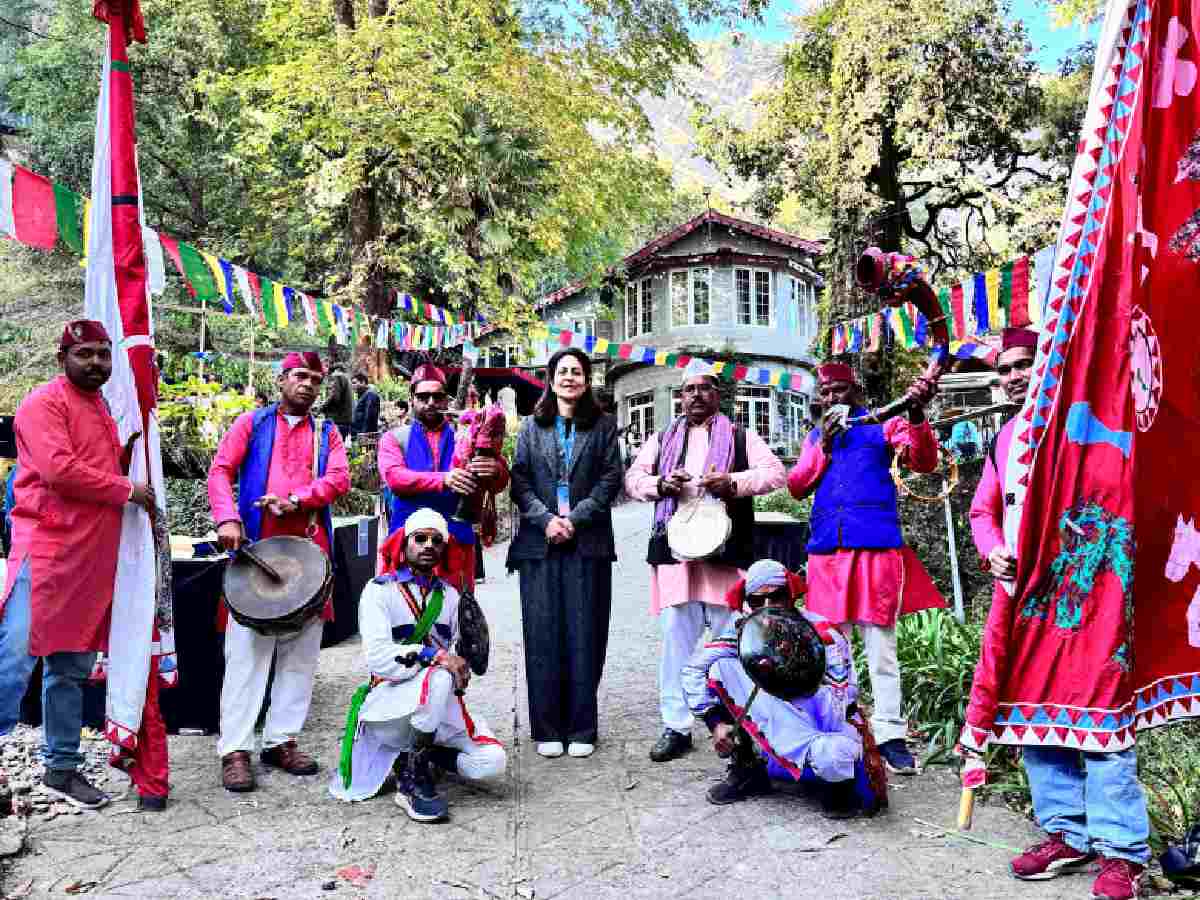
Music will take us on a Sufi performance experience by Rehmat-e-Nusrat. The event will conclude with book launches—Call of the Mountains: Stories of Nainital by Janhavi Prasada and Pugmarks & Pugdundees by Shiveshwar Singh—accompanied by a performance from King Code and a closing dinner at Hotel Shervani.
A decade of resonance
Looking back, Janhavi sees the festival as both a calling and a community. “Himalayan Echoes started as a small gathering, but over ten years it has become a platform for mountain voices across the world,” she reflects. “We focus on the mountains, the people, the environment, and culture. It’s about creating impact where you stand, and carrying that responsibility back into your daily life. That is the essence of the festival.”