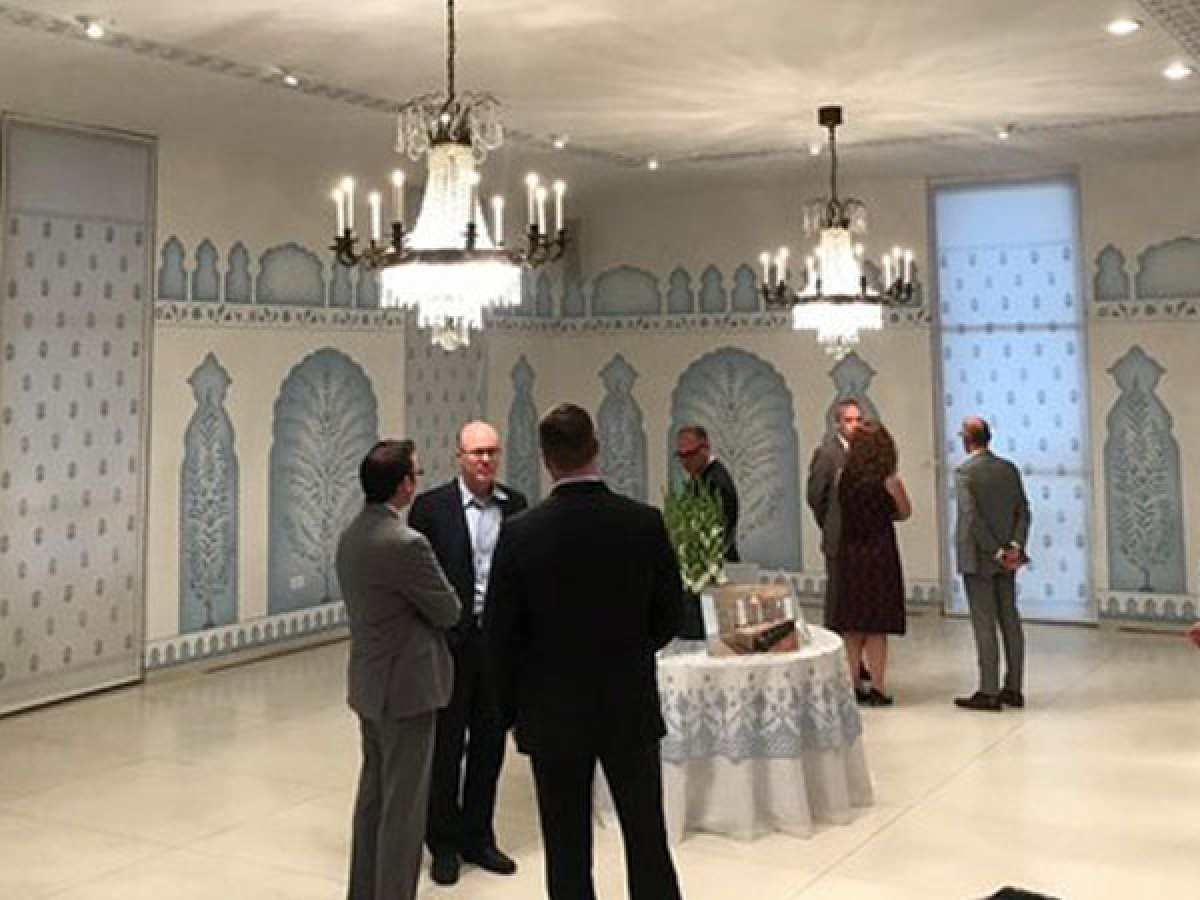
Roosevelt House: Sergio Gor has been nominated by President Donald Trump as the United States Ambassador to India at a time when bilateral relations are passing through a delicate phase. A close confidant of Trump, Gor will soon assume charge in Delhi.
The official residence of the US Ambassador, known as Roosevelt House, is located within the 27-acre campus of the US Embassy in Chanakyapuri. The embassy itself remains the most prominent symbol of American presence in the Capital. From an architectural perspective, Roosevelt House stands out for its distinctive and graceful design.
Former US presidents Bill Clinton and Barack Obama both visited Roosevelt House during their trips to Delhi.
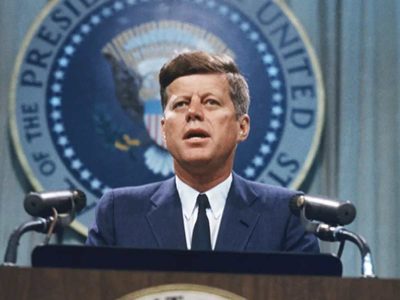
Why John F Kennedy never visited Roosevelt House
President John F Kennedy had been scheduled to make an official visit to India in early 1964. During that trip, he was expected to see the newly constructed US Embassy in Delhi and stay at Roosevelt House. His assassination in November 1963 cut short those plans.
However, his wife Jacqueline Kennedy did visit India and stayed at Roosevelt House.
Also Read: Shortage of veterinary doctors hampers Delhi’s stray dog crisis
Jacqueline Kennedy’s Delhi stay
Jacqueline Kennedy travelled to India from March 12–21, 1962. Her visit was overseen by US Ambassador to India John Kenneth Galbraith, a trusted confidant of the Kennedy family and a friend of India.
On arrival at Palam Airport — which had just become operational that year — she was welcomed by Prime Minister Jawaharlal Nehru and other dignitaries. During the trip, she paid homage at Mahatma Gandhi’s memorial and charmed the public with her charisma at the age of 32.
For reasons never fully explained, John F Kennedy did not accompany her on the visit.
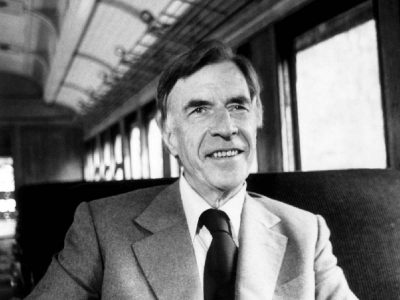
John Kenneth Galbraith’s influential role
John Kenneth Galbraith, who served as US Ambassador to India from 1961 to 1963, was deeply trusted by President Kennedy. He was closely involved in preparing for Kennedy’s planned India visit.
On November 22, 1963, the world was stunned by Kennedy’s assassination in Dallas, Texas. Kennedy had been eager to see the embassy, which had drawn praise from the legendary architect Frank Lloyd Wright. Designed by American architect Edward Durell Stone, the building was considered a pinnacle of modern creativity.
Although Kennedy never made the trip as president, he had visited India in 1955 as a private citizen.
Why Galbraith’s stature mattered
Galbraith was one of the most distinguished ambassadors to India. A celebrated economist standing at 6 feet 11 inches, he was a striking presence in Delhi’s diplomatic circles.
During the 1962 India-China war, Kennedy maintained constant contact with Prime Minister Nehru through Galbraith. Veteran journalist Aroon Kumar recalls that even after his tenure, Galbraith returned to India to deliver lectures. “Few people know that it was through Galbraith’s efforts that Kanu Gandhi, Mahatma Gandhi’s grandson, gained admission to NASA,” he said. Kumar added that older Indians may recall Kennedy’s strong support for India during the 1962 war. According to him, Kennedy told China that if it did not cease hostilities, the US would intervene. China subsequently declared a ceasefire on November 20, 1962, and announced its withdrawal from the disputed territory.
Galbraith also advised the Indian government on military strategy during the conflict.
An ‘Indian’ resident of Roosevelt House
Rahul Richard Verma, who served as US Ambassador from 2014 to 2017, was distinctive for his Indian heritage. Born in Jalandhar, Punjab, Verma spoke Punjabi and often reminisced about visiting his ancestral home. He had first travelled to India in 1974 with his parents.
During his tenure, Roosevelt House was his official residence, and his relatives occasionally visited him there.
The architecture of Roosevelt House
Roosevelt House was designed by Edward Durell Stone, who blended modern architecture with traditional Indian elements such as jalis and chhajjas to create a distinctive aesthetic.
Stone, known for his vision, ensured that the building was practical as well as elegant. A Delhi-based architect noted that “a good architect is one who designs user-friendly staircases, and Stone ensured that the staircases in the embassy and Roosevelt House feel effortless to climb”. The architect added that these designs continue to captivate architecture students.
Mindful of Delhi’s arid climate, Stone gave importance to landscaping and greenery. Pools of water in front of Roosevelt House create a cooling effect, making the residence both functional and serene.
A hub of diplomacy and culture
As the residence of the US Ambassador, Roosevelt House hosts a range of events. These include national holiday celebrations such as Independence Day and Thanksgiving, alongside programmes that highlight India-US relations.
Cultural diplomacy is central to its role: concerts, art exhibitions, film screenings, and literary events showcase American culture while encouraging dialogue with Indian traditions.
Also Read: Delhi: Court order leaves stray dog programme in turmoil
Who gets invited?
The guest list at Roosevelt House is varied. Politicians, government officials, diplomats, business leaders, academics, journalists, and cultural figures are frequent invitees.
Meetings and receptions are held to strengthen bilateral ties, while workshops and seminars engage students and scholars. Social gatherings and cultural evenings also create space for networking and camaraderie.