Delhi: In 1981, Dr Uma Tuli began teaching 30 students under a tree, 15 of whom were children with varying disabilities. That class grew into the Amar Jyoti Charitable Trust and its 50:50 model, under which equal numbers of children with and without disabilities study together.
The approach, described as reverse integration, goes beyond reserving a limited number of places for children with special needs. The school’s teaching methods and facilities are designed to support children with disabilities while allowing them to learn alongside their peers from an early age.
The Trust describes the initiative as the first integrated classroom for children with disabilities.
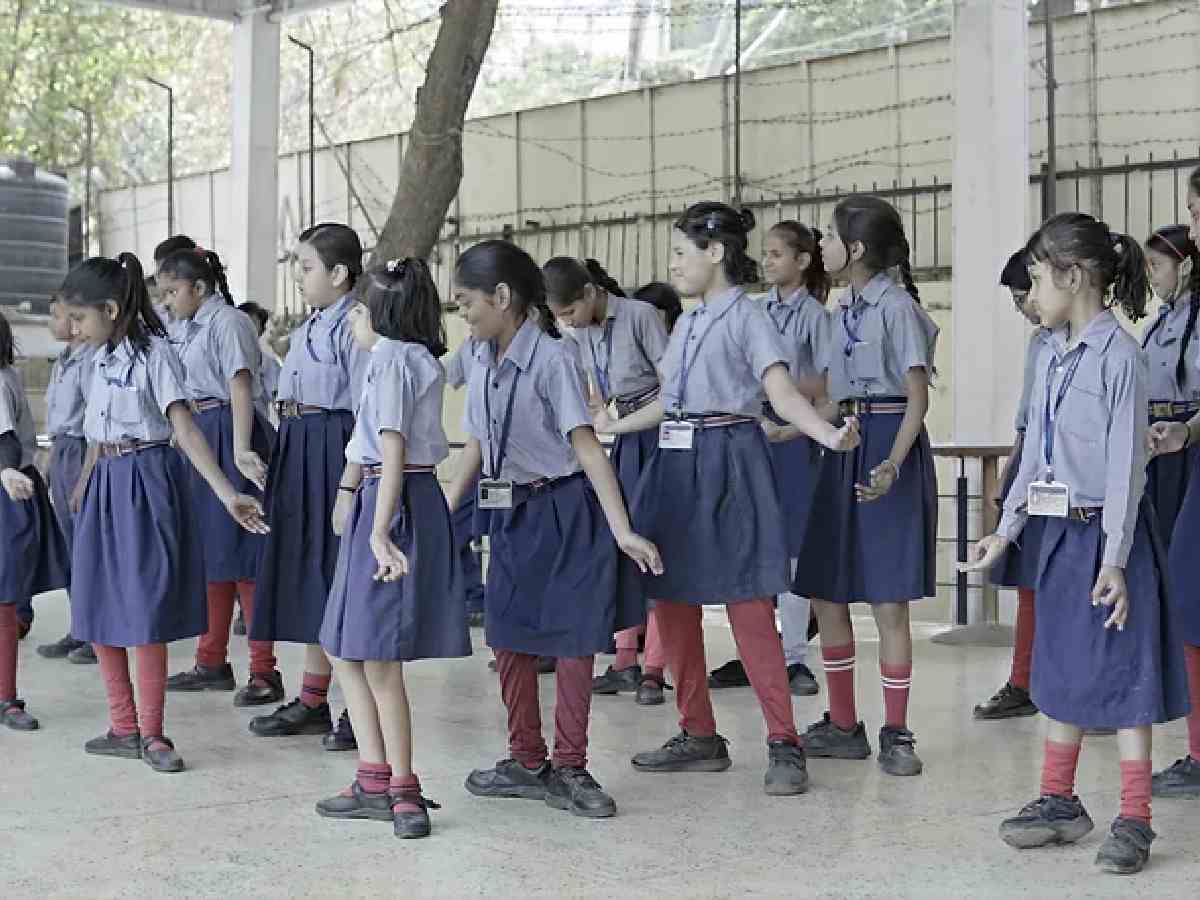
Across the campus, students can be seen helping classmates who use wheelchairs, playing sports together and talking between classes. Such interactions demonstrate how the model attempts to make inclusion part of students’ everyday lives. The school also provides educational and support facilities to students from underprivileged families.
Parul, a member of the social services department, pointed out how different parts of the campus had been made accessible. The school has several learning walls covered with colourful paintings that illustrate concepts from the curriculum. Tactile displays, including globes, maps and words written in Braille, have been placed across the building for students with visual impairments.
Ramps and tactile paths run throughout the campus. Students are taught from an early stage how to use these facilities and navigate the building safely.
A student-centred curriculum
Each student is given a timetable based on their learning and support requirements. Preparatory classes and designated therapy periods are incorporated into the regular school day.
“The students with hearing impairments and vision impairments are first put in preparatory classes, where they are taught Braille, sign language and lip-reading. They are then integrated into classrooms. A lot of students excel at lip-reading and can easily follow a conversation,” Parul said.
Students with autism attend similar preparatory classes to work on their communication, while those with other physical disabilities attend sessions intended to improve their motor skills.
“Every day, designated periods are allotted to every student, during which they are provided with the specific care they need. Whatever physical, auditory or visual therapy a child needs, they get during that time,” Parul explained.
Care beyond the classroom
The campus has a separate medical building with rooms dedicated to prosthetics, physiotherapy and audio-visual services.
Instead of outsourcing such services, the Trust established its own prosthetics laboratory. When students outgrow their equipment, they can seek assistance on the campus. Doctors from different specialities also volunteer to provide medical care.
The medical wing offers free treatment to people living below the poverty line. Early-intervention centres and child psychiatry facilities have also been established to assist with the early diagnosis and treatment of children.
Parents participate in workshops and sessions on caring for children with specific needs. The Trust also conducts workshops focusing on children’s overall development.
Legal advisers provide one-to-one counselling to students, parents and members of marginalised communities twice a week.
Vocational and extracurricular training
Vocational training forms another part of the school’s curriculum. Students can take courses in computers, crafts, textiles and pottery. Besides teaching vocational skills, some of these activities are used to help students develop motor skills and find creative outlets.
“Activities like pottery help students feel calmer. We have so many autistic students who do pottery,” Parul said. “It not only helps develop their fine motor skills but also helps them feel calm.”
“Apart from this, activities like stitching, where you need to thread a needle, also help by improving their fine motor skills and acting as a creative outlet,” she added.
Older students can take courses affiliated with the Pradhan Mantri Kaushal Vikas Yojana and the National Institute of Open Learning. These include IT tools, cutting and tailoring, beauty training and jewellery design. The courses are intended to provide skills that can help students become economically self-reliant.
Continuing into higher education
After completing Class 8, students are placed in different schools across Delhi. However, for many students, access to inclusive education ends after high school. Amar Jyoti seeks to address this gap by offering higher education on its campus.
The Amar Jyoti Institute of Physiotherapy was established in 1999 and is affiliated with the University of Delhi. It offers bachelor’s and master’s degrees in physiotherapy. The Trust also runs a Teacher Training Centre recognised by the Rehabilitation Council of India.
It has partnered with IGNOU to operate a Special Study Centre where people with physical disabilities can access distance education.
Amar Jyoti Charitable Trust has followed its integrated model for more than four decades. It was bringing children with and without disabilities into the same classrooms before the Right to Education Act introduced legal provisions intended to widen access to education for children from disadvantaged backgrounds.
At the school, inclusion is built into the classroom, the curriculum and the support provided to students.