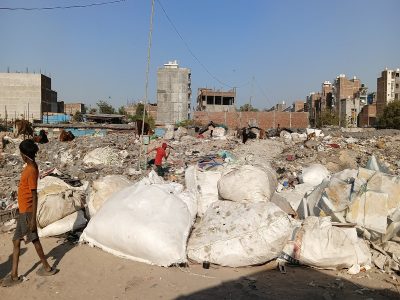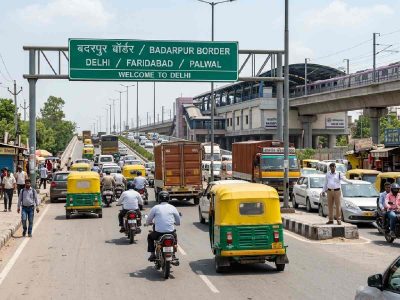
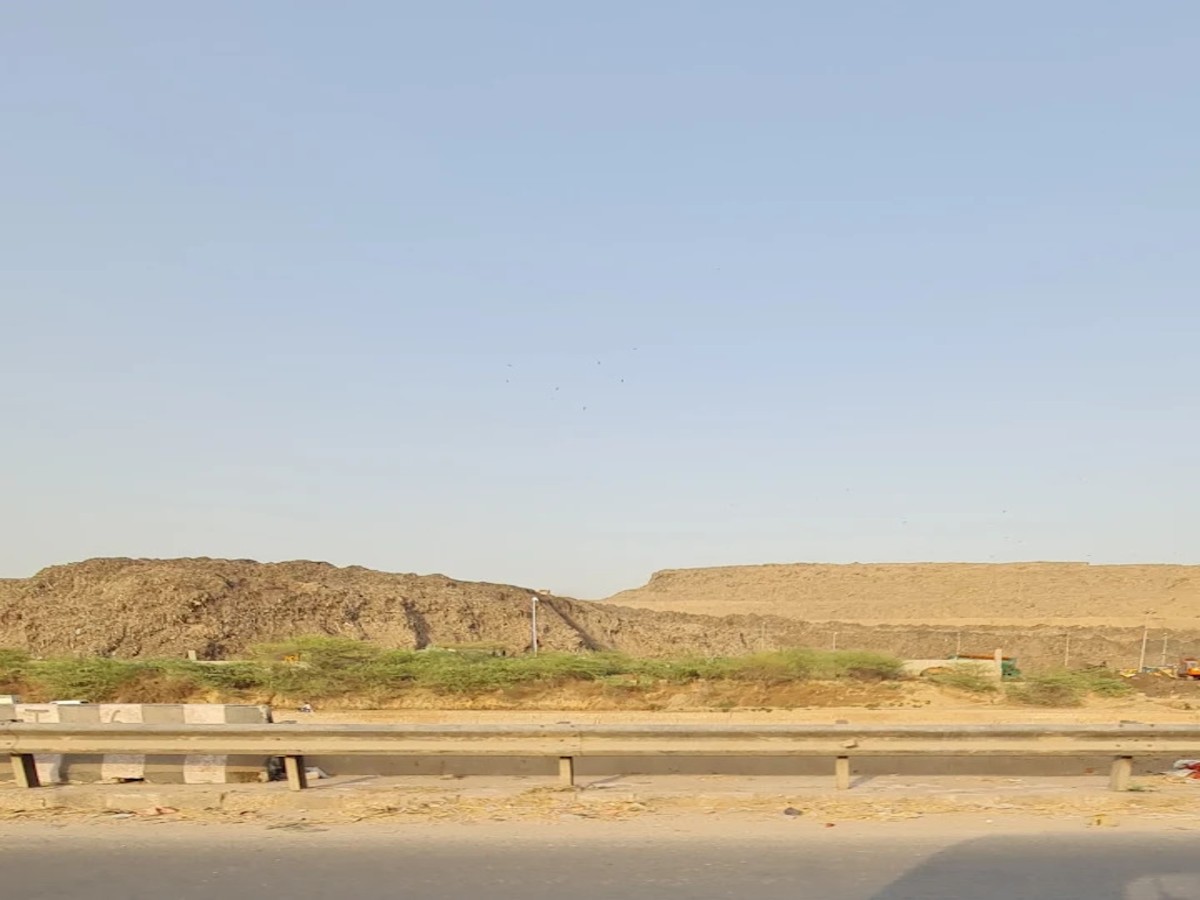
Delhi’s three major landfill sites — Okhla, Bhalswa and Ghazipur — accounted for more than 70% of the waste recorded against approved dumping movements over two days, according to an analysis of the Municipal Corporation of Delhi’s (MCD) RFID-based vehicle management data, underlining the continuing pressure on the Capital’s waste disposal infrastructure.
The records show approximately 10,886 tonnes recorded against 1,118 approved dumping movements on October 22 and 23. Of this, around 10,407 tonnes were recorded on October 23. The figures reflect the weight recorded against truck movements and do not independently establish how much waste was processed at the receiving facilities.
The Sanitary Landfill Facility (SLF) at Okhla recorded the largest quantity, approximately 3,257 tonnes across 252 movements, followed by the Bhalswa SLF, around 2,899 tonnes across 288 movements. The SLF at Ghazipur received approximately 1,547 tonnes across 175 movements. Together, the three sites accounted for around 7,703 tonnes.
The continued arrival of fresh waste at these sites presents a challenge for the MCD, which is simultaneously working to reduce the mountains of accumulated garbage through biomining. The process involves excavating old waste and separating recoverable material, recyclables and inert residue to reclaim land and reduce the volume of legacy waste.
SLFs are “a carefully designed and engineered site where solid waste is isolated from the environment until it is safe. The goal is to prevent contamination of air, soil, and groundwater by safely containing and managing waste over time. Unlike open dumps where waste piles up uncontrolled, sanitary landfills use scientific methods to control leachate, prevent gas emissions from escaping, and avoid long-term soil and water pollution”, according to Catch Foundation.
Challenge to landfill clearance
The scale of the challenge is evident from the volume of legacy waste still awaiting remediation. According to the Delhi Economic Survey 2025-26, approximately 120 lakh tonnes of garbage remained at Okhla, Bhalswa and Ghazipur. A volumetric survey conducted in June 2022 had estimated the accumulated waste at the three sites at 203 lakh tonnes.
The survey reported that 74.11 lakh metric tonnes of legacy waste had been remediated between April 2025 and February 2026 — the highest annual quantity processed so far. However, around 30.74 lakh metric tonnes of fresh waste was also disposed of at the three sites during the same period, highlighting how new dumping continues to add to the burden even as older waste is cleared.
The challenge is compounded by the amount of waste Delhi can process each day. The Economic Survey found that the MCD areas generate nearly 11,862 tonnes of municipal solid waste daily, while the installed processing capacity stands at 7,641 tonnes per day. Actual processing is lower, at 7,460.3 tonnes per day, meaning the city processes only around 62.9% of the waste it generates.
Segregation at source remains uneven, with the MCD areas averaging around 59%, compared with approximately 92% in New Delhi Municipal Council areas and up to 90% in civil pockets of the Delhi Cantonment Board. The MCD has set a target of achieving full segregation by January 2027.
Where else is waste going?
Beyond the three major landfill sites, the RFID records show substantial quantities being transported to waste-to-energy facilities. The Narela facility recorded around 1,375 tonnes across 129 approved dumping movements, while Tehkhand recorded approximately 1,168 tonnes across 183 movements. The waste-to-energy facility at Okhla accounted for around 437 tonnes across 81 movements.
The records also include loads transported to the construction and demolition waste plant at Bakkarwala and the landfill site at Singhola. However, the quantities recorded against these destinations should not be interpreted as the amount of material successfully processed. Truck weights show waste movement, not a facility’s final output.
This distinction matters because different waste categories require different treatment. Organic waste can be composted or processed through biomethanation, recyclable materials can be recovered, and construction and demolition debris requires a separate processing stream. Mixed garbage is harder to segregate and can increase the quantity requiring final disposal.
In the RFID records, municipal solid waste was the largest category, accounting for approximately 5,970 tonnes across 718 approved dumping movements. Mixed garbage contributed around 1,990 tonnes, followed by silt at approximately 1,131 tonnes and construction debris at around 658 tonnes. Street-sweeping waste accounted for approximately 365 tonnes.
According to an official associated with the MCD, much of the dumping happens at separate trash compactors and dumping sites around the legacy landfill sites, not at the site itself. “There are other trash compactors around the legacy landfills. None of the trash that is actually being transported is being dumped there. There is much more regulation at these facilities,” she said.
Central Zone load
Among the municipal zones listed in the dataset, the Central Zone recorded the largest aggregate weight, at approximately 1,864 tonnes across 166 approved dumping movements. Shahdara South followed with around 1,203 tonnes, while the South Zone recorded approximately 1,188 tonnes.
Civil Lines accounted for around 991 tonnes, followed by the West Zone at approximately 887 tonnes and the City SP Zone at around 812 tonnes. Shahdara North recorded approximately 785 tonnes.
These figures reflect the loads recorded for each zone during the period, not a definitive ranking of waste generation. Differences in collection schedules, vehicle capacities, waste categories and routes to disposal facilities can influence the totals.
New processing capacity planned
The Economic Survey 2025-26 outlines plans to add 7,750 tonnes per day of waste disposal and processing capacity over the next few years, primarily through new and expanded waste-to-energy facilities.
A 3,000-tonne-per-day plant is proposed at Narela-Bawana by December 2027, while a 2,000-tonne-per-day facility is planned at Ghazipur by December 2028. Existing plants at Okhla and Tehkhand are also scheduled to be expanded by 1,000 tonnes per day each, taking their capacities to 2,950 tonnes and 3,000 tonnes per day, respectively, by 2027.
If implemented and operated effectively, the additional capacity could help reduce the gap between waste generation and processing. However, the proposed infrastructure will need to be commissioned alongside improvements in segregation and collection to reduce the amount of fresh waste reaching landfill sites.
The RFID records offer a snapshot of the volume of garbage moving through Delhi’s disposal network. To assess whether the city is making meaningful progress, the MCD would need to publish reconciled daily weights, actual processing figures for each facility and the quantities of material recovered or disposed of as residue.
Ultimately, the challenge is not simply to transport garbage away from residential areas, but to ensure that it is processed at a rate that prevents fresh accumulation while the existing landfill mountains are steadily reduced.