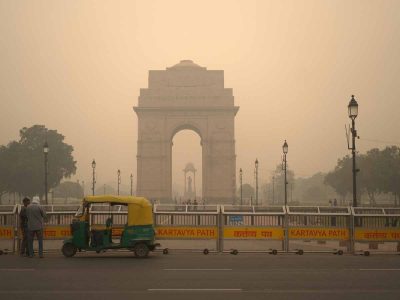
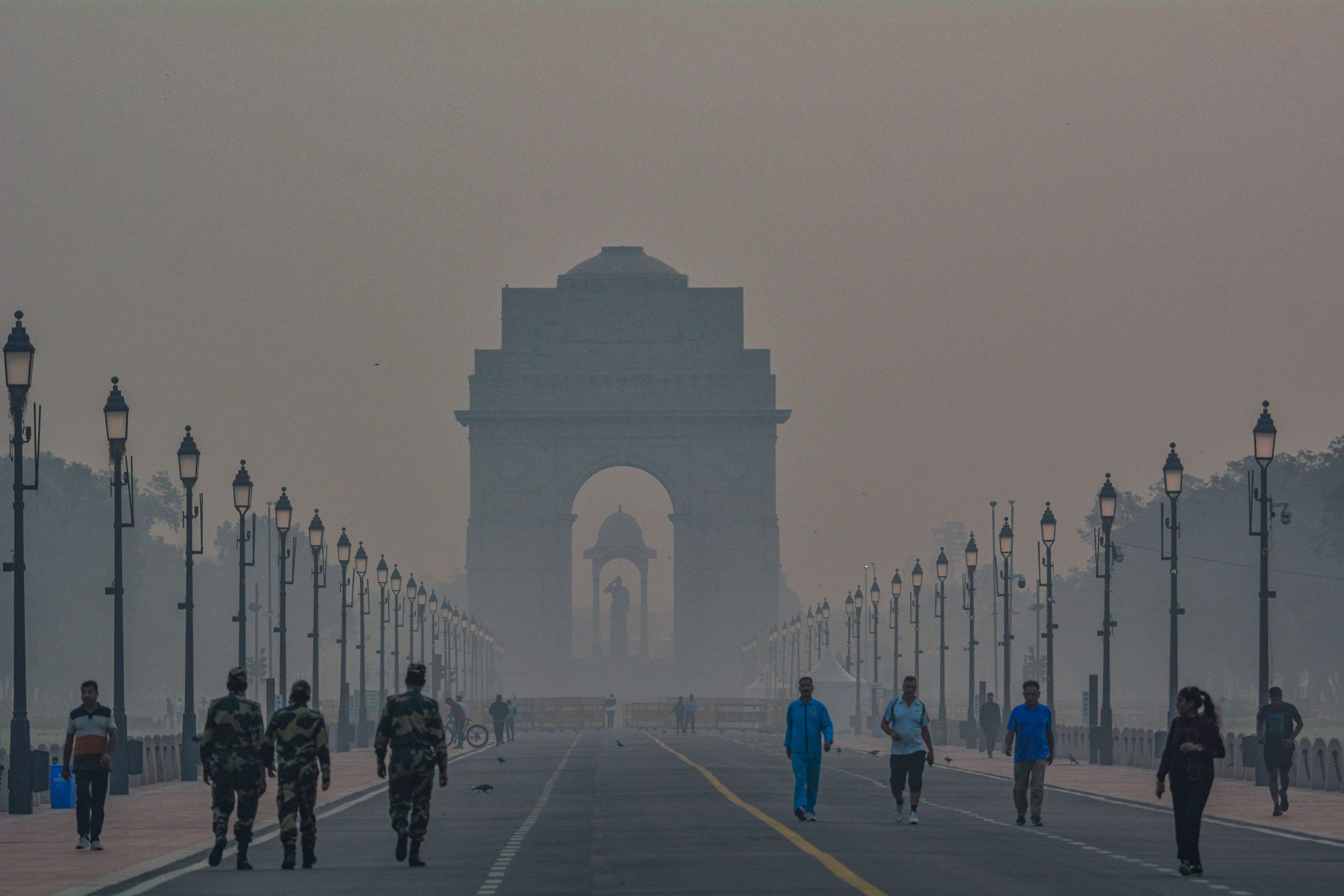
Delhi’s annual battle with air pollution appears to have started on a worrying note, with the Capital recording an average Air Quality Index (AQI) of 171 during the first week of October 2026, its most polluted opening week in three years. The early deterioration has raised concerns about the coming weeks, when falling temperatures, stagnant air and seasonal emissions often combine to worsen pollution.
Although the average AQI falls in the ‘moderate’ category under India’s national air-quality scale, the trend highlights the challenges facing the Capital as it enters the winter pollution season. Low wind speeds, vehicular emissions, construction dust and the seasonal burning of agricultural residue in neighbouring states are among the factors that could influence air quality in the weeks ahead.
Amit, 26, an air quality researcher from IIT Delhi, said, “The early rise in pollution is a reminder that Delhi needs to address emissions before the winter season reaches its peak. Waiting until air quality deteriorates further can make the situation more difficult to manage.”
Weather conditions
The transition from the monsoon to winter is a critical period for Delhi’s air quality. During the monsoon, rainfall helps remove some airborne pollutants, while stronger winds can carry them away. As the rains withdraw, these effects diminish, allowing pollutants to accumulate.
Low wind speeds matter because they reduce the rate at which pollutants disperse. Temperature inversions and stable atmospheric conditions can also limit vertical air movement, trapping pollution near the ground. Such conditions can become more influential as winter approaches, although their intensity varies from day to day.
“Weather conditions can determine how quickly pollutants disperse, but the emissions themselves must also be controlled. Both factors need attention if Delhi is to prevent prolonged episodes of poor air quality,” Amit added.
Weather alone does not create pollution. Instead, it influences the concentration of pollutants released by vehicles, industries, construction activities and other sources. Monitoring daily AQI readings alongside wind speed, temperature and rainfall is therefore essential to understanding the current deterioration.
Also Read: Three days, 6,000 detentions: inside Delhi’s protest crackdown
Stubble burning
As paddy harvesting progresses in Punjab and Haryana, crop-residue burning is once again attracting attention. Some farmers burn leftover straw to clear their fields quickly before the next cropping cycle. The resulting smoke contains fine particulate matter and other pollutants that can travel over long distances, depending on wind direction and atmospheric conditions.
Soumya Dutta, an Environmental scientist, told Patriot, “Stubble burning is an important seasonal concern, but it should not automatically be treated as the sole cause of Delhi’s pollution. Local emissions and meteorological conditions also need to be examined.”
The problem also has an agricultural dimension. Farmers often face a short period between harvesting paddy and sowing wheat. Access to residue-management machinery, affordable alternatives and effective government support can help reduce dependence on burning.
Local emissions
Delhi’s pollution problem extends beyond seasonal agricultural fires. Vehicular exhaust, road dust, construction activities, industrial emissions, diesel generators and open waste burning contribute to the city’s pollution burden throughout the year.
These sources can become more problematic when unfavourable weather prevents pollutants from dispersing. Busy traffic corridors and areas with extensive construction may also show different pollution patterns than other neighbourhoods.
Addressing these sources requires consistent enforcement of pollution-control rules. Measures such as controlling dust at construction sites, improving public transport, checking vehicle emissions and preventing open waste burning can help reduce pollution.
The Commission for Air Quality Management coordinates measures to address pollution across Delhi and neighbouring regions. Its Graded Response Action Plan provides for progressively stricter interventions as air quality deteriorates.
However, the effectiveness of such measures depends on timely implementation, regular inspections and coordination among the states that share the region’s air pollution.
Also Read: Capital protests: barricades, checkpoints choke Central Delhi
Season of uncertainty
For Delhi residents, worsening air quality is more than a number on a monitoring app. It can affect daily commutes, outdoor exercise, school activities and the routines of people who spend much of their time outside.
An AQI of 171 falls within the moderate category under India’s national scale. This category can cause breathing discomfort among sensitive groups, including children, older adults and people with existing lung or heart conditions. It is not classified as ‘poor’ or ‘severe’, but it should not be interpreted as an absence of health risks.
Fine particulate matter, particularly PM2.5, can penetrate deep into the lungs. Exposure is associated with respiratory and cardiovascular health risks, while people with asthma and other existing conditions may be particularly vulnerable.
For those who earn their living outdoors, Delhi’s deteriorating air quality is a challenge they cannot easily avoid. While office workers may be able to remain indoors during periods of elevated pollution, traffic police personnel, street vendors and delivery workers often spend hours on busy roads, where they are exposed to vehicle emissions and road dust.
A traffic police officer stationed at a busy intersection must manage congestion and keep vehicles moving, regardless of air quality. Prolonged exposure to exhaust fumes and dust can make the job harder, especially as pollution levels rise during the winter months.
“Standing at a traffic junction means being surrounded by vehicles for hours. We cannot stop working because the air quality has deteriorated, so better protective equipment and regular health check-ups would help, and we also carry masks to protect ourselves as much as we can,” said a traffic police officer near Vedant Desai Road near RK Puram.
Also Read: Between barricades: how non-protesters were caught up in Delhi crackdown
No choice for vulnerable
Street vendors face a different problem. Many depend on their daily earnings and cannot afford to close their stalls or move away from busy roads whenever pollution increases. They may be exposed all day, especially in areas with heavy traffic and limited space between roads and footpaths.
Vinod Sahu (name changed), 34, a vegetable vendor in Munirka, said, “My stall is beside a busy road, and I spend most of my working day outdoors. I cannot afford to shut my shop whenever the air becomes polluted because my family depends on what I earn.”
“However, I do see a large water tanker moving along the road, spraying water to settle the dust, sometimes as early as 6:30 AM,” he added.
Delivery workers also face prolonged outdoor exposure as they travel between neighbourhoods, often spending several hours on two-wheelers. Their working conditions can make it difficult to avoid congested roads, while delivery schedules may leave little time for breaks.
“We have to keep moving from one location to another to complete deliveries on time. Traffic and road dust are unavoidable on many routes, and taking frequent breaks is not always practical because less work means less money. During the festive season, pollution levels rise, but we still have to work,” delivery worker Iqbal said.
“I also suffer from migraines, so when one is triggered, I sometimes lose an entire day of work. I suspect the water quality may also be a concern, as I have been experiencing a lot of hair fall,” he added.
These accounts highlight a broader problem: exposure to air pollution is not determined only by where people live, but also by where they work and how much time they spend outdoors. Workers with limited control over their schedules may have fewer opportunities to reduce exposure.
The issue also raises questions about workplace protection. Access to suitable protective equipment, drinking water, rest breaks and occupational health checks could help support outdoor workers, although such measures cannot eliminate exposure to fine particulate matter. Ultimately, reducing pollution at its source remains essential.
Delhi’s monitoring network also shows why citywide averages do not tell the entire story. Pollution levels can differ substantially between monitoring stations, meaning that residents and workers in one neighbourhood may face different conditions from those elsewhere. Checking local readings alongside the citywide AQI can give a more useful picture of the conditions people experience.
For these workers, winter pollution is not simply a seasonal environmental concern. It is also an issue of income, working conditions and access to protection. As authorities prepare for the coming months, the needs of people who cannot easily escape polluted air deserve greater attention.
Also Read: Where Ramlila speaks Urdu
Preventing a worse winter
The coming weeks will test the effectiveness of pollution-control preparations. Weather conditions, regional fire activity and the extent to which local emissions are controlled will all influence how Delhi’s air quality develops.
A combination of low wind speeds, limited rainfall and continuing emissions could push pollution levels higher. However, the severity and timing of any deterioration cannot be predicted from the first week’s AQI alone. Regular forecasts from the India Meteorological Department and official air-quality agencies will be important in assessing the risks.
Authorities will need to strengthen enforcement before pollution reaches more serious levels, while keeping residents informed through reliable forecasts and monitoring data. Regional coordination will be particularly important because airborne pollutants do not stop at state borders.
Delhi’s early-October pollution spike serves as a warning that the Capital’s winter air-quality challenge requires action well before conditions become severe. Cleaner transport, effective dust management, alternatives to crop-residue burning, and consistent enforcement can all help reduce emissions.
Whether the early deterioration develops into a prolonged pollution episode remains uncertain. What is clear is that addressing the problem will require sustained action throughout the year, rather than emergency measures introduced only after the air becomes difficult to breathe.