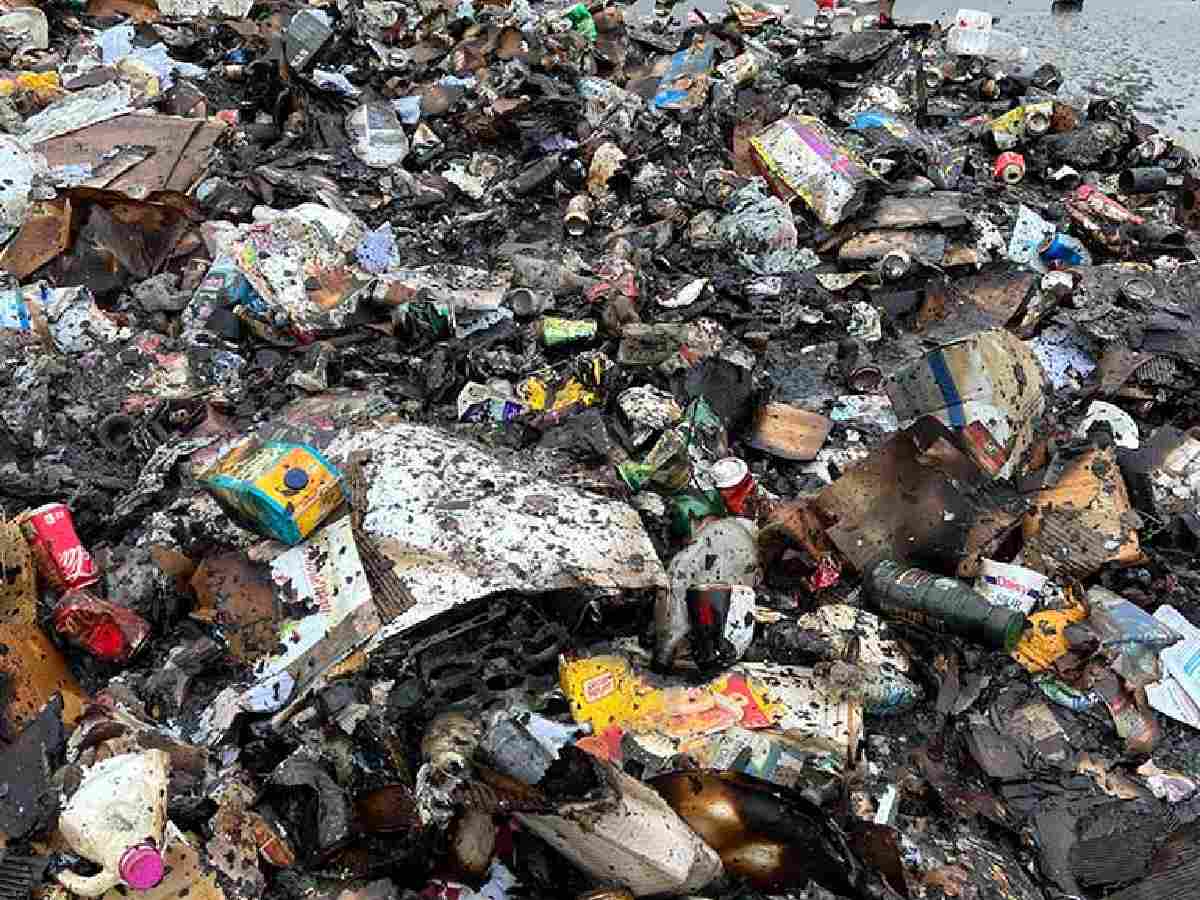
In a city already gasping under layers of smog, the Municipal Corporation of Delhi (MCD) has drawn criticism for its decision to send post-Diwali firecracker waste to Waste-to-Energy (WtE) plants — a move that experts warn could release even more toxic metals into Delhi’s air. Environmental and health specialists have urged the authorities to segregate the waste, assess its toxicity, and dispose of it through authorised hazardous waste facilities.
Surge in toxic waste
According to a senior MCD official, Delhi generated nearly 20% more waste during Diwali, amounting to around 14,000 metric tonnes per day. Unlike regular garbage, this waste contains remnants of firecrackers laced with heavy metals such as barium, strontium, and copper — substances that can become airborne during incineration and pose serious health hazards to residents.
Despite these concerns, MCD officials confirmed that the dry waste from firecrackers is being directed to the city’s WtE facilities. A senior official explained that the dry material from burnt crackers is “mostly sent to WtE plants because it aids incineration.” However, he added that “waste gathered from distant locations is sometimes diverted to landfills.” Sanitation teams, he said, have been instructed to ensure prompt cleaning of roads to prevent waste accumulation from adding to pollution.
Activists raise alarm
In this regard, Warrior Moms — a non-governmental organisation (NGO) — wrote a letter to MCD Commissioner Ashwini Kumar alleging serious lapses in waste management and demanding immediate clarification on how chemically hazardous firecracker residues are being handled.
The group, represented by activist Jyotika Singh, also marked the letter to Chief Minister Rekha Gupta, the Delhi Pollution Control Committee (DPCC), and the Central Pollution Control Board (CPCB), urging segregation, toxicity testing, and safe disposal of the waste through authorised hazardous waste facilities.
In a letter dated October 22, 2025, Singh, on behalf of Warrior Moms, argued that the problem was not just the surge in waste but its composition, since firecracker residues contain toxic heavy metals such as barium, strontium, and copper.
The letter warned that if such waste was sent directly to landfills or incinerated in WtE plants, it could release hazardous metals and carcinogenic gases into the air or leach into groundwater, posing a severe risk to public health and sanitation workers. It sought answers from the MCD on whether firecracker waste was segregated, tested for toxicity, and routed through hazardous waste treatment channels, cautioning that improper handling could trigger landfill fires or air contamination.
Experts, the letter noted, have long cautioned that Delhi’s waste and pollution management systems are under strain and that any negligence could worsen the city’s environmental and health crisis. It called for immediate testing, public disclosure of waste-handling data, and strict compliance with environmental laws to prevent what they termed a “festive pollution disaster.”
Environmentalists demand scientific handling
Bhavreen Kandhari, environmentalist and founder of Warrior Moms, called for urgent transparency and scientific handling of the firecracker waste generated in the national capital.
She said the residue left behind after bursting crackers was “far from harmless,” describing it as chemically active waste containing heavy metals, nitrates, and perchlorates that can leach into soil and groundwater. Treating it as regular municipal garbage and dumping it in landfills, she warned, was both unsafe and non-compliant with environmental regulations.
Kandhari emphasised the need for scientific management. “The waste must first be segregated and tested for toxicity,” she said. Only the non-reactive fraction, if found safe, should be disposed of, while the rest must be treated as hazardous waste. “Delhi cannot afford to let its celebrations turn into a slow-moving environmental hazard,” she added.
Calls for accountability and public awareness
Ruchika Sethi, founder of the citizens’ movement Clean Air Bharat, pointed out that the Ministry of Environment, Forest and Climate Change has already notified guidelines for the collection, handling, transport, and management of firecracker waste. She said the residues of firecrackers contain hazardous chemicals and gunpowder which, if not disposed of properly, can contaminate soil and water, posing long-term environmental risks.
Also Read: Civic body accused of dumping construction waste in East Delhi amid pollution crisis
She added that the rules aim to ensure segregation and scientific processing to prevent contamination. Considering the CPCB’s findings on heavy metals in the air, as reported to the National Green Tribunal (NGT) earlier this week, and given the widespread use of conventional crackers in Delhi-NCR, Sethi said it was crucial that firecracker waste be handled in a way that does not add to emissions or become a health burden for citizens.
According to her, MCD should have planned in advance and educated people on safe disposal methods, such as soaking used fireworks in water and sealing them in bags before disposal. “It is truly unfortunate that waste management is not accorded the priority it deserves,” she said, adding that scientific waste management was akin to preventive healthcare. “Why didn’t the authorities spend time and effort educating the public on the safe disposal of firecrackers, used or unused?” she asked.
Sethi also said that the CPCB should ensure MCD’s compliance with all standard procedures for handling, treatment, and final disposal of firecracker waste to minimise risks to public health. Given the CPCB’s recent findings on heavy metals in Delhi’s air, she added, MCD should explore all options for scientific disposal instead of rushing to use existing incineration facilities.
Resident health at stake
Delhi’s worsening pollution crisis is not just about smog and exhaust fumes — firecracker waste has emerged as a silent but deadly contributor to toxic exposure, doctors warn.
Dr Kuldeep Kumar Grover, Head of Critical Care and Pulmonology at CK Birla Hospital, Gurugram, said that firecracker residues release a complex mix of harmful gases and metals such as sulphur dioxide, nitrogen oxides, carbon monoxide, and heavy metals like lead, cadmium, and barium. When these toxic substances are released into the air, they mix with fine particulate matter (PM2.5 and PM10) and are easily inhaled or absorbed through the skin.
He explained that once inside the body, these pollutants irritate the eyes, nose, and throat, triggering coughing, sneezing, and allergies. They can also severely worsen respiratory diseases such as asthma, bronchitis, and chronic obstructive pulmonary disease (COPD). Prolonged exposure, he said, harms the cardiovascular and nervous systems. “Carbon monoxide reduces oxygen supply to the brain and heart, while heavy metals accumulate in body tissues, potentially causing neurological disorders, fatigue, and long-term organ damage,” he added.
Dr Grover also pointed out that residues from burnt crackers settle on soil and water bodies, contaminating crops and aquatic life. These pollutants, he said, gradually enter the food chain, posing persistent health hazards to humans through the consumption of contaminated food and water.
For protection, he advised residents to take preventive steps such as avoiding proximity to firecrackers, wearing masks to reduce inhalation of toxic fumes, and keeping windows closed during peak hours. “Use air purifiers indoors, rinse your eyes and face after exposure, and stay hydrated,” he said, urging people with asthma or heart conditions to keep emergency medications handy and adopt eco-friendly celebrations.
Experts warn of long-term contamination
Echoing these concerns, Dr Ritu Saxena, Chief Medical Officer and Deputy Medical Superintendent at Lok Nayak Hospital, said that burning firecracker waste worsens the city’s already critical air quality.
“Burning firecracker waste is far more dangerous than people realise,” she said. “These residues contain heavy metals like barium, strontium, and copper, which release toxic fumes when incinerated, worsening Delhi’s already hazardous air quality.” Inhaling such emissions, she added, can aggravate asthma, trigger respiratory infections, and lead to chronic lung and cardiac diseases.
She further warned that dumping this waste in landfill sites poses another grave threat, as heavy metals can leach into the soil and groundwater, contaminating drinking water sources and entering the food chain. Over time, this can cause serious health complications ranging from kidney and liver damage to neurological disorders. Improper disposal, she said, is “a ticking health time bomb for the city.”