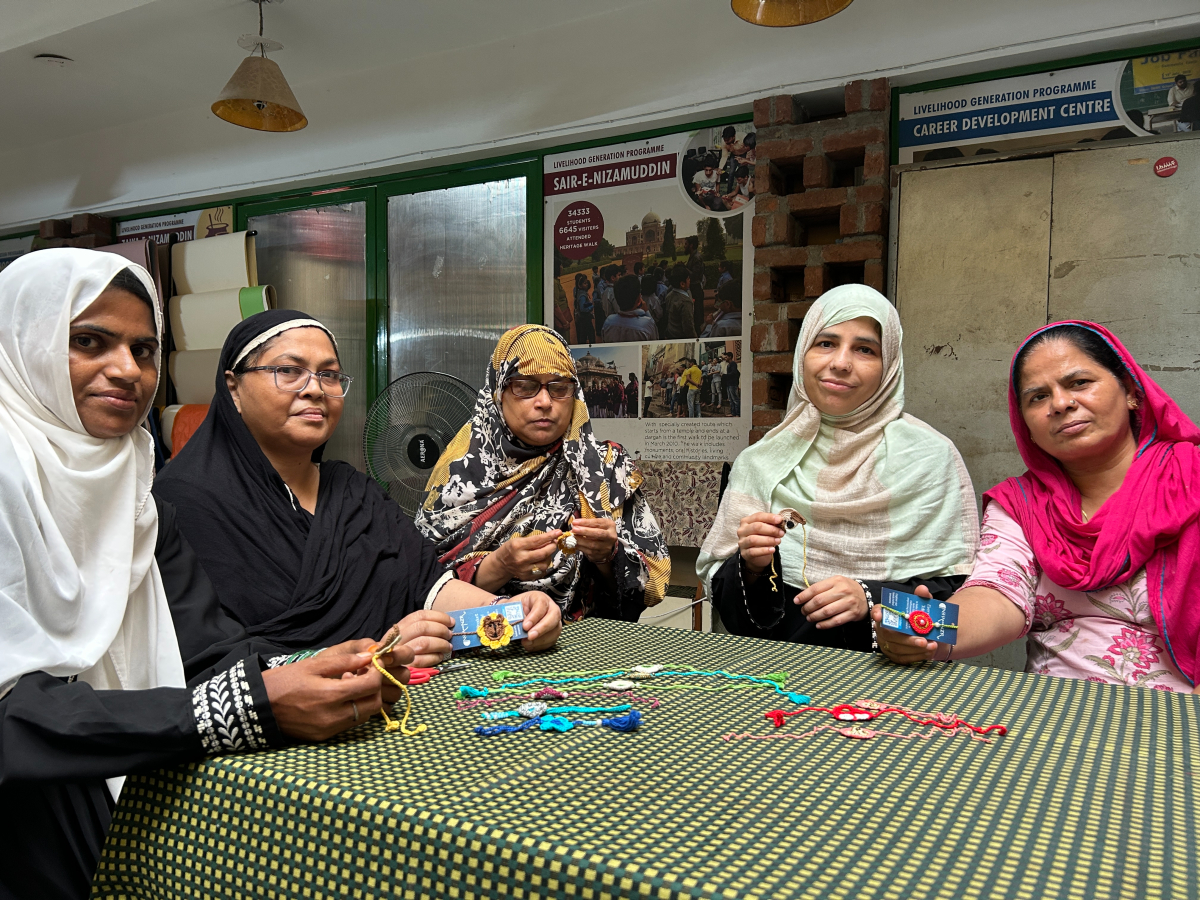
“We were the first to make crochet Rakhis, and back then demand was also high,” said Ratna Sahni, 58, who has been associated with the initiative since September 2012.
“From last year to this year, sales have fallen a little because of social media,” she added.
Arifa Begum, 52, said online sellers were copying the group’s handmade patterns, including those used for Rakhis, beaded bags and flowers, and selling the products at a fraction of the price.
The decline threatens a source of income that women at the centre have spent more than a decade building. Depending on the amount of work they complete, they can earn between Rs 6,000 and Rs 8,000 a month. The money has helped them educate their children, meet household expenses, buy jewellery for their daughters’ weddings and, in one case, make the down payment on a house.
New designs, declining demand
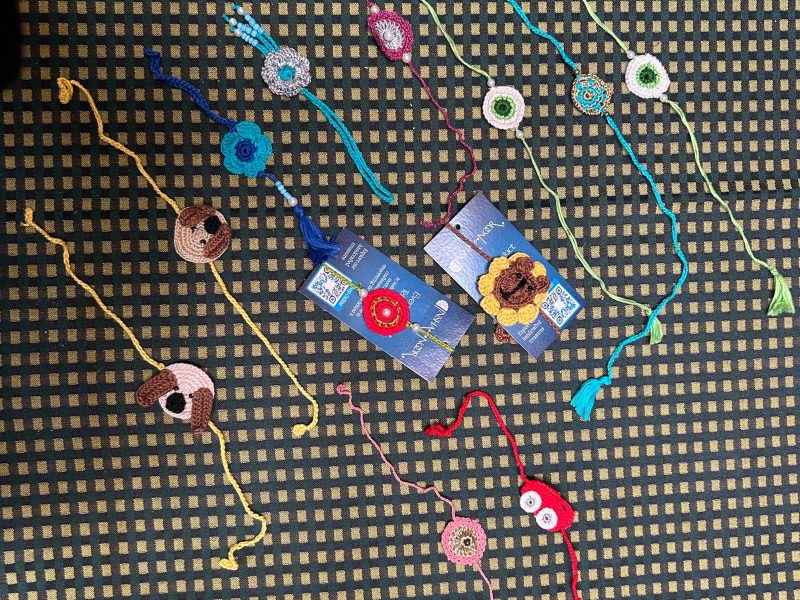
Insha-e-Noor began selling crochet Rakhis shortly before the Covid-19 pandemic. Begum said the early designs were simple, but the range expanded after the women asked their supervisor to introduce new patterns.
This year, she made 35 lion-shaped Rakhis and 15 puppy-shaped ones.
“This is something unique for them,” she said.
The amount paid to an artisan for making a Rakhi varies according to its size.
“Sometimes it is Rs 60, sometimes Rs 70, sometimes Rs 100 and sometimes Rs 130 as well,” said Zaheda, 56, who began learning crochet at the centre in 2009.
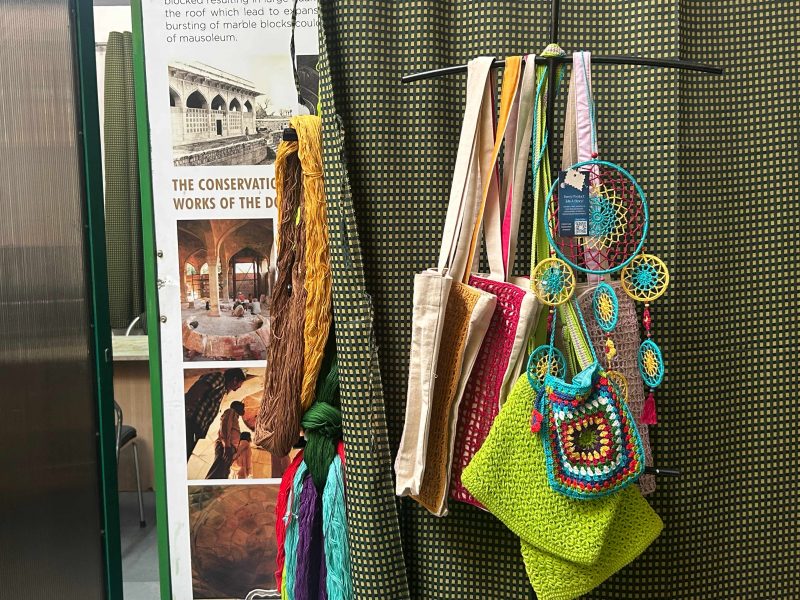
A finished Rakhi from the group sells for Rs 90–130, including courier charges. Zaheda earns Rs 600 for making a duffel bag, while smaller pouches fetch making charges of Rs 3, Rs 5 or Rs 10 each.
“In a month, we have to make a minimum of 10,000 products,” she said, clarifying that this was the collective output of the group rather than the work of one artisan.
Overcoming resistance
When Zaheda first joined the initiative, she did not know that crochet and stitching would eventually become a source of income.
As a Muslim woman, making Rakhis associated with a Hindu festival was unfamiliar to her. She and several other women also faced opposition from their families when they began attending the training programme.
“Earlier, people from my family stopped us from going and doing this sort of thing,” she said.
The resistance began to ease once the women started earning. “When money starts coming, they suddenly feel that it is good to attend such a programme,” Zaheda said.
The training has been free since the initiative began, allowing women to join without making a financial investment.
For Meena, 46, who joined in 2009, the work has helped pay for her children’s education and the everyday expenses of running a household. She also stitches suits for herself when she has time.
Shaista Parveen, 34, joined the programme when she was newly married and had young children. The centre allowed her to work without having to arrange separate childcare.
“The organisation allowed us to bring our children and let them play here while we were working, stitching or doing other things,” she said.
The centre operates from 10 am to 5 pm, six days a week, and remains closed on the second and fourth Saturdays of each month.
Parveen said the women were interested not only in learning crafts but also in acquiring broader life and livelihood skills. “They were scared of losing that opportunity,” she said.
The group now holds monthly meetings attended by 50–60 women, although many more have trained at the centre over the years.
From conservation project to livelihood initiative
Insha-e-Noor, which translates into ‘creation of light’, is a craft-based women’s enterprise based out of Nizamuddin, initiated under Aga Khan Trust for Culture’s Nizamuddin Urban Renewal Initiative.
Insha-e-Noor’s origins can be traced to a survey conducted by the Aga Khan Foundation (AKF) in late 2008. According to Sahni, the survey found that 8–9% of women in the area worked as domestic help.
“When we first came here, these women were doing domestic work. There were no dignified employment opportunities,” she said.
The project was subsequently designed around skills development and livelihoods, with a focus on craftsmanship, health and education.
The initiative grew out of the belief that heritage conservation could not be separated from the lives of people residing around monuments.
“Where there are monuments, work should also be done with the community,” Sahni said.
AKF’s work in the neighbourhood was not limited to crafts. “Health, education and livelihoods were our focus areas,” she said. Young people were also trained through the local Anganwadi and Jan Shikshan Sansthan.
The programme initially offered training in embroidery, tailoring and crochet. Five crafts now form the core of the initiative: tailoring, bookbinding, Saanjhi, Aari and crochet.
Saanjhi is a devotional temple craft rooted in Mathura’s artistic traditions. “The name Saanjhi comes from saanjh, meaning evening,” Sahni said, referring to the time when the craft was traditionally practised.
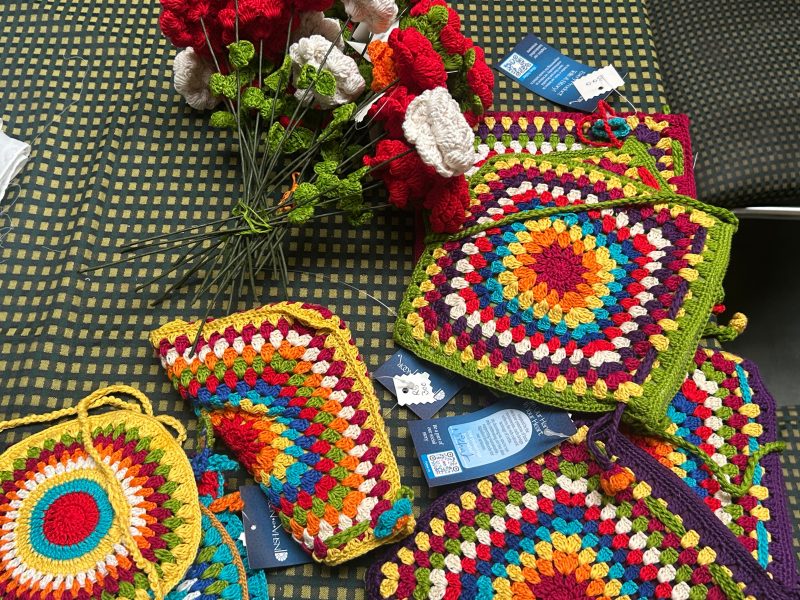
The group’s crochet work incorporates jaali patterns inspired by Mughal-era designs. “There is a lot of latticework in our crochet,” she said, describing it as a reflection of “heritage craft and values”.
Finding a market
By 2011, the group had entered Delhi’s craft circuit.
“Back in 2011, AKF participated in Dastakar Craft Emporium,” Sahni said, referring to the crafts market near Lodhi Road.
The women also displayed their work at the Festival of Lights, Diwali events and Sunder Nursery, where exhibitions were held alongside design and skills training.
Begum remembers 20–25 women attending training during morning and evening shifts in the early years. The stitching course was free for anyone who wanted to join.
Students from the National Institute of Fashion Technology later worked with the group on its designs. Sahni said this collaboration helped the artisans progress from making plain Rakhis to producing the lion and puppy designs offered this year.
Five people are now employed full-time at Insha-e-Noor, which began as an AKF project and is being developed as an independent initiative.
Income and independence
Sahni said the foundation’s objective had always been to train the women, help them earn and eventually allow them to manage the initiative independently.
“Ownership and agency are not taken away. Our aim is to empower them and make them independent,” she said.
Self-help groups helped many of the women open their first bank accounts, while life-skills training was incorporated into the craft programme.
The payment system changed after demonetisation. “After demonetisation, the money was transferred to their individual bank accounts,” Sahni said. Until then, the women had been paid in cash.
The centre also continues to provide work to women who move away after marriage.
“We also provide work if a married woman comes back. No matter how long or short their stay is, they do their work and get paid,” Sahni said.
Several women moved away after getting married during the Covid-19 pandemic. The arrangement allowed them to take up work during brief visits to their maika (parental home) and receive payment before leaving.
Over the years, the women have used their earnings in different ways. Some spend the money on household expenses or clothes, while others have bought gold jewellery for their daughters’ weddings.
One woman used her income to make the down payment on a house. She is still repaying the loan through equated monthly instalments.
An uncertain future
Sharmeen Jahan, 54, who joined the programme in 2012, worries that younger women may not be interested in continuing the craft. She also fears that technological advances could threaten handmade work.
“Because of AI, machines can now also do this kind of work, as machine learning is growing in India,” she said.
For Jahan, however, the centre has provided more than an income. It has given her long-standing friendships and a sense of financial independence.
“I am independent right now. I am not earning much, but I earn enough to at least imagine something and do something for myself,” she said.
Also Read: Unboxed 2.0: Delhi exhibition showcases queer artists beyond labels and stereotypes