
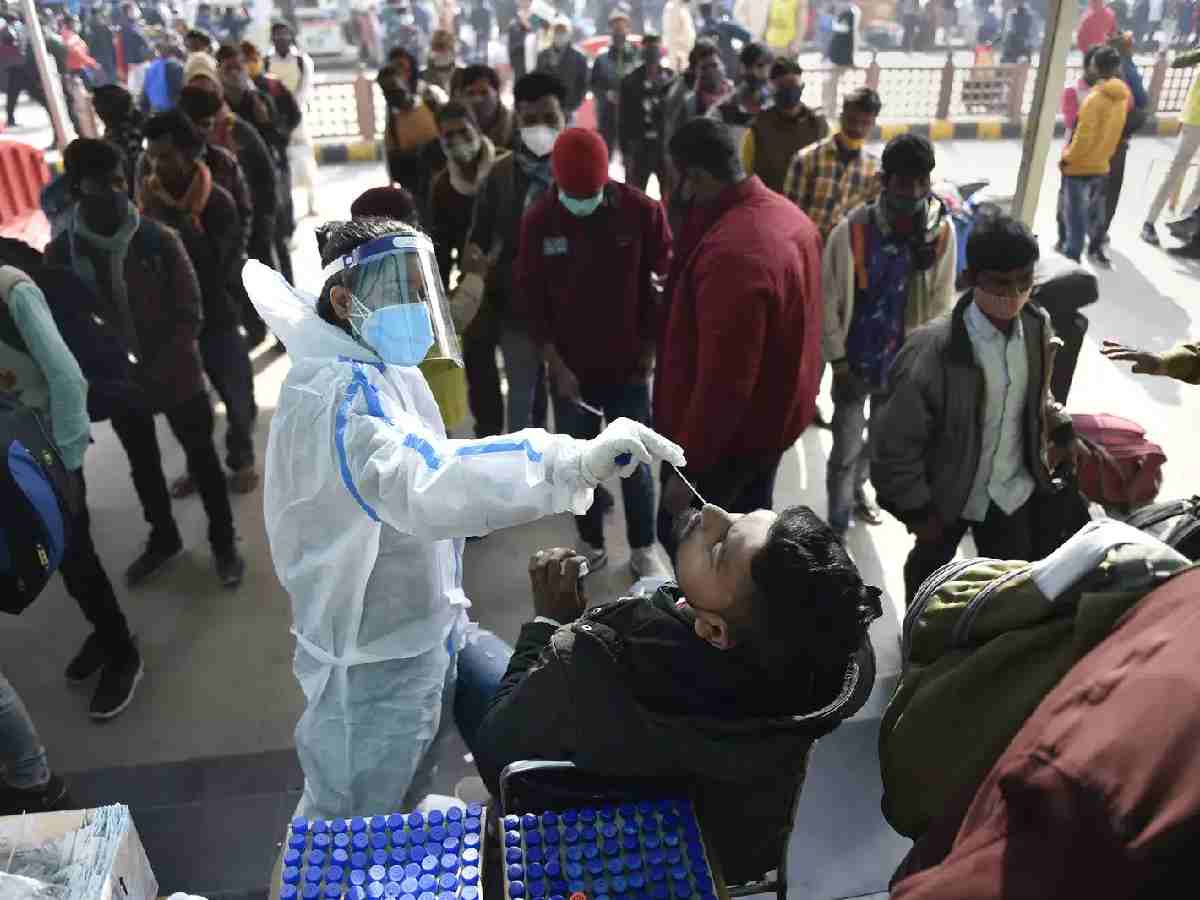
After a relatively quiet spell spanning nearly three years, Delhi is once again seeing a rise in COVID-19 cases. While the numbers are nowhere near the catastrophic peaks of previous waves, the renewed spread of the virus has prompted concern among public health authorities.
As of June 20, there are 632 active COVID-19 cases in the capital, according to the Delhi Health Department. Though most patients are recovering with mild symptoms and hospital admissions remain low, the rise has been steady since late May, prompting the city’s health machinery to step up preparedness.
Since the start of 2025, a total of 2,580 individuals in Delhi have recovered from the infection. While the majority of new cases are being managed at home, authorities remain on alert, especially in view of the 15 COVID-related deaths reported this year. Experts say this is a sign that the virus continues to circulate and mutate, though its current form is far less severe.
What’s causing the spike?
Multiple factors are believed to be contributing to the recent rise in cases. These include the emergence of more transmissible sub-lineages of the Omicron variant, waning immunity among the population, and a general return to pre-pandemic behaviour.
Professor Dr M Wali, senior consultant at Sir Ganga Ram Hospital, pointed to the role of new variants. “One key reason is the emergence of new Omicron sub-lineages, such as JN.1 and KP.2, which are more transmissible than their predecessors. Although these variants typically result in milder illness, they are capable of spreading quickly and affecting a large number of people in a short time,” he said.
Dr Wali also noted that immunity from vaccination or prior infection tends to wane over time. “Many Delhiites were vaccinated or infected more than a year ago, and their immunity—either vaccine-induced or natural—may have diminished. This makes them more vulnerable to reinfection.”
Behavioural patterns have also changed significantly. The return of crowded events, unmasked gatherings, and increased travel has made it easier for the virus to spread. “The summer heat is also playing a role,” Dr Wali added. “It’s driving people indoors into air-conditioned, poorly ventilated spaces, which increases the risk of airborne transmission.”
What are the symptoms?
Fortunately, the majority of current infections are presenting with mild symptoms. These include sore throat, low-grade fever, dry cough, body ache, and fatigue. Some patients have also reported gastrointestinal symptoms like nausea or loose stools, and in a few cases, headaches.
Importantly, very few patients require hospitalisation. Unlike previous waves, oxygen support and intensive care admissions are rare. Recovery typically takes three to five days, and patients are managing with simple home remedies—paracetamol, rest, and fluids.
Who should be cautious?
Despite the mild nature of most cases, certain groups remain at higher risk. These include the elderly, pregnant women, and individuals with existing medical conditions such as cancer, chronic heart, lung, liver or kidney disease, and morbid obesity.
Dr J Kirtana, Associate Consultant of Infectious Diseases at Fortis Hospital, Shalimar Bagh, stressed the importance of vigilance for vulnerable groups.
“Those with comorbidities, post-organ transplant recipients, and individuals on immunosuppressive medications should take extra precautions,” she said.
Precautions recommended for high-risk individuals include practising good hand hygiene, wearing masks in public settings, maintaining physical distancing, avoiding crowded places, and seeking medical advice promptly if symptoms appear.
How is the government responding?
In light of the rising numbers, the Directorate General of Health Services (DGHS) has issued a fresh advisory addressed to all government and private hospitals across Delhi. The advisory, approved by the competent authority and signed by the Special Secretary (Health and Family Welfare), outlines key steps to bolster the city’s preparedness.
One of the most urgent recommendations is ensuring hospital readiness. Medical directors and administrators have been instructed to verify that essential medical equipment—ventilators, Bi-Pap machines, oxygen concentrators, PSA plants, antibiotics, and vaccines—are all in working condition.
“All equipment such as ventilators, Bi-Pap, oxygen concentrators, PSA, etc. are to be kept functional at all times,” the advisory states. Hospitals have also been asked to conduct refresher training for staff, especially those designated to handle COVID-19 patients, to ensure protocols are well understood.
Surveillance and reporting have been reinforced as well. Hospitals are required to report all influenza-like illness (ILI) and severe acute respiratory infections (SARI) cases to the Integrated Health Information Platform (IHIP). In addition, COVID-19 and influenza data must be uploaded regularly to the Delhi State Health Data Management Portal.
Genome surveillance is being prioritised. All positive samples must be sent to Lok Nayak Hospital for whole genome sequencing (WGS) to detect emerging variants in real time. Hospitals are required to notify the State Surveillance Unit of the number of samples sent for sequencing.
Testing protocols have also been updated. Healthcare facilities must now test at least 5% of all reported ILI cases for COVID-19. The aim is to uncover hidden chains of transmission within the community.
Lastly, mask enforcement is back. Hospitals are under instructions to strictly implement mask usage and general respiratory hygiene. “Respiratory etiquettes are to be maintained, including mandatory mask usage in healthcare facilities,” the advisory notes.
Expert insight
Dr Tushar Tayal, Consultant in Internal Medicine at CK Birla Hospital, Gurugram, noted that the combination of newer sub-variants and declining population-level immunity is largely responsible for the resurgence. “This current rise in cases is being fuelled not just by the newer, more contagious variants but also by the waning of immunity gained through previous infections and vaccinations,” he said.
“Public behaviour has also shifted—mask-wearing and physical distancing have been almost completely abandoned, and that’s aiding the virus’s spread,” he added. Dr Tayal pointed out that the resurgence is most prominent in Kerala, followed by Delhi, Maharashtra, Gujarat, and West Bengal.
On the clinical side, he explained that the symptoms being reported now are similar to previous Omicron waves, with a few new features. “Common symptoms include fever, fatigue, dry cough, and throat pain. But what’s being widely reported in this wave is hoarseness of voice—a feature not seen as often in earlier waves like Delta and early Omicron, where loss of smell and taste were more common,” he said.
He stressed that, although most cases remain mild, people with comorbidities, children, and the elderly continue to face higher risk of complications or even death. “While the mortality rate is not clearly defined, the recent deaths are a reminder that the virus still poses a threat to vulnerable groups,” he said.
Tayal advised the public to take basic precautions: wear masks in crowded or poorly ventilated areas, practise good hand hygiene, avoid contact with symptomatic individuals, and get tested if symptoms emerge. “We don’t need panic, but we do need awareness,” he added.
Covid phases and their impact on health systems
India’s first encounter with COVID-19 in early 2020 brought with it both a new virus and new uncertainties. The initial strain, first identified in Wuhan, China, caused respiratory distress, low oxygen levels, and other complications like blood clotting. The health system was unprepared, and the fear of the unknown gripped both doctors and the public.
The first wave peaked around September 2020 and subsided by January 2021. By this time, medical professionals had a better understanding of disease progression and management strategies.
Then came the devastating second wave in early 2021, driven by the Delta variant. It overwhelmed hospitals, led to oxygen shortages, and exposed the structural weaknesses in the country’s healthcare infrastructure. This wave peaked in April and continued till June. The trauma of those months—ICUs overrun, oxygen cylinders in short supply, and mounting fatalities—remains etched in public memory.
By early 2022, the Omicron-led third wave began. Although the new variant was highly transmissible, it was clinically milder. Symptoms resembled those of seasonal flu, and fewer patients required hospitalisation. The wave peaked in January–February and waned by March. Mid-2022 marked the official end of COVID-19 as a global emergency, but the virus had not disappeared—it became endemic, circulating quietly but steadily through the population.
How variants have shaped the pandemic
One of the defining characteristics of SARS-CoV-2 is its ability to mutate. While most mutations are insignificant, some have given rise to variants of concern—Beta, Delta, and Omicron being the most prominent.
Each new variant outpaced its predecessor. Delta rapidly replaced earlier strains, only to be overtaken by Omicron. The virus’s reproduction number (R-value) provides insight into this trend: the original Wuhan strain had an R value of 2, Delta around 4, and Omicron approximately 8. Newer sub-variants like JN.1 may have R values as high as 12. The latest offshoots—NB.1.8.1 and XFG—could be even more infectious.
Omicron’s distinct clinical pattern
Omicron stands apart not just genetically but also clinically. Unlike Delta, which affected the lungs severely and often required oxygen support, Omicron primarily infects the upper respiratory tract. Its symptoms—sore throat, runny nose, mild fever—resemble those of a cold or flu.
Scientists believe this is due to structural changes in the spike protein. Omicron’s spike has a high number of mutations and enters human cells in a way that avoids causing cell fusion—a process known as syncytium formation—which led to more severe lung damage in earlier strains.
As a result, Omicron causes milder disease in most healthy individuals. However, the virus still poses a danger to people with weakened immune systems, chronic illnesses, or advanced age. While it can evade prior immunity to some extent, existing vaccines and prior infections continue to offer strong protection against severe outcomes.
Sub-variants and the current rise in cases
The current increase in cases in Delhi and other states is being driven by sub-variants of Omicron, such as NB.1.8.1 and XFG. These are not new variants, but evolutionary offshoots of JN.1, a highly contagious form of Omicron.
While these strains may be more transmissible, they have not shown any change in clinical behaviour. The infections remain mild in the vast majority of cases, with little need for hospital care. Experts have found no indication that the current sub-variants are more dangerous for healthy individuals.
Nevertheless, close monitoring of mutations remains critical. For virologists and epidemiologists, tracking changes in the virus’s structure helps anticipate any shift in severity. For the public, however, the central message remains that COVID-19, though still present, is far more manageable than before.
Stay vigilant, not fearful
The resurgence of COVID-19 in Delhi is not a reason for alarm, but it is a reminder to remain cautious. With 632 active cases and 15 deaths reported this year, the numbers are relatively low, but they underscore the virus’s continued presence and evolution.
Also Read: Understanding gender affirmation surgery: A surgeon’s perspective
The path forward does not lie in returning to lockdowns or restrictions. It lies in building everyday habits that offer protection without disrupting life. Wearing a mask in crowded places, getting tested when symptomatic, and taking booster doses when eligible are simple but effective steps.
COVID-19 may have changed its form—but the need for responsibility remains the same.