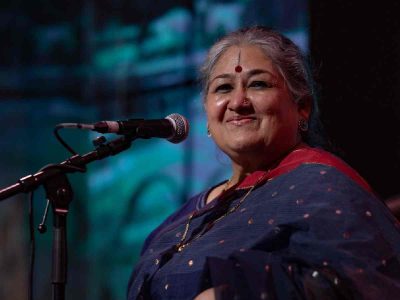
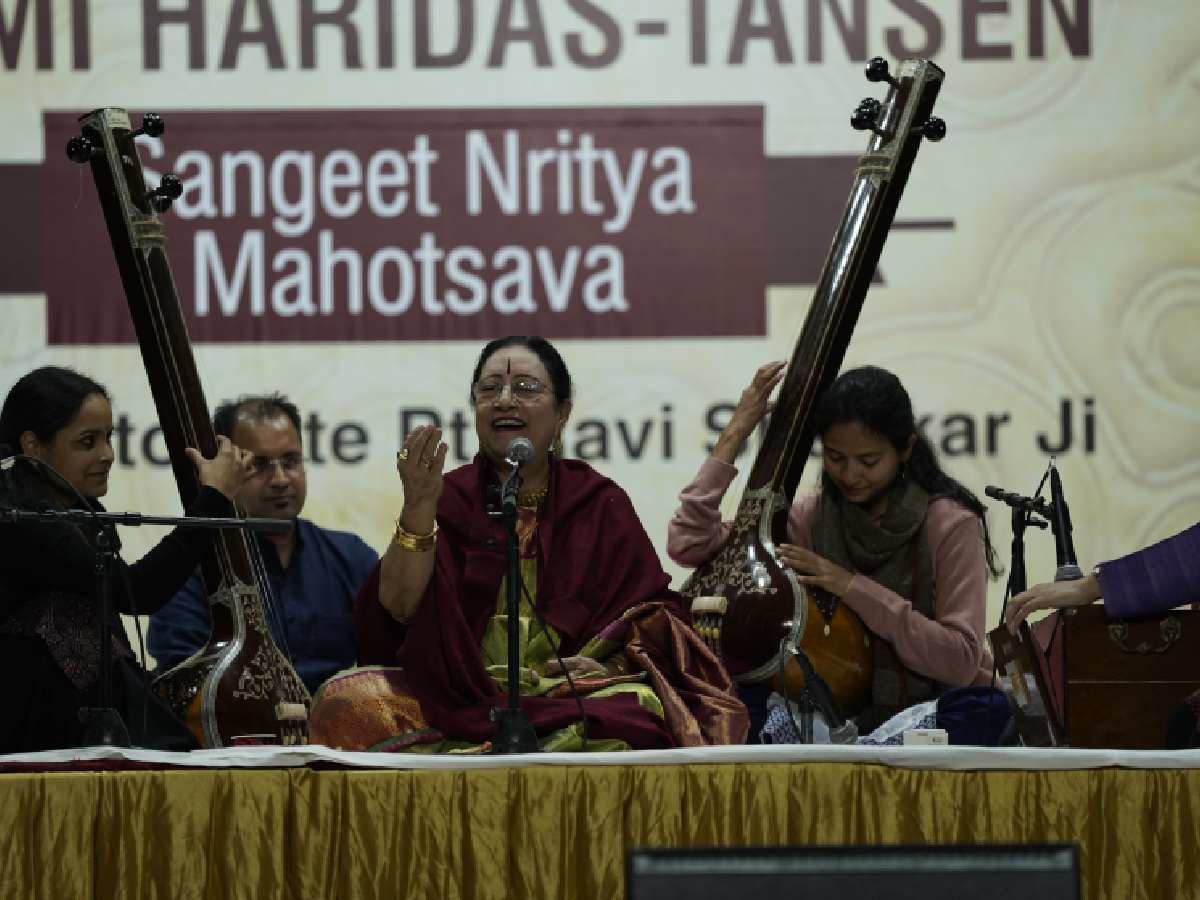
Indian classical music’s first female superstar, Begum Parveen Sultana, will be singing in Delhi on January 11 at the eagerly awaited Swami Haridas Tansen Sangeet Nritya Mahotsav. Feted as a cult figure, she shot to stardom while still in her early twenties; remarkably, she was awarded the Padma Shri in 1976 at the age of just 26 — a record that is yet to be matched. Her first concert was in 1962, when she was only 12.
Her extraordinary voice, spanning more than three octaves, combined with her magnetic stage presence and striking beauty, ensured a captivated audience wherever she sang. Even today, after more than six decades on stage, Begum Parveen Sultana’s appeal remains unparalleled.
She was born in the culturally rich town of Nagaon in Assam. Her father, Ikramul Mazid, himself a musician, soon realised that his daughter’s voice was exceptional. He brought her to Calcutta to learn classical khayal gayaki from the erudite singer Pt Chinmoy Lahiri, a disciple of Pt SN Ratanjankar of the Agra gharana, who had, however, evolved a distinctive and individual style of singing.
It was a pleasure chatting with the charming and legendary artist, whose warmth and affability are as well known as her music. Edited excerpts from the interview:
Begum Sahiba, after a lifetime in music and countless accolades, does the heady memory of receiving the Padma Shri still excite you?
Oh yes, very much so. I still remember Indira Gandhi being so kind when she presented me with the award; she said she felt I was an inspiration to young people from such a remote area. I am genuinely grateful for the honour that was bestowed on me when I was so young — a record that, as you said, has still not been matched! I remember my father crying when he told me about it; he was utterly overwhelmed. I was so sheltered at that time that I did not even fully understand the importance of such a great honour.
I have always believed that, as a performing artist, the audience matters most. You are not singing for yourself at home. Pleasing the audience is essential; every listener spends money to come and hear me, and I cannot afford to let them down. I sing for both kinds of listeners — those who understand classical music and its intricacies, and those who may not understand it fully but are open to experiencing and appreciating it. Class and mass are equally important to me. My motto has always been to please both, and my larger aim is for classical music to reach every home.
In terms of mass appeal, you have also been immensely popular as a playback singer for films since the 1960s. A song inextricably linked with you is ‘Hame tum se pyaar kitna’ from the 1981 film Kudrat. You have sung alongside Pt Jasraj, Sulakshana Pandit, and Ustads Niaz Ahmed and Faiyyaz Ahmed Khan.
Yes, I have been singing for films for several decades now. But it was always my stature as a classical singer that first attracted music directors.
You have also sung across India on every major central platform. Which city has been the most receptive to you?
All audiences have been equally receptive; no one city has supported me. I recently sang in Ahmedabad at Saptak, and there were so many young people in the audience who truly appreciated the concert. Some of them told me it was their first classical concert. I asked them, “How come?” and they replied, “We didn’t know it would be like this.”
Parveenji, it is often said that it is not just your music, but also your stage presence and connection with the audience that make your concerts so special. What would you say to that?
My stage presence, as you call it, is God-gifted. I am simply myself on stage. For me, the listeners are paramount. Their expectations are very high, and I cannot let them down. I genuinely love my audience. I always feel, audience hamare dev hain, bhagwan hain, aur main pujari hoon (My audience is like God, and I am the worshipper).
Even someone sitting in the very last row should appreciate my music and leave the hall remembering it; the music should stay with them, even haunt them.
I never take my music for granted. Before every concert, there is thorough preparation. As a vocalist, it is especially challenging — you never know when your voice might let you down. I often say that being a performer is like preparing for war — Bandook saaf rakhni padti hai (You must always keep the gun clean).
Riyaaz (vocal practice) is essential; your mind must be clear, and you should know exactly what to sing and where. Audience ke saath rub-ba-ru hona hai (You must be in constant, direct communion with your audience — soul to soul).
You cannot simply shut your eyes and switch off; how will you convey anything then? You have to remain open, alert, and deeply aware at all times. I make it a point to ensure that my audience leaves satisfied.
Thank you for speaking with me, Parveenji. We are all looking forward to your concert on January 11.
I find this festival absolutely fantastic. Even at this age, Uma Sharmaji, the organiser of the Swami Haridas Tansen Sangeet Nritya Mahotsav, works tirelessly with her team to ensure everything is perfect. I am deeply grateful to her. It is so cold, and yet the audience does not move! I may begin at 9 p.m. and finish at 1 a.m., but the audience stays until the very end. It is a marvellous experience, and I look forward to coming back every year. It is laajawab (truly exceptional).
Show quoted text