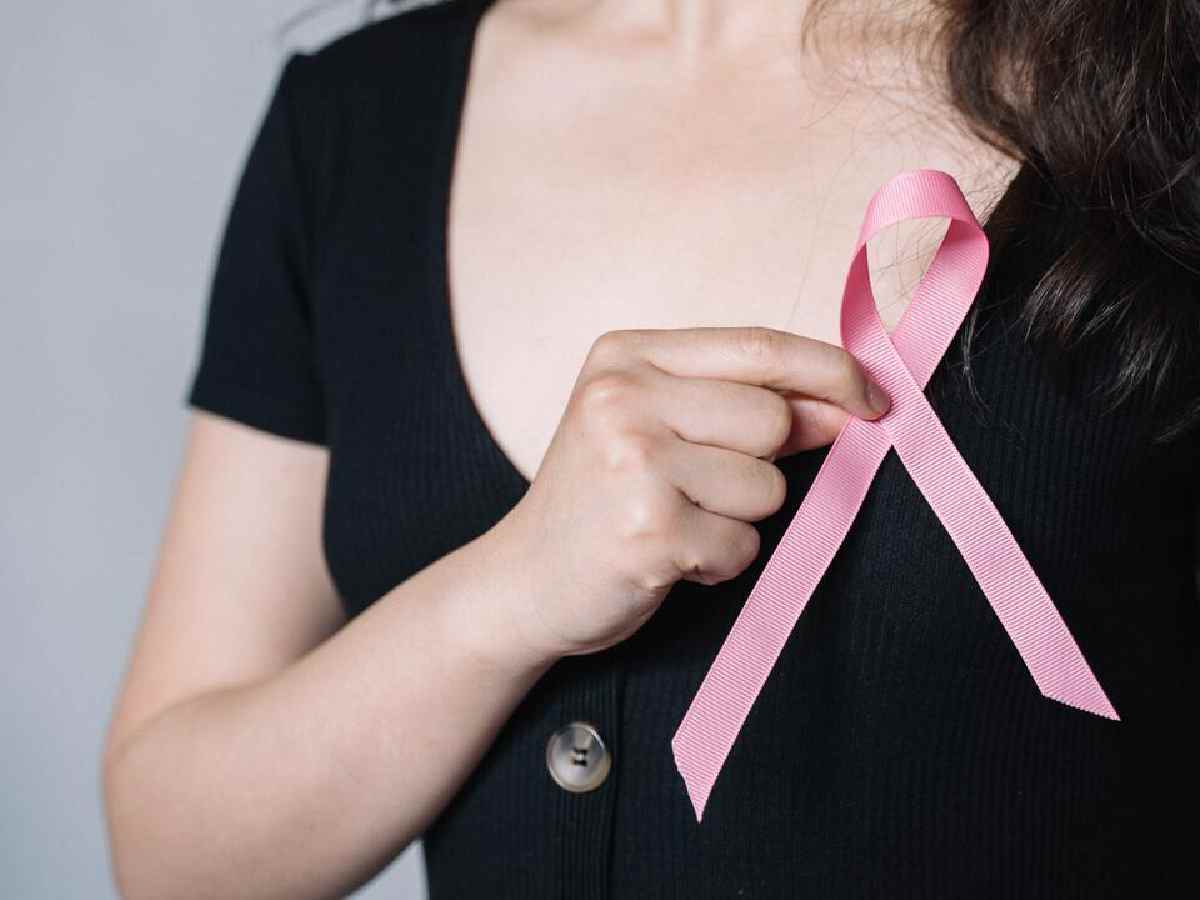
Delhi: Breast Cancer remains one of the most significant health challenges of our time, claiming over 6,70,000 lives globally in 2022—nearly 1,835 women every day. In India, the number of cases is growing rapidly, with 25% of diagnoses now involving women under 50. By 2040, the country could face one of the highest cancer burdens globally, largely due to delayed detection.
Delhi NCR-based oncologist and Indian Army veteran Dr (Lt Col) Brahamjit Singh believes a simple, no-cost innovation may offer part of the solution. His method—the Brahams Protocol (BHP)—is an at-home self-examination technique designed to help individuals detect early signs of breast cancer through visual inspection and touch.
With early-stage breast cancer having a 90% cure rate, the BHP seeks to make early detection more accessible by involving individuals and families in proactive screening practices.
Also read: Delhi man stabbed to death after he refuses to give beedi
One case every four minutes
Breast cancer has become the most common cancer among women in India, accounting for nearly 30% of all female cancer diagnoses. Recent data indicates that approximately 2,00,000 new cases are reported annually—one every four minutes.
Each year, nearly 90,000 women die from the disease. Late detection remains a key reason behind these outcomes, with India’s mortality rate considerably higher than the global average. Half of all cases now occur in women under 50, with an 18% annual rise observed among those below 35.
Urban areas show 30% higher incidence rates than rural regions, but rural patients often face more serious outcomes, with 40% being diagnosed at later stages. Currently, 60% of breast cancer diagnoses in India happen at Stage III or IV—where five-year survival drops from 90% at Stage I to just 20% at Stage IV.
Screening levels remain critically low. Only 1% of women in India undergo regular mammograms. As a result, 85% of breast cancer cases are detected either through self-examination or when symptoms begin to appear.
“Age is no longer a barrier in breast cancer,” said Dr Singh.
“Mahima Chaudhry developed breast cancer at 48 years of age, Chhavi Mittal at 42, Hamsa Nandini at 37, Hina Khan at 36 years. These are not just names; they are ominous warnings. Breast cancer does not discriminate. It does not pause to consider age, social status, or faith. Once believed to be a threat after the age of 50, this silent executioner is now preying upon younger women, creeping into their lives in their forties, even their thirties, without warning, without mercy,” he added.
The Brahams Protocol
The BHP is a structured approach to breast cancer screening intended to be performed at home. Dr Singh describes it as a step forward in making early detection accessible to more people, especially where access to medical screening remains limited.
The method involves self-examination through visual cues and physical touch, with the support and involvement of a partner. It encourages early recognition of changes in the body, aiming to detect cancer before it progresses to advanced stages.
The protocol also emphasises the emotional impact of breast cancer, particularly for family members and partners, and positions early detection as a shared responsibility within the household.
A gap in detection
The development of BHP was driven by repeated encounters with patients diagnosed at advanced stages—something that Dr Singh found troubling despite the availability of modern treatments.
“Being a medical oncologist carries immense responsibility,” he said. “Every day, I witness the fear, despair, and helplessness that breast cancer inflicts.”
Over time, these experiences led to personal reflection. “Despite having access to cutting-edge treatments, the real battle was often already lost— simply because the diagnosis came too late,” he said. The idea for a self-examination protocol emerged not just from clinical necessity but also from a deeply personal space. “It came from love, from wanting to preserve companionship and dignity. I didn’t want anyone to live with the regret of ‘if only we had known sooner.’”
The Protocol is framed as a tool that bridges this gap—a method that doesn’t rely on expensive infrastructure but instead empowers people within the home to act early. “Breast cancer doesn’t just take the life of the woman,” he added quietly. “It breaks the entire family.”
The method in practice
The Brahams Protocol is built on two steps: Inspection (Look) and Palpation (Feel). It does not require any medical instruments— just a private space, informed consent, and attention to detail.
The process is intended to take less than ten minutes. It involves observing changes in appearance and using the hands to detect differences in tissue texture or growth.
The method encourages participation from the woman’s husband or partner, with informed consent and mutual trust as key principles. It positions the partner not as a bystander, but as an active participant in safeguarding health. “This isn’t just a clinical process,” Dr Singh noted. “It’s about turning care into action. In a relationship built on trust and support, this can be a natural extension of that bond.”
A central principle behind the method is that observation improves with knowledge. “The eyes only see, and the fingers only feel, what the mind knows,” Dr Singh explains.
The Palpation component involves seven specific steps:
Use the first three fingers—index, middle, and ring—together
- Use the flat pads of the fingers, not the tips • Apply varying pressure to detect surface and deeper changes
- Use circular motions to check texture and shape (referred to as “The Ginger”)
- Examine the breast thoroughly using three screening techniques
- Assess the armpit area (axilla) using the “Inverted Cup” method
- Examine the nipple and areola region (NAC)
Speaking to Patriot, Dr Singh said, “Even if BHP saves 10% of women from late-stage diagnosis, it’s a victory. Studies show that breast self-exams (when done correctly) improve early detection rates.”
Also read: Delhi transport dept to add 2,000 e-buses to its fleet this year
A tool for awareness
Breast cancer remains a major health burden, and early detection continues to be the most effective way to reduce mortality. BHP, according to its creator, provides a low-cost, accessible method to involve families in that process
“Don’t wait for a diagnosis to act. Learn BHP today—because the best time to detect breast cancer is before it’s too late,” Dr Singh urged.