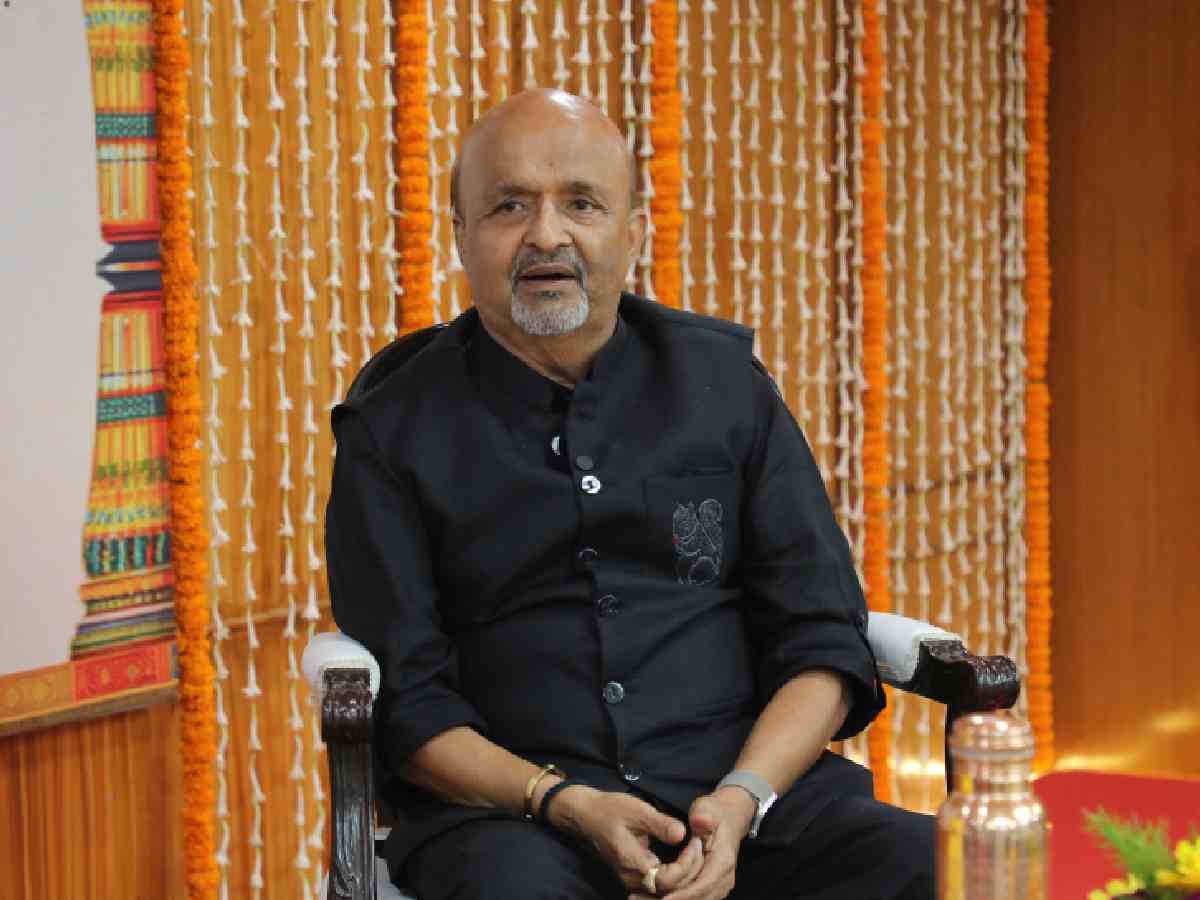
For veteran lyricist Sameer Anjaan, the path to writing over 3,500 songs—many now etched into India’s collective memory—was paved with hardship, resilience, and an unyielding love for words. Known for soulful hits like Teri Umeed Tera Intezaar, Ghunghat Ki Aad Se and Mujhe Neend Na Aaye, Sameer spoke to Patriot during a visit to Delhi for Baithak: Sameer Anjaan – A Lyrical Mehfil.
The Guinness World Record holder for the most songs written in Bollywood described his early days in Mumbai as “intensely challenging.” Born in a small village near Banaras (Varanasi), he left behind rural life and a secure career to chase his dreams in the city.
“It was a long journey. I left my bank job and even turned down an offer to be a professor after completing my MCom from BHU,” he said. “At the time, not many people were that educated. But I was adamant—I wanted to write lyrics.”
That decision came at a steep cost. “I used to cry at night and sleep hungry. But I always believed the pain and hunger would take me forward. And it did. If you haven’t known poverty or heartbreak, your writing will sound fake. It won’t touch hearts.”
Also read: ICW 2025: Manish Malhotra redefines runway with a couture party
A legacy that was both a blessing and a burden
Sameer is the son of celebrated lyricist Anjaan, a legacy he describes as “both a blessing and a burden.”
“People assumed I was doing this as a hobby—‘Itne bade baap ka beta hai, shaukiya shaayari karta hoga.’ Music directors would make me sit and test me, wondering if my father was ghost-writing for me,” he said. “It took me four years of sitting daily at Laxmikant’s studio before one mukhda (song’s opening) was approved.”
One of his lowest points came when a renowned composer, also a friend of his father, dismissed his work outright. Sameer recalled: “He read 40 of my songs and said, ‘You’re a terrible writer. Don’t show this to anyone. You’re spoiling your father’s name.’ Then he threw my diary out the window. I was broken. But I picked it up and went straight to Usha Khanna’s house. I didn’t stop.”
Persistence eventually paid off. Sameer went on to write for iconic films like Dil, Aashiqui and Coolie No. 1. “When Mujhe Neend Na Aaye came out, I’d walk into colleges or events and hear it playing everywhere. Then came Aashiqui, and it felt like the whole country was in love.”
Faith, fame and the power of words
Despite decades of fame, Sameer remains deeply spiritual. “We are just vessels. The real creator is that supreme power—call it Allah, call it God. Faith in that power keeps me going.”
But he worries about the lyrical decline in today’s music. “A lot of songs now, especially by some new rappers, have abuse in them. That’s not art. Art should elevate, not provoke just for attention,” he said.
Still, he acknowledges and appreciates genuine talent. He calls Diljit Dosanjh “a fine artist with a powerful voice” and describes Nusrat Fateh Ali Khan as “a true Sufi and servant of Allah.” Of Atif Aslam, he said: “Atif has sung some of my most beautiful songs. His voice is full of romance and passion. I even did an album with him—he is an artist I deeply admire.”
Misunderstandings, humour and cultural gaps
Sameer recounted humorous misunderstandings from film sets, especially in South Indian productions.
“One time, I wrote the line Teri aankhon mein bijli chamke, and the director asked me, ‘Sir, how do I shoot thunder in the eyes?’ I didn’t know whether to laugh or cry,” he said, laughing.
Another incident left him baffled. “I saw the heroine lying down, and people were rubbing her foot. I asked what was going on, and they said, ‘You’ve written rub, rub, rub.’ I was shocked. I told them rab means God! They had no idea.”
There was also confusion over poetic expressions. “For the film Rakhwala, I wrote the line Neend aa rahi hai, na jagao, jao baba jao so jao. The director objected, saying, ‘Sir, you’ve written baba, but there’s no grandfather in the scene. Baba means grandfather, right?’ I thought, ‘Inko kaise samjhaun bhai, yeh ek expression hai’—how do I explain that ‘baba’ is just a poetic term of endearment?”
The present and what lies ahead
Sameer began his career in 1983 with Ek Baar Chale Aao, but it was the 1990 blockbuster Dil that firmly established him. Recently, he wrote songs for Battle of Galwan, starring Salman Khan. “After a long time, I felt I was writing something with real meaning,” he said.
Yet, he laments that Hindi film music has lost its emotional depth. “We started making songs to compete with others, forgetting our roots. But now, in at least five upcoming films, I’m writing pure, emotional songs. You’ll soon hear music that reminds you of the golden days.”
For Sameer, the art of writing remains sacred. “You don’t need silence or a special setting to write. The atmosphere should be in your mind. If it’s clear, I can write standing in a corner. We lyricists are experts in putting thoughts into words.”
He is equally passionate about teaching. “It has always been my dream to teach people to become songwriters. When you write lyrics, there are many nuances one needs to take care of, but if you know how to approach the challenges that will come your way, you can really excel.” He now teaches an online course on the platform Unlu to mentor aspiring lyricists.
Also read: Delhi HC to hear on Jul 30 pleas against Centre’s nod to release Udaipur Files film
‘The old magic will return’
Sameer is realistic about changing trends but remains hopeful. “The lyrical value is deteriorating, and sound is gaining more importance. It’s like junk food—it’s everywhere. The audience wants a new sound, but this isn’t healthy for the future. In my early days, so much attention was given to detailing. Now, they just want the music ready. The lyrics are treated like an afterthought,” he said.
He blames the lack of collaboration for this decline. “Now, there’s a creative block because producers and directors aren’t ready to discuss their scripts with lyricists. There’s no synergy. I try to protect myself from such blocks by staying focused on the emotion of the scene.”
Speaking about Delhi, Sameer admitted he has barely explored the city. “It’s always been hotel to function to flight. But I want to stay a few days, roam the city and write about it. Dilliwalon ke liye zaroor likhunga,” he said.
Asked to recite a couplet for Delhi, he smiled and promised, “Next time, I will return with something written just for this magical city.”
As Bollywood slowly rediscovers its emotional core, Sameer remains optimistic. “In at least five upcoming films, I’m writing songs that are pure melody—songs with feeling. You’ll hear the old magic again. That’s my promise.”