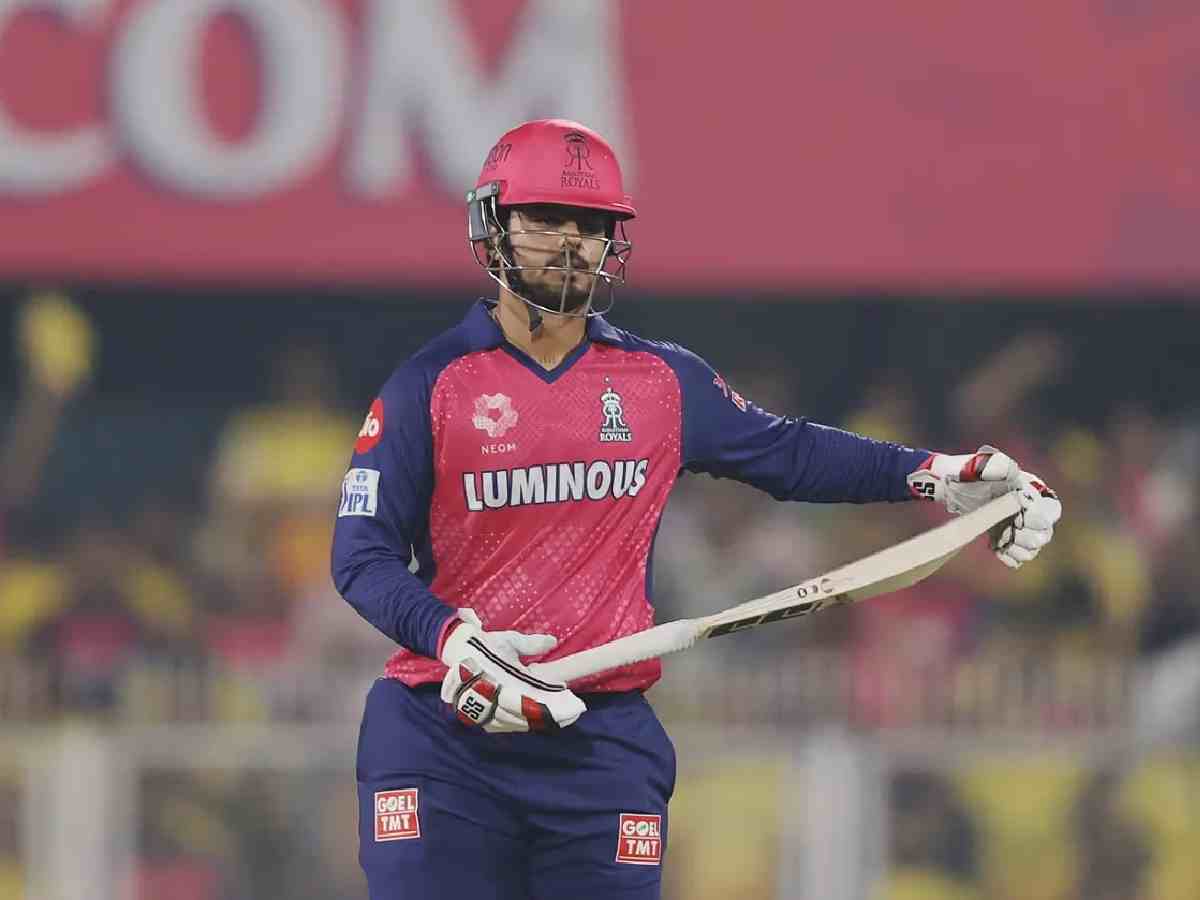
When Rajasthan Royals’ (RR) aggressive left-handed batsman Nitish Rana scored a brisk 28-ball 51 against Delhi Capitals in Delhi on April 16, he must have had mixed feelings, having scored those runs at his former home ground, the Arun Jaitley Stadium (formerly Ferozeshah Kotla). The match ended in a tie after both teams’ scores were level at the end of the 20 overs each, forcing a tie-breaker Super Over.
In the Super Over, Delhi Capitals’ Australian import Mitchell Starc bowled a tight over to win the game in thrilling fashion. However, a puzzling decision was made: why was in-form Rana, who had been the joint top scorer for his team alongside Yashasvi Jaiswal, ignored by the Royals for the Super Over, especially when he knew the venue like the back of his hand? This question baffled many.
Former Australian all-rounder Shane Watson, who was commentating at the time, could not hide his shock: “I am bewildered. What wrong has Rana done?” Former New Zealand player Simon Doull, sharing the microphone with Watson, agreed: “I am with you.”
The two other RR players who batted in the Super Over were openers Shimron Hetmyer and Riyan Parag. Rana, however, did receive a consolation award for hitting six boundaries.
Rana has played most of his cricket for Delhi, his home city, even captaining the team in the Ranji Trophy. However, a fallout with the often-controversial Delhi and District Cricket Association (DDCA) forced him to leave and play for — and captain — Uttar Pradesh from the 2023-24 season onwards. Therefore, he must have had mixed feelings.
Willow talk
Bat checks have become a regular occurrence in IPL matches this season, and the issue came up again during Rajasthan Royals’ home match against Rishabh Pant’s Lucknow Super Giants (LSG) at Sawai Man Singh Stadium in Jaipur on April 19. The issue arose when a miscued pull shot from Rana flew high and far off the edge of the bat, resulting in the only six of his knock.
Commentator and former India left-arm spinner Murali Karthik quipped, “No wonder umpires are checking bats every time batsmen walk in.”
Why take DRS?
In recent times, it has become common for batsmen, upon being given out, to opt for the Decision Review System (DRS) but not wait at the crease for the third umpire’s decision. Instead, they start walking towards the dressing room before umpire’s verdict is conveyed.
Also Read: IPL diary: Kohli’s milestone century of T20 fifties sparks IPL charge
This behaviour was observed in the Rajasthan Royals game against LSG on April 19. Home captain Riyan Parag opted for the DRS when the on-field umpire declared him out LBW against pacer Avesh Khan. However, the left-hander from Assam did not wait at the crease to know the outcome of his appeal. He reached the dugout before the third umpire’s decision, which was displayed on the giant screen: ‘out’. Commentator Shane Watson called Parag’s decision to leave without waiting for the DRS result as “bizarre.”
Interestingly, this impatience is sometimes seen in international matches as well. So, why take — and waste — the limited DRS appeals that teams have at their disposal, if batsmen are certain the decision will surely go against them?