Throughout the year, the Public Works Department (PWD) has found itself on the brink of chaos, with a large volume of work being allotted but little visible improvement on the ground.
According to the PWD Sewa dashboard, more than 1,176 complaints related to public infrastructure have been recorded. These include complaints about buildings, drain-related issues, flyovers, foot overbridges, horticulture, other road issues, pollution, potholes, residential colonies, roads and footpaths, streetlights, subways, waterlogging, and WiFi and CCTV infrastructure.
A clear pattern emerges from the data: complaints related to potholes and streetlights are particularly frequent, while the category of ‘Other Road Issues’ has recorded the highest number of complaints overall.
Roads remain Delhi’s biggest issue
Under the ‘potholes’ category, a total of 252 complaints were received over a two-month period. Of these, 191 remain pending, while the rest have been resolved.
Over the past 10 months, the Delhi Government has claimed to have repaired more than 3,000 potholes, describing the effort as a “commitment to ending the cycle of delays and excuses”.
A PWD official said, “These are routine complaints from the public. As soon as we receive reports concerning roads and streetlights—such as potholes, missing lights, damaged bulbs or poles—the department responds promptly and resolves them within two to three days.”
Also Read: Delhi’s health system stretched as pollution, climate stress and disease converged in 2025
Roads found to be in very poor condition, where potholes recur frequently, are added to a list for complete repair and re-carpeting as a permanent solution. “Work on these will commence shortly, once air pollution levels improve,” the official added.
However, complaints under ‘Other Road Issues’ paint a more worrying picture. The category recorded 318 complaints, of which 221 remained incomplete as of December 26.
Waterlogging without rain: A fact in Delhi
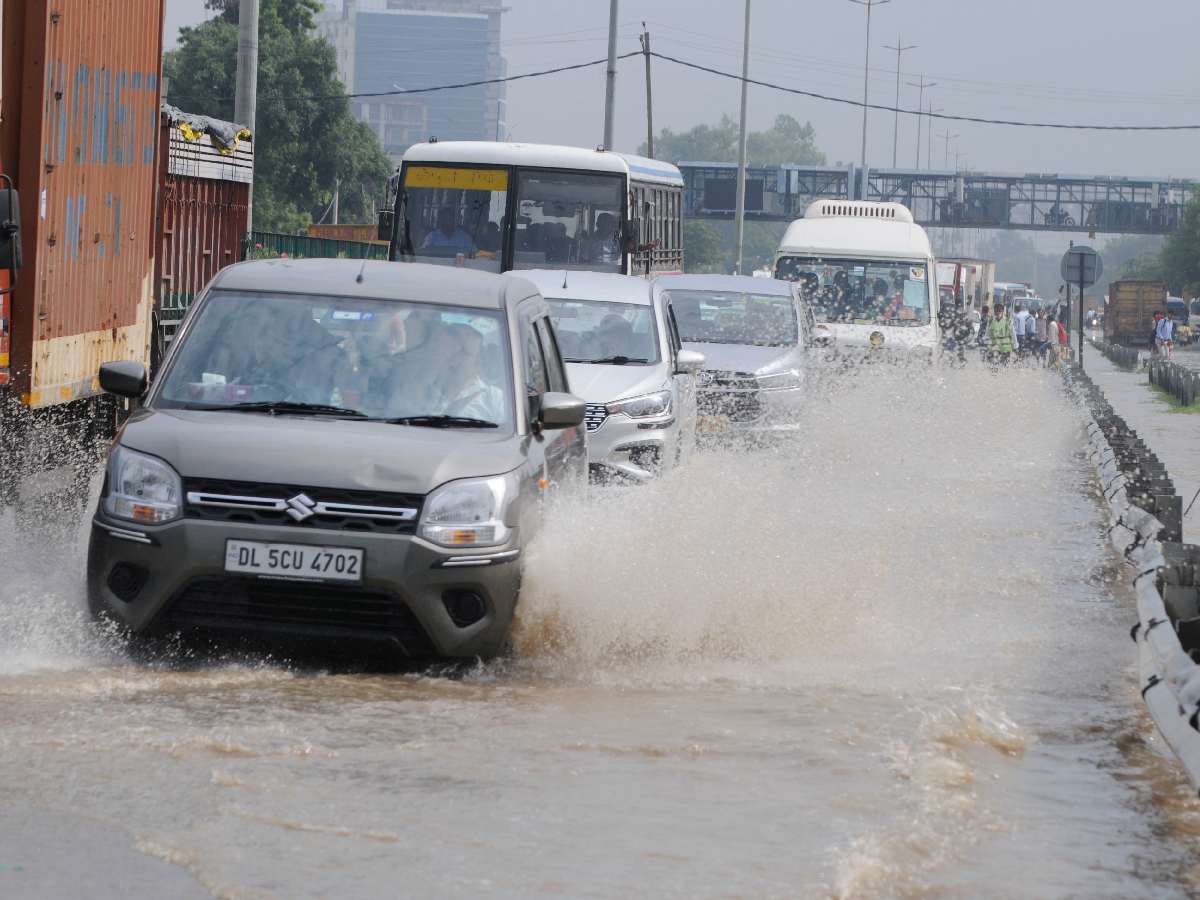
The situation appears even more grim with waterlogging continuing to feature prominently among complaints, even during periods of clear weather.
In November and December (till December 26), the PWD received 73 complaints related to waterlogging. Of these, 44 remain unresolved. In several cases, the resolution timeline appears uncertain, with many complaints remaining pending for over a month.
For comparison, during the monsoon season in October, 317 incidents of waterlogging were recorded. Overall, more than 1,000 waterlogging-related complaints have been registered during the current year.
On November 28, a resident of Bali Nagar in West Delhi, Ryan Ohri, reported severe water seepage in the neighbourhood.
“A large amount of water has been standing next to the pavement in front of Food Scouts restaurant, The Home Shop and the 369 store for months now,” the complaint stated. It added that the stagnant water was causing a “significant mosquito problem in the area” and requested urgent attention.
In East Delhi, a road near Dashmesh Public School in Vasundhara Enclave has remained blocked due to severe waterlogging. Officials said the condition was linked to extensive maintenance work being carried out by the Delhi Jal Board (DJB) to repair the sewage system. “It will be fixed once the maintenance work is completed,” an official said.
On November 26, a resident complained that a section of the main Burari road had been flooded with sewage water. The complainant, who spoke on condition of anonymity, said the waterlogging was “not because of the sewage work being carried out by the DJB”. They added that “the water is overflowing from cracks in the footpath”. However, PWD officials stated on the portal that the leakage was due to DJB maintenance work.
Several complaints also highlight the deteriorating condition of roads. Archana Prawalia, a resident near Loni Pusta in East Delhi, said potholes along the stretch had led to chronic waterlogging.
“The road from Loni Pusta to Loni Depot is in very poor condition. There are numerous potholes along the entire stretch,” she said.
She added that the route, used daily by more than 10,000 commuters from Baraut, Baghpat and Shamli, becomes blocked “each time there is some seepage issue”, turning the daily commute into a “drag”.
Delhi’s pothole dilemma
Earlier in 2025, the newly formed Bharatiya Janata Party government in the national capital had promised to fix all potholes in Delhi. However, the government missed multiple deadlines while attempting to complete the repairs across the city.
The PWD had initially set an end-of-April deadline to repair 7,600 potholes. This was later extended to the end of May, by which time the department had completed just over 52% of the work as of May 7.
Broken footpaths, another recurring issue, continue to force pedestrians onto carriageways, increasing safety risks. Many such complaints originate from West and North West Delhi, where residents say problems have persisted for years without resolution.
One complaint highlighted the deteriorating condition of Najafgarh Chowk, worsened by repeated digging by the DJB. Vaibhav Bansal, the complainant, said traffic jams had become routine.
“During peak hours, traffic jams last for over two hours daily. It is mostly because of the broken roads, as it reduces the speed of vehicles to a crawl,” he said.
A separate complaint regarding encroachment also remains unresolved. An official associated with the case said PWD staff attempting to remove illegal shops were attacked. “We went there to remove the encroachments of shops and makeshift stores but they charged at us. Even the police did not intervene to help us,” the official said.
In June, ahead of the monsoon season, the PWD carried out an intensive pothole repair drive, fixing 3,433 potholes in a single day—33 more than its stated target. Officials now say the department aims to complete repair work across 500 km of road network by March 2026.
Streetlights keep flickering in Delhi
The data also show 276 complaints related to streetlights, including missing lights, dark patches and damaged poles. Of these, 174 remain unaddressed.
Recently, the department announced plans to replace all conventional yellow streetlights on PWD roads with smart LED lights, as part of an energy-saving and cost-effective strategy aimed at eliminating dark spots.
There are approximately 90,000 streetlights across Delhi maintained by the PWD. The department is also responsible for around 1,400 km of main arterial roads, flyovers and underpasses across the capital.
PWD’s road ahead
The Delhi Government has set a target to repair arterial roads across the city by the end of the current financial year. The plan includes patching broken sections and potholes, increasing plantation on central verges, and improving landscaping to reduce dust.
The PWD has initiated a 55 km overhaul of key flyovers, along with the Noida Link Road, to ease traffic bottlenecks.
Earlier in August, PWD Minister Parvesh Sahib Singh launched the Government on Wheels campaign, undertaking a 47 km inspection drive along the Outer Ring Road.
The department has also initiated a drive to develop four model road stretches across Delhi, including at least one in south Delhi, to curb dust-related pollution. These stretches will be redeveloped with end-to-end paving, green belts and proper footpaths to eliminate exposed soil patches.
Singh said instructions had been issued to prepare four model stretches initially.
Officials said the government has decided that all major roads will be paved continuously from one end to the other, leaving no “brown areas” or unpaved sections. The long-term plan is to extend this approach to all arterial roads, including the Ring Road and Outer Ring Road, to create dust-free corridors across the city.