“I did not know that I was being extorted because of the gender I chose to identify as. Later, when I spoke to lawyers, I understood what was actually happening to me.”
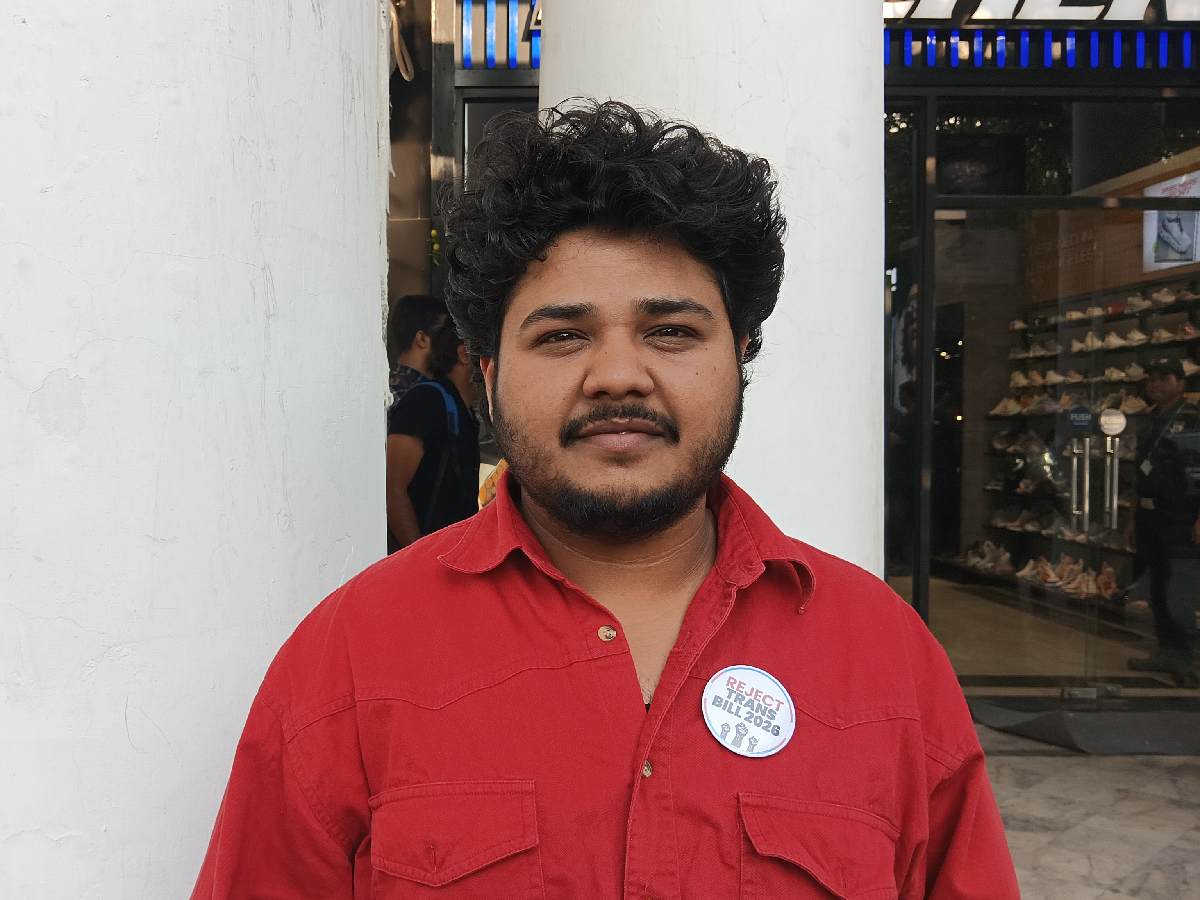
Kabir Maan, a vocal queer rights activist recognised for his work in education and awareness, until a few years ago was unaware that the country would double down on his and the community’s identity in 2026. Yet, he persisted, going on to educate over 15,000 children on being comfortable in their own skin while also sensitising them about sexual abuse.
Sextortion over identity
While his efforts initially bore fruit, Maan now finds himself battling renewed scrutiny over his identity. However, this is not new. “I had two colleagues, Riya (name changed) and Payal (name changed), who I thought were my friends. I confided in them when my gender dysphoria was getting worse. I had told them that I identified as a man. However, they used my insecurities against me,” he said.
“They told me that if I told anyone about my identity, the world would be against me, and they were my only hope,” he added.
At the time, Maan was associated with an NGO working on child rights. “Retrospectively, it was a safe space, but I was led to believe otherwise. While I was told that the both of them were my only outlet for acceptance, the real plot started to unfold. They kept telling me that I needed to send them money because Payal was being suspected of being involved romantically with me, and had to run away,” he said.
He added that he was told Payal had run away from home and that he needed to support her financially. “I was made to believe that it was the truth and I was at fault for identifying myself as a man,” he said.
During the pandemic, the pressure intensified. “They even told me that Payal’s family had lodged an FIR against me on the pretext of my identity being illegal. I did not know anything about the 2019 Act (Transgender Persons Protection of Rights Act), nor was I aware of the 2014 NALSA (National Legal Services Authority) judgement at the Supreme Court,” he said.
“They asked for money to keep the police quiet and I kept giving them the money.” By the end of it, he had accumulated over Rs 10 lakh in debt.
“They told me that the case had now gone to court, and I had to send a significant amount of money to keep it under wraps. I had quit my job by then because I was not able to cope. It came down to taking loans from online applications,” he said.
Finding truth and support
The financial and emotional toll left him isolated, with no support system, not even from his family. In April 2021, a turning point came when he joined another NGO.
“This is where I noticed that there were people like me and I belonged somewhere,” he said.
“That is when I finally opened up about the debt I had incurred.”
It was only then that he discovered the truth. “Upon asking the NGO’s contacts in the police, I found out that there was never any case against me, nor a complaint. I had been deceived all throughout on the guise of my identity,” he said.
“A legal representative at the Human Rights Law Network (HRLN) later informed me that I had been a victim of sextortion.” Reflecting on his journey, he realised that, unlike others, transgender persons actually start “living their lives much later” than cis-gendered people.
“Dalit transgenders even more so,” he sniggered.
The cost of silence
Now 34, Maan believes that early awareness could have prevented much of his suffering.
“The real issue that we are dealing with is a lack of conversation. More importantly, it is the lack of education,” he said. “I could have saved myself from all the harassment and sextortion if I knew about the community earlier.”
Becoming Kabir
Always jovial, a smile plastered on his face, he mentions giddiliy how he always wanted to be referred to as Kabir.
“I have always been Kabir. However, with my surname it became a bit difficult since I did not want to be known as Kabir Singh. So, I thought, why not use Maan? I am a man either way,” he said, pondering over how he became Kabir Maan.
The name ‘Kabir’, he added, is inspired by the mystic poet and his poem, ‘Na Main Dharmi, Na Hi Adharmi’.
Educating one child at a time
From not wanting to wear the skirts and frocks his parents would choose, he was never confused about who he really was.
“I was very adamant about not wanting to wear clothes which were exclusively meant for girls. They would force me into them but my parents did not know any better. I started wearing the kurtas since they still had a semblance of gender neutrality to them,” he said.
After almost 30 years of his life, did he choose to actually go for Hormone Replacement Therapy (HRT).
“Being from the margins, information also reaches you by the end of everything. It is not just ignorance but also, about accessibility,” he said, “I never went to a good private school. I went to a government school near my house in Old Delhi where the conversations were limited and I never saw anyone who spoke like me. Even later when I went to college, I was called a lot of names which never made me feel welcome. There was nobody who understood who I was, and nobody who spoke about gender dysphoria.”
Thus, the goal as an educator was to provide a safe space for children to understand them and the issues that they are facing. “We chalk a lot of things up to children being themselves. If they have a hard time studying, it is chalked up to ADHD (Attention-deficit/hyperactivity disorder). If they are fidgety, then they are told to focus. There is never any conversation around the potential cause for these disorders,” Maan highlighted.
“Some children may face gender dysphoria, or in worse cases, there are instances of sexual abuse involved as well. In a lot of sessions that I have conducted, we found out that a lot of the children were sexually abused and often it was by other family members. However, since the parents do not want to take any action against their own family, these issues are retracted.”
A country regressing
Maan’s work as an educator now faces fresh uncertainty.
After President Droupadi Murmu assented to the Transgender Persons (Protection of Rights) Amendment Bill, 2026, concerns have grown across the community.
“At least I had my transgender ID card, but now there is no use for it either. I do not know what to identify myself as, and more importantly, I have no way of applying to educator jobs,” he said.
The amended law redefines the legal criteria for identifying as a transgender person and introduces stricter provisions, including mandatory medical certification.
The legislation has faced backlash from opposition parties and LGBTQIA+ groups, who argue that stakeholders were excluded from consultations. The resignation of National Council of Transgender Persons (NCTP) members Kalki Subramanium and Rituparna Neog on the day the Rajya Sabha passed the Bill underscored the dissent.
A Supreme Court-appointed committee, led by retired Delhi High Court judge Justice Asha Menon, has also urged the Union government to withdraw the Bill, citing concerns over its provisions.
Also Read: Living on the edge: Transgender community fears exclusion under amendment Bill
Further, the Rajasthan High Court, on March 30, warned that the amendment risks turning an “inviolable aspect of personhood” into a state-controlled entitlement.
However, despite these travails, the smile remains on his face while the country regresses a step at a time. He knows that he, alongside the community, will bounce back.
“We have been fighting for a long time. The struggle has just been made a tiny bit longer.”