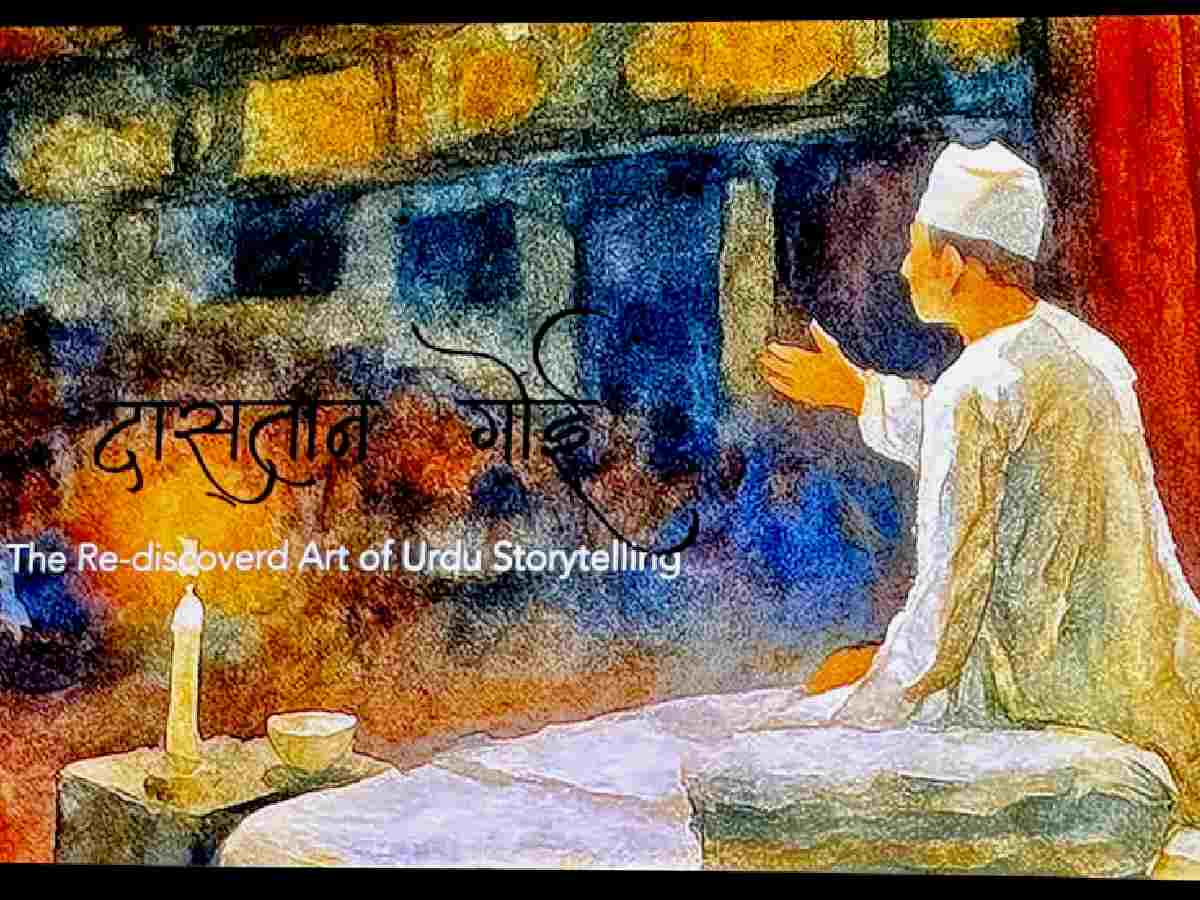
On May 4, 2005, Mahmood Farooqui performed his first modern dastangoi, presenting ‘Tilism-e Hoshruba’ at the India International Centre. Exactly 21 years later, on May 4, 2026, Anjuman Taraqqi Urdu (Hind), popularly known as Urdu Ghar, celebrated his journey and the revival of dastangoi at the same venue. The event featured a documentary tracing the revival of the form, the people behind it, how the idea took shape, and how it travelled to stages across the country, reaching wide audiences and inspiring a new generation of dastangos, including women.
It was back in 2005 that he began reviving the forgotten art of dastangoi under the guidance of his uncle, Shamsur Rahman Faruqi, whose book on dastangoi, Dastan-e- Amir Hamza Ka Mutala opened up a new world of storytelling for him. Determined to keep the form alive, Farooqui founded the Dastangoi Collective, where he gathers and trains new performers to ensure the art form’s continuity.
His philosophy centres on reviving and adapting dastangoi, the classical Urdu storytelling tradition. He sees the form as a bridge between tradition and modernity, allowing contemporary themes to be explored through historical narratives. Farooqui believes in making storytelling accessible to newer audiences, using it to engage with social issues and foster cultural continuity, he says in an interview with Patriot.
How did it all begin?
“I had just returned from Cambridge, and that book really bowled me over. It was just fantastic. I read it, and then I thought one should do something to revive the tradition. Then I got a fellowship at Sarai, near CSDS.
When I read the actual dastans, I was mesmerised because I had not read anything like them, despite my interest in theatre, drama, and Urdu. This was a different level of writing, drama, dialogue, and imagination. I felt it could be revived.
But there was no one doing this. There were no role models. The form was totally dead. I did not know how to go about it.”
How did you shape what we now know as modern dastangoi?
“With my uncle’s guidance, my theatre experience, some intuition, and innovation, along with my producer Anusha Rizvi, I introduced the idea of having two performers. I felt that in today’s age, it might work better. That was not part of the tradition earlier.
Earlier, it was performed in mehfils. We had to bring it on stage. We had to devise the set, costumes, and the use of lights, sound, and music. The first show was rudimentary, but it was very successful — exactly 21 years ago. That gave me a lot of encouragement.
My first partner was Himanshu Tyagi, with whom I did theatre in school. Over time, we refined the presentation — brought in katoras, candles, and later costumes designed by Anusha. We used angarkhas, dupattas, topis, and pyjamas.
These were traditional Indian garments, not tied to any one community. That’s how we developed the visual identity of the performance. Then it grew — we received invitations, trained more people, wrote new stories, and the journey has continued.”
What has kept you going for 21 years?
“I enjoy doing it, and it brings together all my interests. When I perform a dastan on Mir, I engage with Urdu literature, 18th-century Delhi, and then perform it.
Also Read: I bring forgotten histories and women’s voices to life through dastangoi: Fouzia Dastango
As a theatre director, I would write plays, but there wouldn’t be as much scholarship. As an actor, I wouldn’t engage intellectually in the same way. Here, research, writing, performance, and acting all come together.”
What role has Urdu played, and how has dastangoi expanded the language?
“It’s all in Urdu. Dastangoi has brought Urdu back to the stage. Urdu drama is not very popular now, but dastangoi is. We’ve also developed a different kind of Urdu — not the filmi or romantic ghazal style, but something more direct, political, and rhetorical. In our dastans, we also use Sanskrit and Braj, and sometimes Persian. We are bringing multiple linguistic traditions back to the stage.”
You have also brought Hindu epics into dastangoi. How do you approach that?
“They were always meant to be recited. The Mahabharata was orally narrated. Dastans work the same way — they are meant to be spoken.
If I am a storyteller, why would I not engage with one of the greatest stories told in India? There are multiple Urdu translations of the Gita, and even an Urdu Mahabharata.
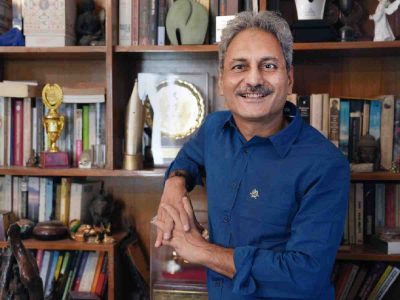
There are also thousands of verses on Krishna in Persian and Urdu. This is knowledge we are bringing back into public discourse. The response has been overwhelming. It’s God’s grace.”
Your themes span Urdu dastans, Tagore, Jallianwala Bagh, and novels. How do you adapt such diverse material?
“It is challenging because what is written and what is recited have different tonalities. What is read in isolation and what is performed publicly require different treatment.
You have to transform the written word into a spoken one — embellish it, shape it into a dastan. It draws on poetry and multiple narrative techniques. And yes, everything is political.”