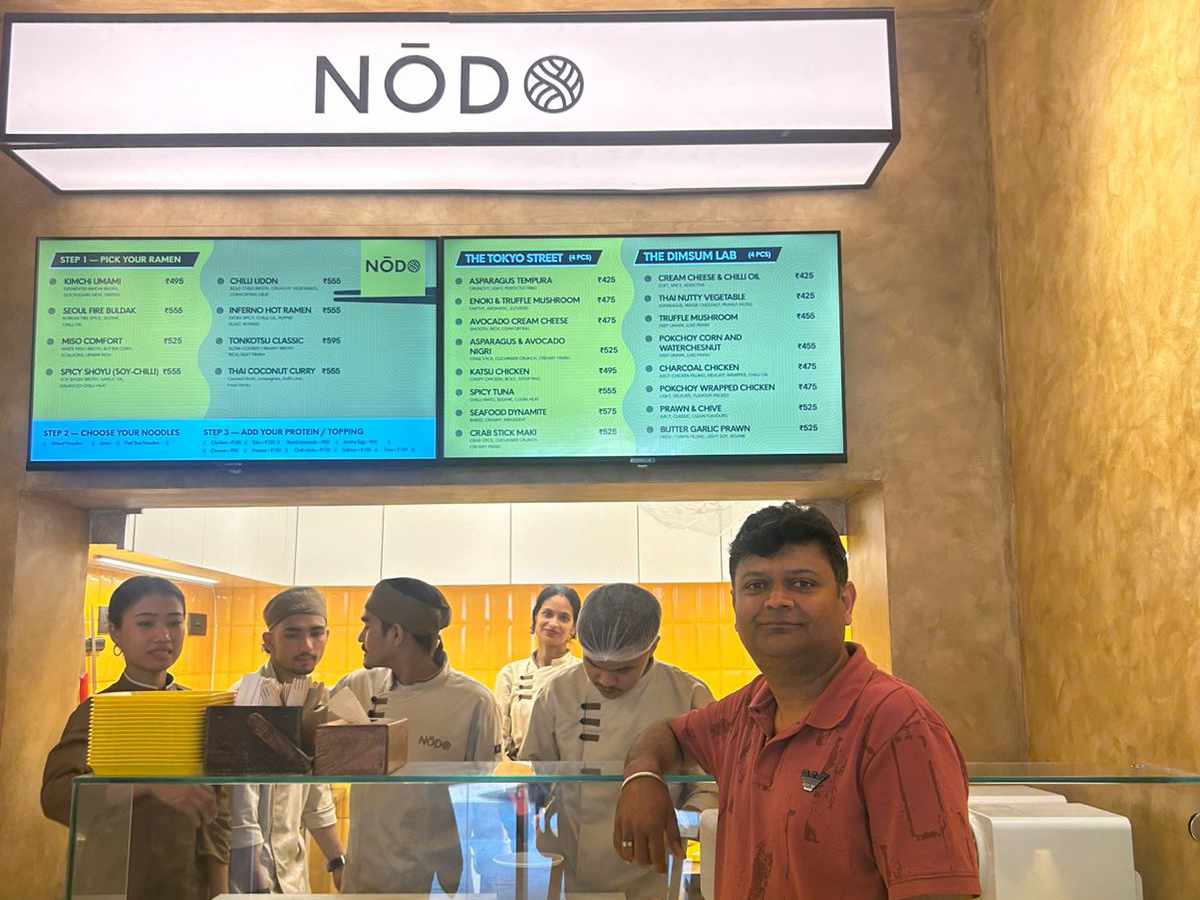
By early evening, the narrow lanes of Khan Market in Delhi begin filling with customers moving between cafés, dessert shops, and restaurants. Amid the familiar bustle of one of the Capital’s busiest food districts, a compact new outlet serving steaming bowls of ramen and trays of sushi has started drawing curious visitors.
NŌDO, a newly launched Pan-Asian kitchen in the market, is built around a simple idea: serving ramen, sushi, and dim sums quickly enough for people constantly on the move, while still retaining the flavours associated with traditional Asian comfort food.
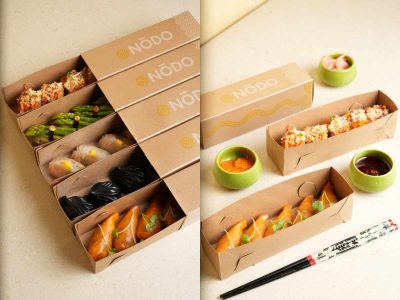
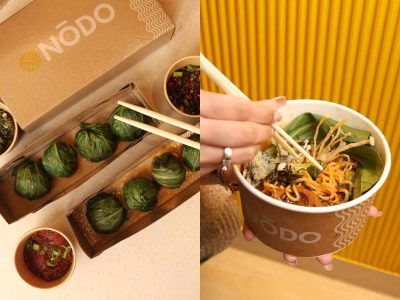
Inside the outlet, bowls are assembled within minutes, dim sums are packed into takeaway boxes, and sushi is arranged in neatly sectioned trays designed as much for delivery as dine-in customers. The space itself is compact and fast-moving, reflecting the growing preference among younger diners for meals that fit around work schedules, shopping trips, and late-evening outings rather than elaborate sit-down dining experiences.
For founder Shivang Gupta, the concept developed gradually over several years of working with Asian cuisine across different restaurant formats. “I had introduced sushi and dim sums through a small cart inside one of my restaurants, Sky Lantern in Malviya Nagar, almost four years ago. We realised very quickly that people were specifically coming for these items and that they had the potential to stand independently as a brand,” Gupta said.
Reinventing ramen
Having spent nearly two decades in the restaurant business across Delhi-NCR, Gupta said he noticed that while sushi and dim sums were becoming increasingly popular, very few places were trying to serve them in a quick, street-style format. “What remained missing for me was the main course. Sushi and dim sums alone could not complete the experience. When ramen started becoming popular in India over the last two years, that completed the picture in my mind,” he said.
At NŌDO, ramen forms the centrepiece of the menu. The kitchen offers eight different ramen variations ranging from spicy kimchi broths to creamier tonkotsu-inspired flavours and lighter coconut curry bases. Customers can customise bowls through different noodles, broths, and toppings, including tofu, eggs, chicken, and seafood. One of the most ordered dishes at the outlet is the Kimchi Umami bowl, which combines fermented kimchi broth with greens, soft eggs, and freshly prepared noodles.
But beyond flavour, Gupta said the challenge was making ramen suitable for a fast-service environment. “In traditional ramen kitchens, broths take hours to prepare and customers often wait long periods for a bowl. We wanted to reduce that timeline while still keeping the flavour authentic,” he said. Gupta said the team spent nearly a year experimenting with broth preparation techniques and assembly methods before launching the outlet.
“We worked on systems where most bowls can be prepared within seven minutes. The idea was to create something quick without making it feel artificial or overly commercial,” he added.
Keeping it focused
The founder repeatedly drew a distinction between instant packaged noodles and what he described as “real ramen”. “If somebody wants packaged noodles, they can get them anywhere now, even through quick-commerce apps. What we are trying to offer is completely different. The noodles, broths, and flavours here are prepared to give people a more authentic experience,” Gupta said.
Unlike many restaurants that offer expansive Pan-Asian menus, NŌDO deliberately limits itself to a smaller selection built around ramen, sushi, and dim sums.
The sushi section includes asparagus tempura rolls, avocado cream cheese sushi, seafood dynamite, and katsu chicken rolls, while the dim sum menu features cream cheese chilli oil dumplings, charcoal chicken fillings, and butter garlic prawns. “All 24 dishes on the menu were selected after extensive trials. We wanted every item to feel complete instead of endlessly adding dishes just for variety,” Gupta said.
Interestingly, while the outlet expected ramen to dominate sales, Gupta said sushi and dim sums had continued to receive equally strong demand during the first few weeks. “We thought ramen would account for nearly 60 per cent of the orders, but sushi and dim sums are competing very strongly. Customers who come for ramen are often ordering across the menu,” he said. The drinks section remains relatively simple, offering fruit-based coolers and lighter beverages intended to complement the heavier broths and fried dishes.
Changing food habits
For Gupta, one of the larger goals behind NŌDO is making Pan-Asian food feel less formal and more accessible to everyday diners. “I never wanted this to feel like a place where people need to sit for hours inside a luxury dining setup. The idea was always to create something faster and more approachable,” he said. He believes the growing popularity of ramen in India mirrors changing food habits among younger consumers who are increasingly open to experimenting with international cuisines.
Also Read: ‘The knife must be flexible’: a café story
“Indian diners enjoy strong flavours. Ramen has that richness and depth, which is why people are connecting with it so quickly,” Gupta said. Even the packaging reflects the outlet’s focus on portability. Sushi is packed into structured trays, ramen bowls are sealed carefully for takeaway and delivery, while dim sums are boxed to retain heat during transit.
Expansion plans
Though the outlet has been operational for only a few weeks, Gupta said the response had exceeded expectations. “The overwhelming part is that people are understanding the concept. Some customers are returning specifically for ramen flavours, while others are coming back for sushi and dim sums,” he said. The company now plans to expand rapidly across Delhi-NCR. According to Gupta, seven outlets across different markets are already being planned over the next two years before the brand moves towards a franchise-owned, company-operated expansion model.
“My larger vision is to make ramen a much more mainstream food choice in India. I want people to think of grabbing a ramen bowl the same way they think of grabbing momos or chaat,” he said. For now, NŌDO’s Khan Market outlet stands as an early attempt to adapt Asian street-style dining to Delhi’s fast-changing food culture, where convenience increasingly shapes what — and how — people choose to eat.