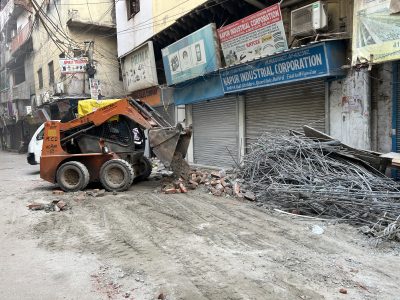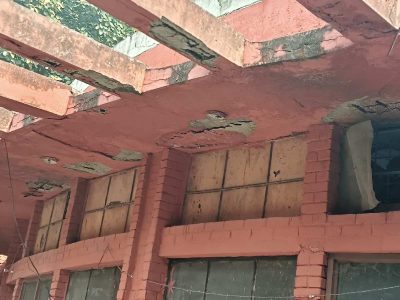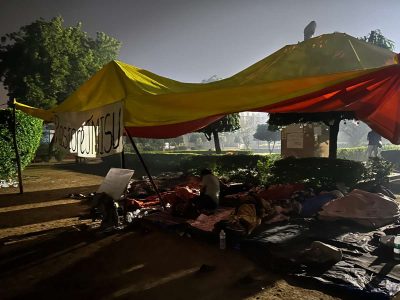
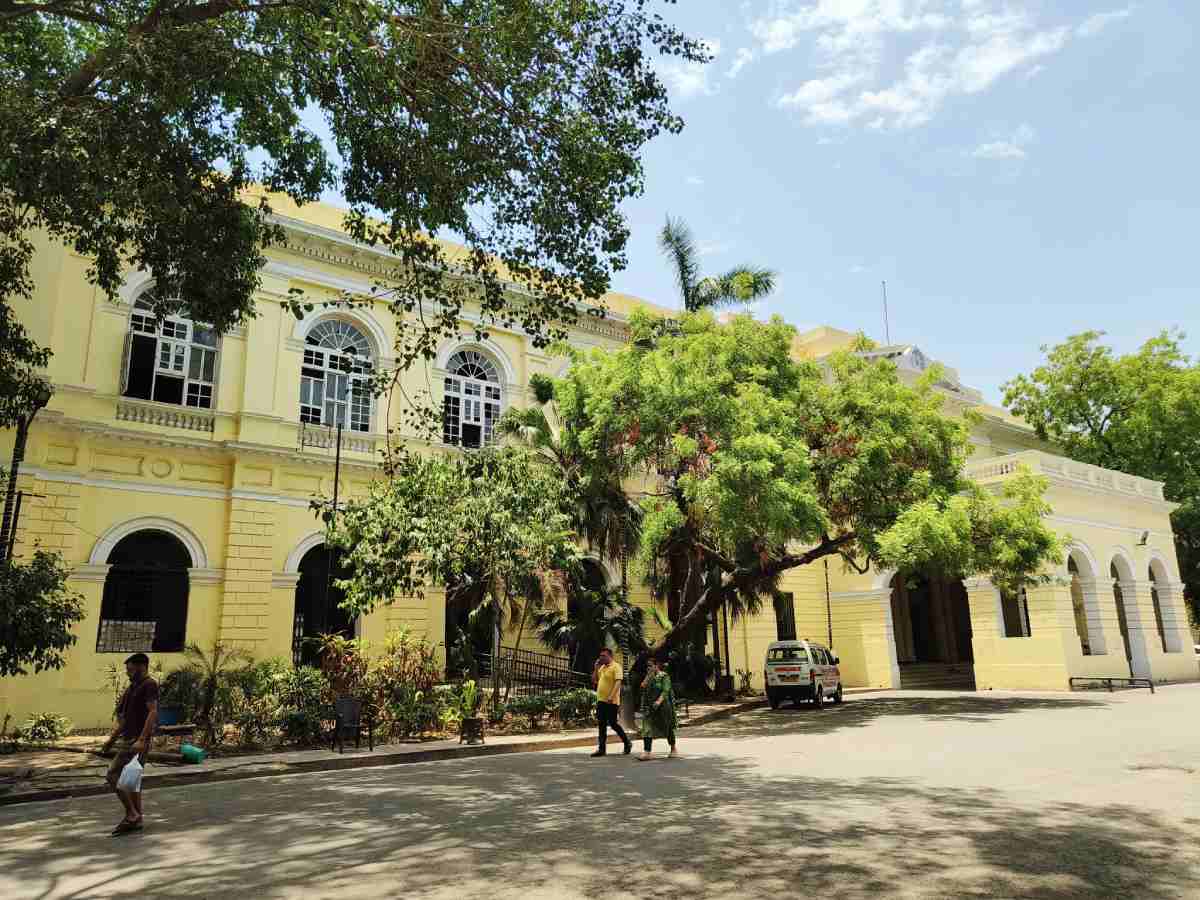
A major portion of Chandni Chowk’s 160-year-old Town Hall collapsed on October 31, damaging its facade, roof, first-floor structure, entrance porch and historic clock. The incident has put the Municipal Corporation of Delhi (MCD) under scrutiny for failing to protect a Grade-I heritage building that has remained largely unused since the civic body shifted its headquarters to the Civic Centre in 2011-12.
The collapse came despite conservation assessments, reported structural concerns and plans to redevelop the complex as a Global Heritage Centre. MCD owns the building and is responsible for its maintenance. Yet the structure deteriorated while the corporation discussed turning it into a major heritage attraction.
Neglected landmark
The Town Hall has been part of Chandni Chowk’s civic and architectural history for around 160 years. The municipality acquired the property in 1866, and the building later became the headquarters of Delhi’s municipal administration. It served that purpose for nearly 145 years before MCD shifted its offices to the Civic Centre.
The relocation changed the building’s role. The Town Hall lost its administrative function and remained largely unused.
Although authorities discussed several possible uses for the property, including cultural and heritage-related projects, the complex did not receive a comprehensive redevelopment before the collapse.
Its Grade-I heritage status made regular maintenance and specialised conservation especially important. Historic structures require periodic inspections, timely repairs and careful attention to their original architectural features. Leaving such a building unused does not remove the need to protect it. In fact, a vacant property can deteriorate further if authorities do not monitor its condition.
A heritage architect Anirudh told Patriot, “Heritage buildings, particularly those with Grade-I status, require regular structural inspections and specialised maintenance. In India, we often mistake cosmetic repairs for conservation, using whitewash or concrete to make ageing structures look new. But a fresh coat of paint cannot conceal internal cracks or prevent further structural damage.”
Warnings went unaddressed
The Town Hall’s structural condition had reportedly raised concerns well before October 31. A 2024 conservation assessment recommended a comprehensive plan to address deterioration and preserve the structure. In 2025, MCD reportedly appointed a consultant for around Rs 8.5 lakh to examine the building’s structural condition, conservation needs and possible future use.
These developments show that the authorities had recognised the need to assess the property. But commissioning a study is only the first step. The more important question is whether MCD acted on the findings and completed the work that experts recommended.
A conservation expert told Patriot, “A conservation report is only the first step towards protecting a heritage building. The authorities must act on its recommendations, arrange adequate funds and ensure that the necessary repairs take place on time. Simply identifying structural damage is not enough, because delays can allow an already ageing building to deteriorate further. Conservation requires continuous monitoring, proper planning and timely intervention.”
The expert, who did not wish to be named, added, “MCD’s responsibility towards the Town Hall did not end when it shifted its headquarters to the Civic Centre. Although the building stopped serving as the corporation’s administrative office, it remained under MCD’s ownership and required regular inspections and maintenance. A historic property cannot be left unattended simply because it is no longer in daily use. The corporation had a responsibility to protect the structure and ensure that its condition did not deteriorate.”
A grand plan
Even as concerns about the building’s condition emerged, MCD moved ahead with plans to redevelop the complex. In April 2026, the MCD Standing Committee approved a proposal to turn the Town Hall into a Global Heritage Centre under a Develop-Operate-Maintain model. The proposed project would showcase Delhi’s history, art, culture and cuisine through galleries, archival displays and interactive exhibits.
The plan aimed to give the unused property a new public purpose and make it a heritage destination. In June 2026, the Delhi Tourism and Transportation Development Corporation sought structural drawings and layout plans from MCD to prepare project documents. In September, the Delhi government and MCD signed a memorandum of understanding for the redevelopment.
The project is envisaged to be implemented over around 36 months. However, the detailed project budget, conservation scope, consultant responsibilities and final arrangements for structural restoration need to be examined.
Speaking on condition of anonymity, a former Municipal Commissioner said, “A redevelopment project can give a historic building a new purpose, but the authorities must first make sure that the structure is safe. Conservation, engineering and administration have to work together. A new vision for the Town Hall cannot replace the basic responsibility of maintaining it.”
Restore or rebuild?
The collapse has complicated the proposed redevelopment. The damaged facade, roof, entrance porch and historic clock will require a detailed assessment before authorities decide how to proceed.
Restoration would involve repairing the damaged structure while retaining original materials and architectural features wherever possible. Reconstruction could involve rebuilding sections that engineers find beyond repair.
For a Grade-I heritage building, this distinction matters. The Town Hall’s value lies not only in its external appearance but also in its original materials, craftsmanship, and architectural details. Replacing these features without proper assessment could reduce the building’s historical value, even if the rebuilt structure looks similar.
The authorities must establish which portions can be restored, which materials can be salvaged and whether any sections need reconstruction. They must also document the damage before beginning major work.
Anirudh said, “The priority should be to preserve the Town Hall’s original identity rather than simply give it a fresh appearance. Before undertaking any reconstruction, experts must carefully assess the damage, document the surviving structure and examine which original materials and architectural features can still be restored. Rebuilding without proper conservation assessment could result in the loss of the building’s historic character.”
The conservation plan must therefore explain how experts will preserve the building’s surviving historic fabric. MCD should make the assessment public so that heritage specialists and citizens can understand the proposed approach.
Fear grips traders
The collapse of the Town Hall has sparked fear among traders and shopkeepers in Chandni Chowk, who say the falling debris could have caused fatalities to the people standing nearby. The incident has also raised concerns about damage to shops, disruption to business and the possibility of further structural failures in the crowded market.
For traders, the danger was not limited to the heritage building itself. Chandni Chowk remains a busy commercial hub, with shopkeepers, workers, customers and visitors moving through its narrow lanes every day. A collapse of this scale could have put lives at risk and damaged neighbouring businesses, leaving traders facing financial losses and disrupted livelihoods.
A Chandni Chowk trader, Shyamlal, told Patriot, “Fortunately, the collapse did not claim any lives, as the market remains crowded throughout the day. If the debris had fallen while people were passing through the area, it could have caused serious injuries or even fatalities. The authorities must recognise that neglected buildings pose a direct threat to public safety, particularly in a busy market like Chandni Chowk.”
A local shopkeeper said the incident had also raised fears among businesses operating around the Town Hall. He added, “Our shops and livelihoods depend on the daily movement of people in this market. If another portion of the building collapses, it could injure customers and workers, damage nearby shops and force businesses to shut. Even a temporary closure means a loss of income for traders who depend on daily sales.”
Mohammed Rahim, a resident and small hardware shop owner, said the collapse should warn authorities about the condition of other old structures in the area. “People live and work around these historic buildings, and many cannot afford to take such risks. The authorities must inspect the surrounding structures before another accident takes place. Heritage conservation is important, but the safety of people must come first,” he said.

The incident has therefore raised concerns beyond the Town Hall’s restoration. Traders want authorities to inspect nearby buildings, secure vulnerable sections and prevent further damage that could threaten lives and livelihoods. For a market as crowded as Chandni Chowk, delayed action on structural risks could have consequences far greater than the loss of a heritage landmark.
MCD’s Response
MCD, however, has yet to provide a detailed account of the circumstances leading to the collapse. Responding to Patriot’s queries, an MCD official said the matter is in process and that necessary steps were being taken. The official did not specify what action MCD had taken or address concerns about the building’s earlier structural warnings and maintenance.