After two rounds of undergraduate seat allocations, hundreds of seats remain vacant at several of Delhi University’s off-campus colleges, even as its most sought-after institutions have filled their seats.
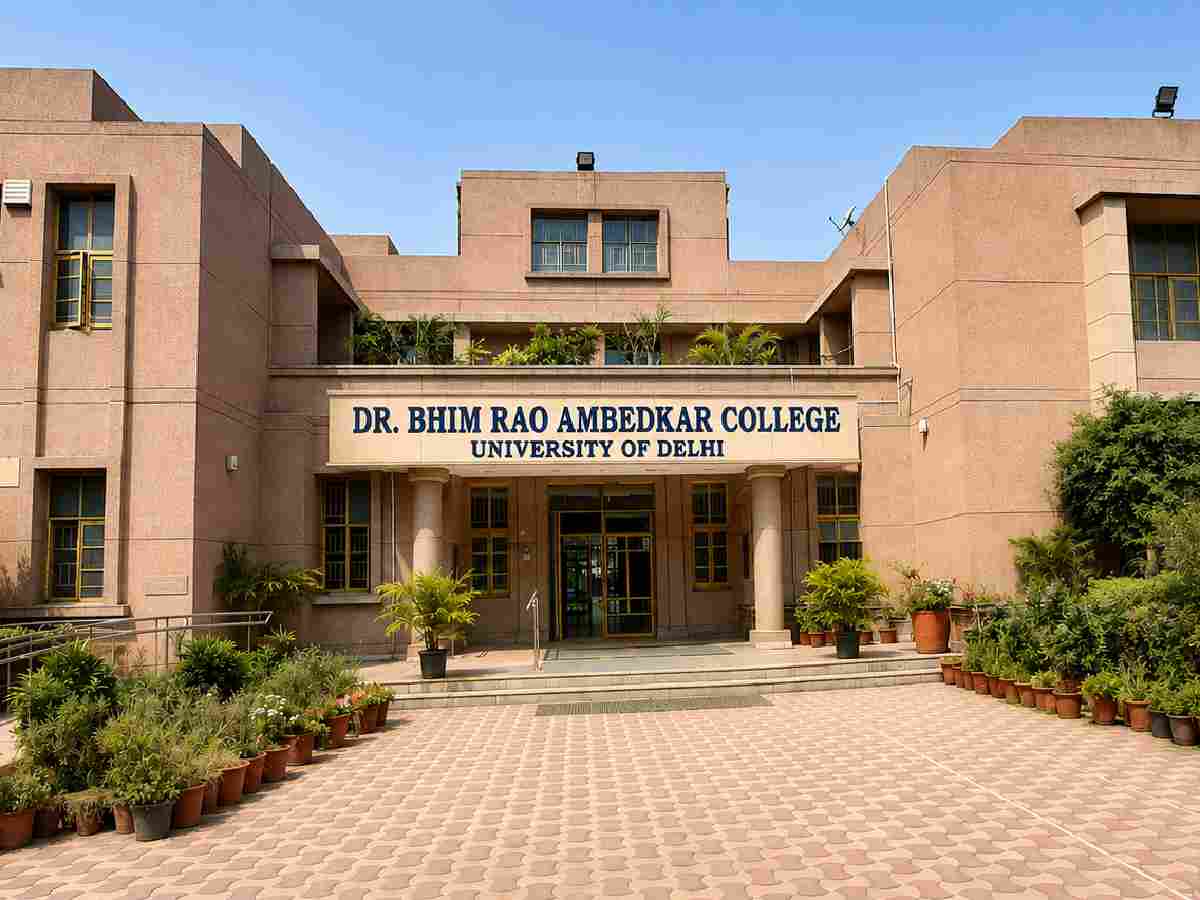
A report in The Indian Express, based on the vacancy list released for the third round of the Common Seat Allocation System for the 2026–27 academic session, said Bhagini Nivedita College had more than 800 vacant seats. Aditi Mahavidyalaya followed with over 600, while Satyawati College had more than 400 and Dr Bhim Rao Ambedkar College over 300.
Off-campus colleges are located outside the university’s North Campus and South Campus clusters and are spread across the Capital and the National Capital Region. They remain fully affiliated with the university.
Reputation and commuting shape choices
Although the admission process and fee structures appear similar on paper, students rank colleges differently. Several students said off-campus institutions were often treated as fallback options, even when they offered the same courses as more sought-after colleges.
Sumant Anand had hoped to study at North Campus before joining the Bachelor of Science (Honours) Mathematics programme at Satyawati College. Looking back, he does not believe academic quality is the main reason seats remain vacant.
“I think vacant seats are not necessarily because the college or course is academically weak. A major factor is student perception. Many students have a strong preference for colleges with a more established reputation, particularly the colleges they associate with North Campus,” he said.
Anand said students often relied on word of mouth and a college’s general reputation instead of examining its departments, faculty and infrastructure before listing their preferences.
“Location and daily commuting also matter a lot,” he said. “Apart from that, students often consider placements, peer groups, infrastructure, societies and the overall perception of a college before accepting a seat.”
Some students also wait for subsequent allocation rounds in the hope of securing a preferred college.
“Some students keep waiting for subsequent rounds or better options rather than accepting a seat they don’t consider their first choice. So sometimes the issue is more about preference and perception than the actual quality of education,” Anand said.
Such decisions can backfire, he said, with students sometimes failing to secure a seat while colleges continue trying to fill vacancies late into the admission cycle.
Asked what should determine a student’s choice, Anand said, “The course itself comes first because the academic programme ought to match my professional objectives. After that, I would consider the college’s academic reputation, career and placement opportunities, location and connectivity, infrastructure and the overall student environment.”
He said location was particularly important because students have to commute daily.
“Even if a college has good academics, a difficult commute can greatly affect a student’s daily college experience,” he said. “At the same time, I don’t think a college should be judged only by its location or brand name. The opportunities and environment available to students matter more in the long run.”
Anand said the off-campus tag should not automatically be considered a disadvantage.
“If the course is good, the academic environment is nurturing, the college is reasonably accessible and there are opportunities for students to develop skills and build their careers, I would definitely consider it,” he said.
Faculty and infrastructure concerns
Riya Yadav (name changed), who studies history and political science at Bhagini Nivedita College, offered a different account based on her experience.
Yadav said admission numbers were low and many students moved to other colleges after their first year. “The college’s reputation is not good,” she said.
According to Yadav, students allotted lower-preference choices during counselling often begin looking for alternatives. Some transfer through the university’s internal migration system when better seats become available, while others lose interest in continuing at the college. She said low enrolment and the departure of students further damaged a college’s reputation.
Yadav identified teacher shortages as one of the main problems. She said sanctioned teaching posts remained vacant, leaving classes understaffed or, at times, not being held.
She said being located off campus, inadequate infrastructure and poor teaching made the college less attractive. According to her, only a few teachers conducted worthwhile classes.
Yadav also pointed to inadequate facilities. She said some off-campus colleges had poorly equipped buildings and classrooms, while libraries lacked books, had restricted opening hours or were too small for the number of students using them. Access to subject-specific reading material, laboratories and research facilities was also limited.
She said weaknesses in teaching and infrastructure damaged a college’s reputation, reduced admissions and encouraged more students to leave. Yadav added that students did not take many of the teachers seriously and described the administration as poor.
While Anand attributed the vacancies largely to perception, reputation and students waiting for preferred options, Yadav said teacher shortages, inadequate infrastructure and an unresponsive administration were significant factors. Both, however, said long commutes influenced how students ranked colleges.
Centralised admissions and teacher shortages
Delhi University Teachers’ Association member Dinesh Kataria said the pattern also reflected a mismatch between the university’s centralised admission system and years of inadequate faculty recruitment.
Kataria said the system did not take students’ place of residence into account. “A lot of students who live close to a college might never get admission there,” he said.
Students could be allotted colleges across the city regardless of the distance from their homes, he added.
Kataria said the preference for North Campus colleges was not based solely on reputation but also on cost. Families considered both the appeal of a well-known college and the expense of a long daily commute, neither of which, he said, was adequately addressed by the centralised system.
He linked the vacancies to the expansion of seats over the past five years following the introduction of reservations for economically weaker sections and other backward classes.
“Over the last five years, since the reservations were introduced, the university has increased the number of seats by 50%,” he said.
Kataria said an intake of 40 students in 2010 would have increased proportionately because seats had risen across all colleges.
He argued that the expansion had placed peripheral and off-campus colleges at a disadvantage because students continued to gravitate towards familiar, centrally located or more conveniently accessible institutions.
He said the availability of more convenient local options had also reduced demand for seats at peripheral colleges. “This mismatch is causing the problem,” he said.
Kataria said teacher recruitment had failed to keep pace with the expansion.
“In some colleges, not even one new teacher has been appointed in the last 10 to 20 years,” he said.
He recalled that around 2014–15, the most recent appointment at some colleges had been made in 2010. Only a handful of teachers had been hired in 15 years, he said.
Kataria blamed the recruitment process and the lack of government support. “There has been no recruitment,” he said.
He said teaching quality had been affected because colleges were expected to accommodate 50% more students without a corresponding increase in faculty. Colleges needed teachers for each subject, he added, and students were aware of the resulting gaps in teaching.
Kataria cited Satyawati College as an example of an established institution where admissions to some programmes remained low despite the availability of courses.
He said admissions were low at Satyawati and in some programmes at other colleges. “Students do not want to enrol. It is also about the reputation of the college,” he said.
Patriot contacted the Delhi University administration for comment on the vacant seats and the concerns raised by students. The university did not respond until the time of publication. The online version of this report will be updated if a response is received.