
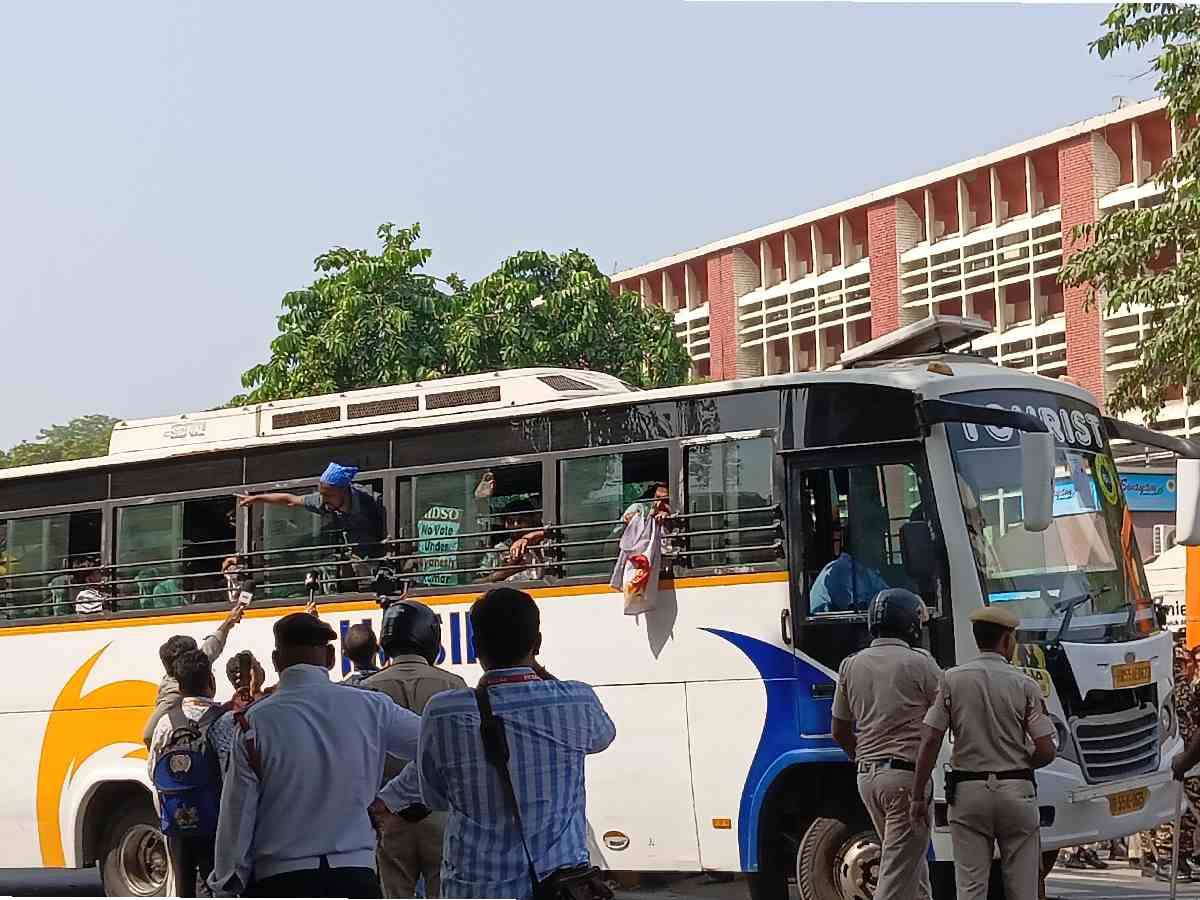
With thousands of detentions across Delhi in response to protests against Chief Election Commissioner (CEC) Gyanesh Kumar, understanding the law has become essential. Several factors govern how police handle protests and carry out detentions.
The Bharatiya Nagarik Suraksha Sanhita (BNSS) spells out when police may detain or arrest a person, the safeguards that apply in custody and the circumstances in which force may be used. The Delhi Police Act, 1978, imposes additional restrictions on unnecessary detention and the use of force.
The principal legal framework governing detention and arrest in Delhi is the BNSS, which replaced the Code of Criminal Procedure, together with the Delhi Police Act, 1978 and constitutional safeguards concerning personal liberty.
A distinction is important at the outset. Detention, removal and arrest are not necessarily the same thing. The BNSS gives police specific preventive powers to detain or remove a person in defined circumstances, while a formal arrest triggers additional statutory safeguards.
Also Read: Health warnings force Delhi-NCR pet owners to rethink costumes
Presently, the area around Jantar Mantar and multiple other areas in Lutyens’s Delhi have come under orders of detention under Section 163 of the BNSS, which replace Section 144 of the CrPC. It states that the district, sub-divisional, or executive magistrate can issue prohibitory orders or directions under exceptional circumstances. It states, “(The magistrate may) direct any person to abstain from a certain act or to take certain order with respect to certain property in his possession or under his management, if such Magistrate considers that such direction is likely to prevent, or tends to prevent, obstruction, annoyance or injury to any person lawfully employed, or danger to human life, health or safety or a disturbance of the public tranquillity, or a riot, or an affray.” Under this order, police can also enforce the unlawful assembly of five or more people and detain the concerned persons.
Section 172 of the BNSS concerns compliance with lawful police directions. It states: “All persons shall be bound to conform to the lawful directions of a police officer given in fulfilment of any of his duty.”
It adds that a police officer may detain or remove any person “resisting, refusing, ignoring or disregarding” to conform and may either take such person before a Magistrate or, in petty cases, release them as soon as possible within a period of 24 hours.
The provision applies to lawful directions issued in the exercise of duties under the ‘Preventive Action of the Police’ chapter. It is not a general power of detention.
Also Read: ‘Khoya-Paya’: how Delhi festivals handle missing children
The BNSS also permits preventive arrest in specified circumstances. However, Section 170(2) limits such custody: “No person arrested under sub-section (1) shall be detained in custody for a period exceeding twenty-four hours from the time of his arrest unless his further detention is required or authorised under any other provisions of this Sanhita or of any other law for the time being in force.” Sub-section (1) states that a police officer may arrest a person to prevent them from committing a cognisable offence. “A police officer knowing of a design to commit any cognizable offence may arrest, without orders from a Magistrate and without a warrant, the person so designing, if it appears to such officer that the commission of the offence cannot be otherwise prevented,” it states.
The detained person can be kept in custody only for a limited period. “No police officer shall detain in custody a person arrested without warrant for a longer period than under all the circumstances of the case is reasonable, and such period shall not, in the absence of a special order of a Magistrate under Section 187, exceed twenty-four hours exclusive of the time necessary for the journey from the place of arrest to the Magistrate’s Court, whether having jurisdiction or not,” the BNSS states.
Section 57 of the BNSS also requires an arrested person to be taken before a Magistrate without unnecessary delay.
“A police officer making an arrest without warrant shall, without unnecessary delay and subject to the provisions herein contained as to bail, take or send the person arrested before a Magistrate having jurisdiction in the case, or before the officer in charge of a police station,” it states.
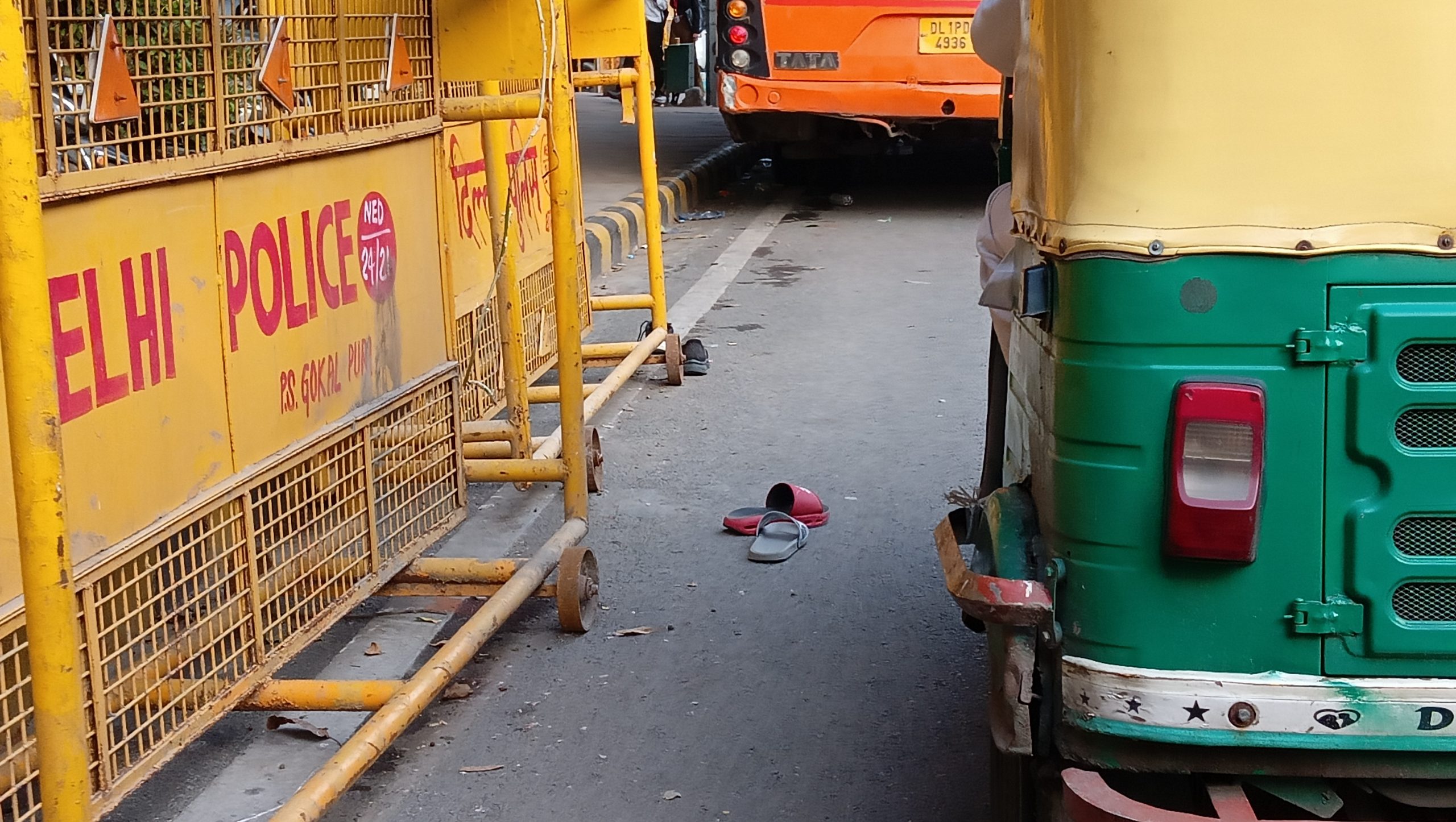
Also Read: Metro footfall halved on October 10 amid protest curbs
This statutory requirement operates alongside Article 22(2) of the Constitution, which requires an arrested person to be produced before the nearest Magistrate within 24 hours of arrest, excluding the time necessary for the journey to the court.
However, Article 19 (pertaining to freedom of speech) provides under Section 1(b) that all citizens have the right to “assemble peaceably and without arms”.
The 24-hour period is therefore principally a safeguard against unauthorised continued police custody. Further detention requires judicial authority under the applicable provisions of law.
How much force can police use?
The BNSS does not prescribe a fixed quantity or level of force. Instead, Section 43(2) permits force in defined circumstances: “If such person forcibly resists the endeavour to arrest him, or attempts to evade the arrest, such police officer or other person may use all means necessary to effect the arrest.”
That power is expressly qualified by Section 46, “The person arrested shall not be subjected to more restraint than is necessary to prevent his escape.”
The provisions therefore permit force where necessary to effect a lawful arrest when a person forcibly resists or attempts to evade it, but prohibit unnecessary restraint. The law does not prescribe particular forms of force. Whether the force used was lawful depends on the circumstances, including the basis for the arrest, the nature of the resistance and whether the restraint remained necessary to secure the arrest.
Also Read: Delhi gets off to its most polluted October start in three years
Any use of force resulting in serious injury or death must be considered under the wider criminal law, constitutional protections and the legal principles governing police use of force.
Delhi Police Act
The Delhi Police Act provides an additional safeguard. Section 124 makes it an offence if a police officer: “vexatiously and unnecessarily detains, searches or arrests any person” or “offers any unnecessary personal violence to any person in his custody.”
Similarly, excepting exceptional circumstances, a woman should not be arrested between sunset and sunrise. Where such an arrest is necessary, a woman police officer must make a written report and obtain prior permission from a First Class Magistrate.
The provision also states that, unless circumstances require otherwise or the arresting officer is a woman, a police officer: “shall not touch the person of the woman for making her arrest.”