
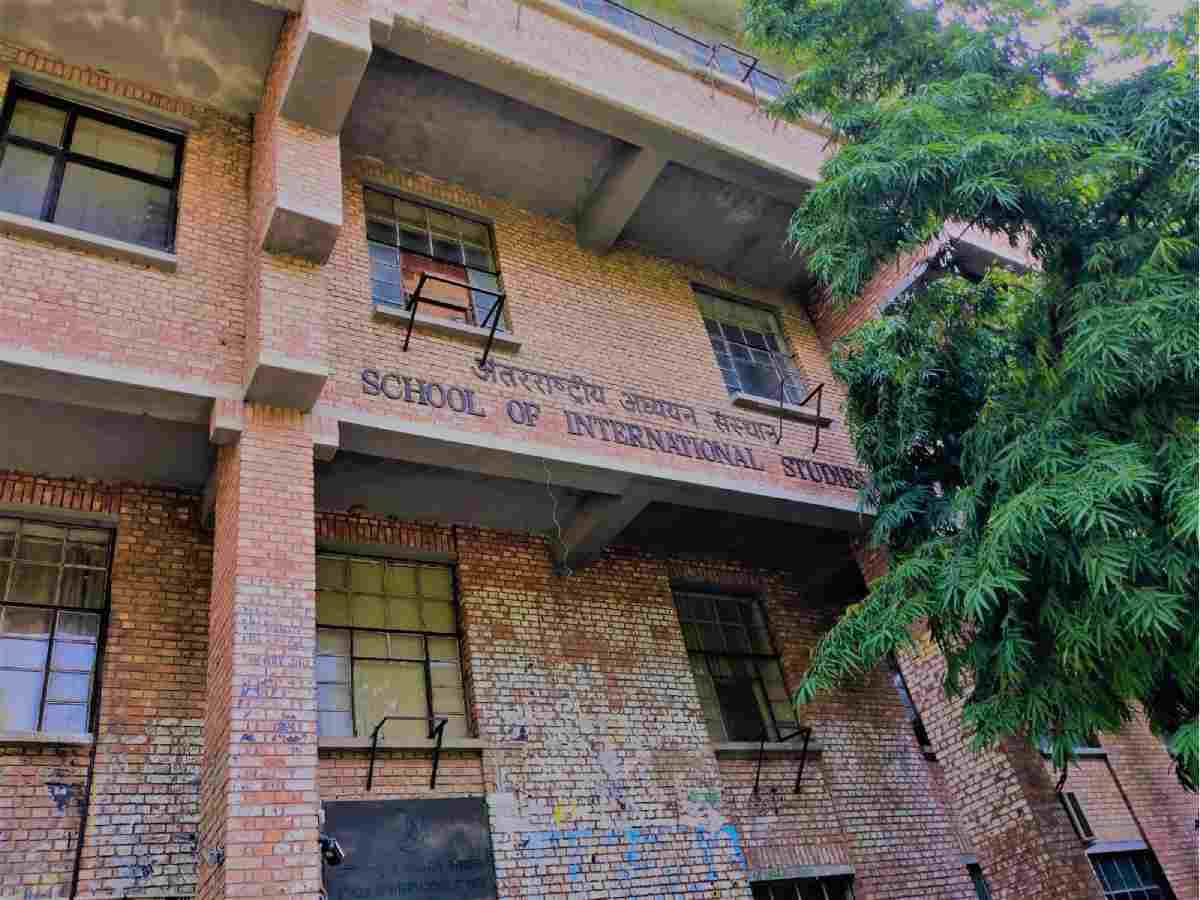
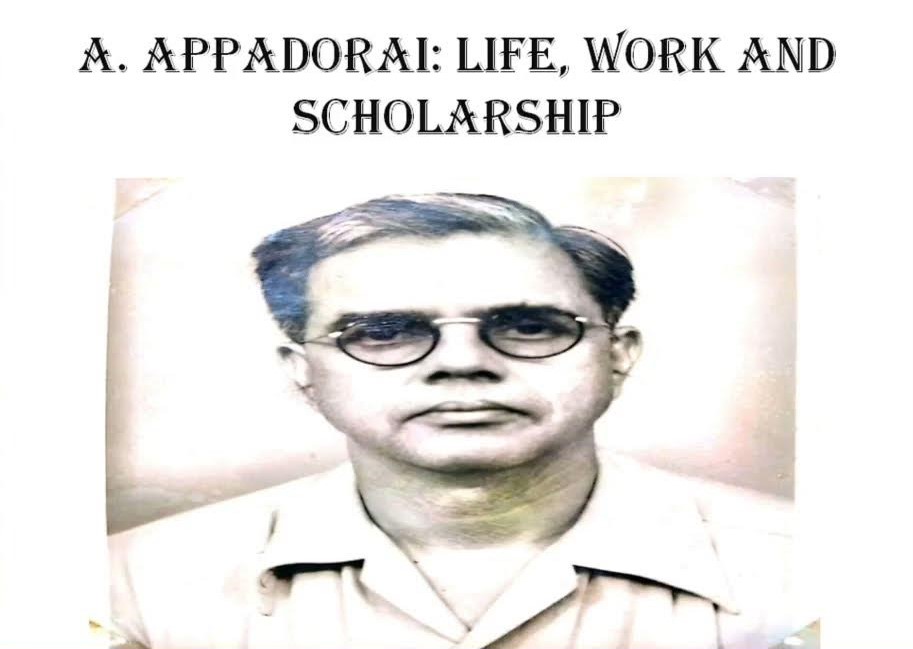
Dhoti-clad Professor A Appadorai often sat at Bengali Sweets in Bengali Market with his students of the Indian School of International Studies (ISIS) in the 1950s, just behind his house. The school then operated from Sapru House. A doyen of international affairs, Appadorai was one of the founders of ISIS, which later merged with the School of International Studies (SIS) of Jawaharlal Nehru University (JNU), where he also taught.
As the calendar turns to 2025, SIS marks its 70th anniversary. Founded in the heady post-independence era, the school has evolved from a modest research institute into a global powerhouse of international affairs scholarship. It stands as a testament to India’s intellectual ambition, nurturing generations of thinkers who have shaped foreign policy, diplomacy, and global discourse.
This year, amid seminars, lectures, and reflections on its journey, SIS reaffirms its role as the oldest school in JNU. From its origins in 1955 to its current status as a hub for area studies and functional expertise, SIS continues to embody the Nehruvian vision of a knowledge-driven nation navigating a multipolar world.
Origins of a vision
The story of SIS begins not with JNU, but with a bold initiative in India’s nascent democracy. In 1951, a committee under the aegis of the Indian Council of World Affairs (ICWA), chaired by Pandit Hriday Nath Kunzru, proposed a dedicated institution for postgraduate research in international studies—a field still embryonic in India. Members included luminaries such as GS Mahajani, DR Gadgil, NV Gadgil, KM Panikkar, BC Ghose, and A Appadorai.
“The deliberations culminated in the formal registration of the Indian School of International Studies as a society on October 3, 1955, under the Societies Registration Act of 1860. Approved by the University of Delhi in March that year, ISIS was envisioned as a space for advanced studies leading to PhD degrees, addressing the urgent need for expertise in diplomacy, international law, and global politics as India stepped onto the world stage,” Appadorai told this writer in 1988.
The Ford Foundation played a pivotal role in ISIS’s launch, granting an initial four-year endowment of US $200,000 in July 1955. This support built infrastructure and facilitated the invitation of international scholars to bridge knowledge gaps.
Eminent faculty
Among the early faculty was Rahmatullah Khan, who joined in 1965. A renowned international legal scholar, Khan was Professor of International Law and Chairperson of the Centre for Studies in Diplomacy, International Law and Economics.
Equally renowned was Professor Pushpesh Pant. “Prof Pant has inspired many generations of SIS students. Also a food critic and historian, students never missed his classes. He used to help his students in every possible way. His house in JNU was thronged by them whenever they were in any crisis,” recalls Raman Hitkari, author of the recently published book Aashiyana Macrobertganj and an SIS alumnus.
From Sapru House to JNU
Initially housed at Sapru House on Barakhamba Road (1955–1968), ISIS shifted to 35 Firozshah Road (1968–1970) before its transformative merger with the newly established JNU in June 1970. JNU, founded in 1969, absorbed ISIS to strengthen its focus on social sciences and international relations.
“The prefix ‘Indian’ was dropped, birthing the School of International Studies. From JNU’s Old Campus (1970–1989) to the sprawling New Campus since 1989, SIS has grown into a multifaceted entity,” says Nawab Ali Khan, an alumnus.

Today, it comprises eight Area Studies Centres—covering Africa, the Americas, East Asia, Europe, the Indo-Pacific, Inner Asia, Russia and Central Asia, and South Asia—and four Functional Centres: Comparative Politics and Political Theory, International Legal Studies, International Politics, Organisation and Disarmament, and the Study of the World Economy (formerly International Trade and Development).
Shaping India’s global voice
Over 70 years, SIS has produced thousands of students who have explored India’s evolving global role and nurtured interdisciplinary dialogues. Its emphasis on multilingualism—with courses in Chinese, Japanese, Russian, and Spanish—has equipped scholars to engage directly with primary sources. Amid geopolitical shifts, from the Cold War to today’s Indo-Pacific rivalries, SIS has remained a crucible for critical thinking, often challenging orthodoxies and advocating a multipolar order.
“No chronicle of SIS would be complete without celebrating its eminent alumni, whose footprints span corridors of power, academia, and culture. Chief among them is Dr Subrahmanyam Jaishankar, India’s Minister of External Affairs since 2019. Equally illustrious is Nirmala Sitharaman, India’s Finance Minister,” says Sripal Jain, an author and alumnus of the late 1970s.
Also Read: Two Delhi schools, whose alumni became global leaders, turn 60
In national security, SIS boasts JN Dixit, the second National Security Adviser (1991–1994), who earned his PhD from the school. His tenure coincided with the Soviet collapse and India’s economic liberalisation; his books on South Asian geopolitics remain staples. Similarly, Arvind Gupta, Deputy National Security Adviser since 2017, also holds a PhD from SIS. A former Director at the Institute for Defence Studies and Analyses, Gupta has shaped cyber and strategic policies, including India’s National Cyber Security Policy.
Alumni in diplomacy, academia, and media
Diplomacy’s corridors echo with SIS voices. Venu Rajamony, with an M.A. in International Relations, served as India’s Ambassador to the Netherlands (2013–2017) and as Press Secretary to President Pranab Mukherjee. His work on EU-India relations highlights SIS’s strong European Studies focus.
Beyond bureaucracy, SIS alumni illuminate academia and the media. Santishree D Pandit, current JNU Vice-Chancellor, is an SIS alumna whose scholarship on federalism and Northeast India earned her the post in 2022—the first woman VC of JNU. In the media, Sanjaya Baru, former Media Advisor to Prime Minister Manmohan Singh, drew on his SIS background for incisive columns on global economics.
Looking ahead
Seventy years on, SIS confronts new horizons: climate diplomacy, AI ethics, and the decolonisation of knowledge. With events such as the 2025 anniversary symposium, the school honours its pioneers while mentoring the next cohort. In an era of flux, SIS remains JNU’s beating heart.