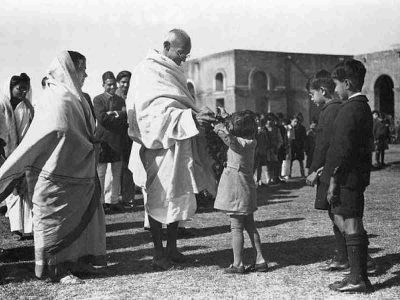
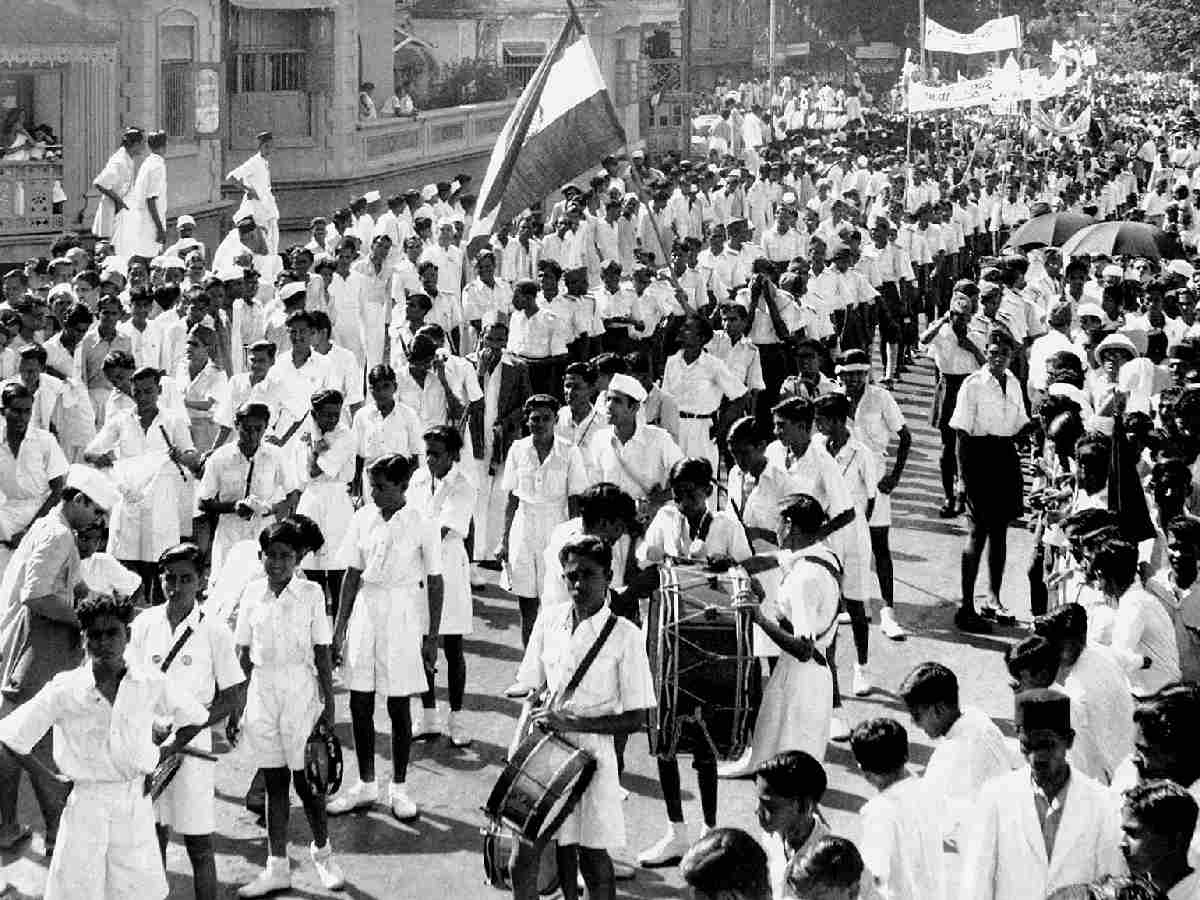
Noted author and commentator Ravi Chaturvedi was 10 years old when India celebrated its independence. Nearly eight decades later, he still vividly remembers the mood in Civil Lines, where he lived at the time.
“People were celebrating the momentous occasion in parks in their localities, distributing sweets to each other. Some people were also visiting shopping centres like Connaught Place and Kashmere Gate for an outing,” recalls Chaturvedi.
“People were also worried about how India would tackle its problems and progress. I have seen how Delhi has grown into such a large metropolitan city since 1947.”
That transformation began with Partition. Hundreds of thousands of Hindus and Sikhs left their homes in what became Pakistan and came to Delhi. Many Muslims left Delhi for Pakistan.
The city of Delhi that we see today is the result of several major changes that followed. In 1941, the city had fewer than one million people but by 1951, it had nearly 1.75 million. Refugees lived in tents, parks, old monuments and other open spaces. The government subsequently built new colonies such as Lajpat Nagar, Rajendra Nagar, Patel Nagar and Malviya Nagar to accommodate the displaced population. These neighbourhoods still bear names that recall freedom fighters and places the refugees had left behind.
“The refugees brought new energy, new businesses and a strong Punjabi influence that changed the food, language and daily life of the city. Partition did not just add people; it accelerated Delhi’s outward growth and changed the character of the city,” says Harish Khanna, a former professor at Delhi University and an ex Delhi University Teachers’ Association (DUTA) office-bearer.
The DDA steps in
The sudden growth created chaos. Houses, roads, and services could not keep up. In 1957, the government established the Delhi Development Authority (DDA), following efforts by CK Nair, the Malayali who won the 1952 and 1957 Lok Sabha elections from Outer Delhi.
The DDA’s job was to plan Delhi’s expansion. It prepared the city’s first Master Plan and took control of much of the vacant land. It built new housing colonies, markets and offices for the growing middle class. For decades, the authority played a major role in deciding where people could live and work, while seeking to curb unplanned development and create neighbourhoods with parks and schools.
“I feel that although the DDA faced many problems and could not always keep up with demand, it gave Delhi its basic shape for the next thirty years. Without this body, the city would have grown in an even more disorderly way,” says Ajit Dubey, author of Bhojpuri and a former Executive Director of the Airports Authority of India.
The birth of NCR
Even with the DDA, Delhi kept expanding. By the 1980s, planners were looking beyond the city’s boundaries, leading to the creation of the National Capital Region (NCR) framework. The plan was to spread growth into neighbouring cities and towns such as Gurgaon, Noida, Faridabad and Ghaziabad. “The NCR Planning Board was set up to guide this larger region. Factories, offices and housing moved outward. People began living in satellite towns and travelling into Delhi for work. This reduced some pressure on the core city and created the vast urban area we now call Delhi-NCR. The concept turned Delhi from a single city into the centre of a much larger metropolitan region,” says Devinder Gupta, an expert on real estate.
1991 economic liberalisation
The next big shift came in 1991 with economic liberalisation. India opened up to foreign investment and reduced many of the controls on business. Delhi, as the Capital, felt the change quickly. New offices, shopping malls, hotels and private housing emerged. The service sector — including banking, information technology, call centres and retail — grew rapidly. Real estate prices rose and the skyline began to change. Middle-class families found more jobs and greater consumer choice. The city also became more closely connected to the global economy.
Liberalisation did not solve every problem, but it accelerated economic activity in Delhi and created new opportunities for businesses and workers from across India.
Infrastructure gets a boost
Sports events also accelerated investment in Delhi’s infrastructure. In 1982, the city hosted the Asian Games, prompting the construction of new stadiums, hotels, flyovers and roads. Thousands of workers came to Delhi to work on the projects. The Games left behind new infrastructure and helped reshape parts of the city.
In 2010, the Commonwealth Games brought another wave of construction. Stadiums were upgraded, a new airport terminal opened, and roads and flyovers were improved.
Connecting Delhi
The Delhi Metro began running in 2002 and gradually expanded into a network connecting different parts of the city and extending into the NCR. It changed commuting patterns and provided an alternative to Delhi’s increasingly congested roads.
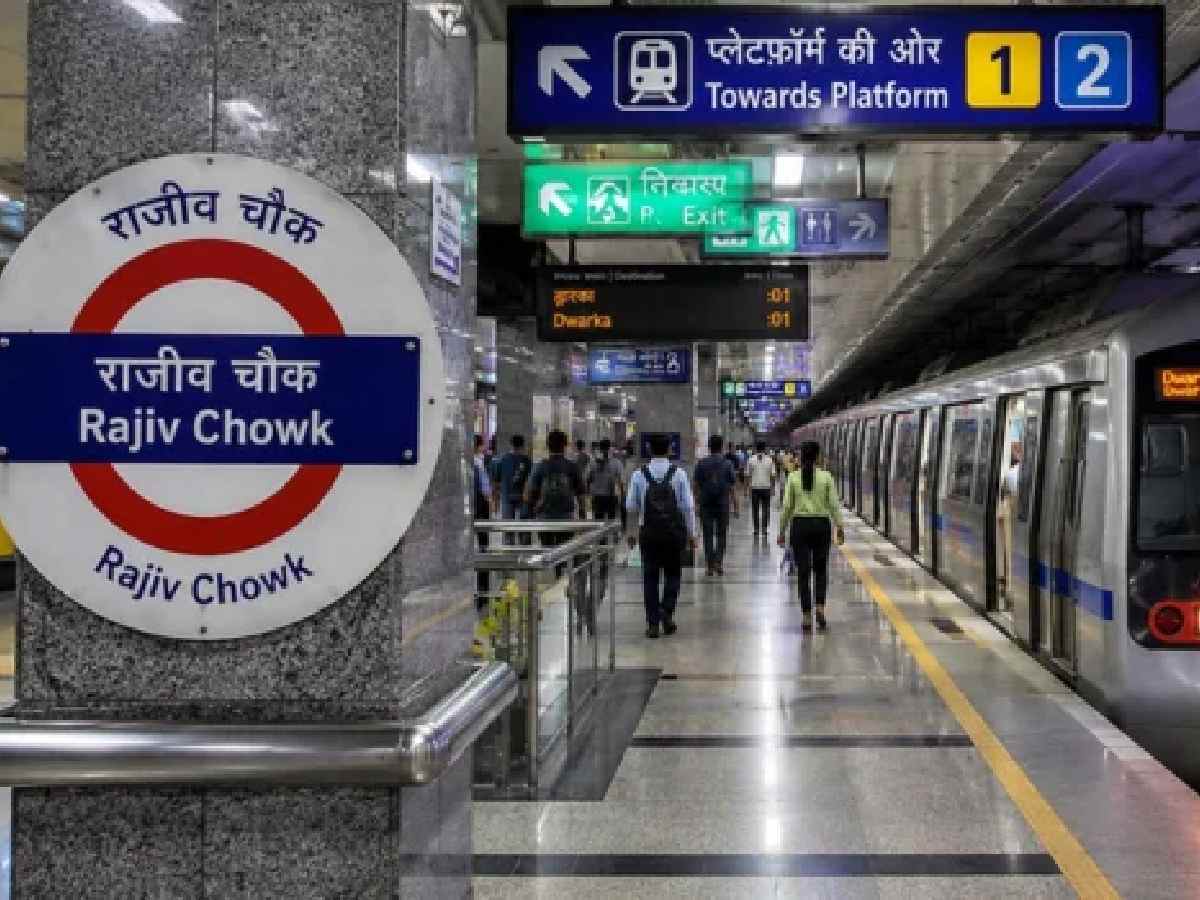
“The Metro grew year by year into a large network linking different parts of the city and reaching into the NCR. It reduced travel time and changed how people moved. Together with the infrastructure created for major sporting events, the Metro gave Delhi facilities that matched its growing size,” says social worker Mohammad Taqi, who lives in Old Delhi.
The Delhi of today
Looking back, five forces stand out in Delhi’s transformation since 1947: Partition and migration, planned development through the DDA, the expansion of the NCR, economic liberalisation, and investment in infrastructure. Partition brought a huge influx of people and accelerated the city’s expansion; the DDA sought to organise that growth; the NCR extended it beyond Delhi’s boundaries; economic liberalisation brought new businesses, jobs and investment; and major infrastructure projects, including the Metro, helped the city cope with its growing population and economy.
As India celebrates Independence Day, the Delhi of today reflects nearly eight decades of demographic change, urban planning, economic transformation and infrastructure development. The city continues to face challenges such as pollution, congestion, unequal access to housing and pressure on public services, but the forces that have shaped its growth since 1947 remain visible across its neighbourhoods, transport networks and expanding metropolitan region.