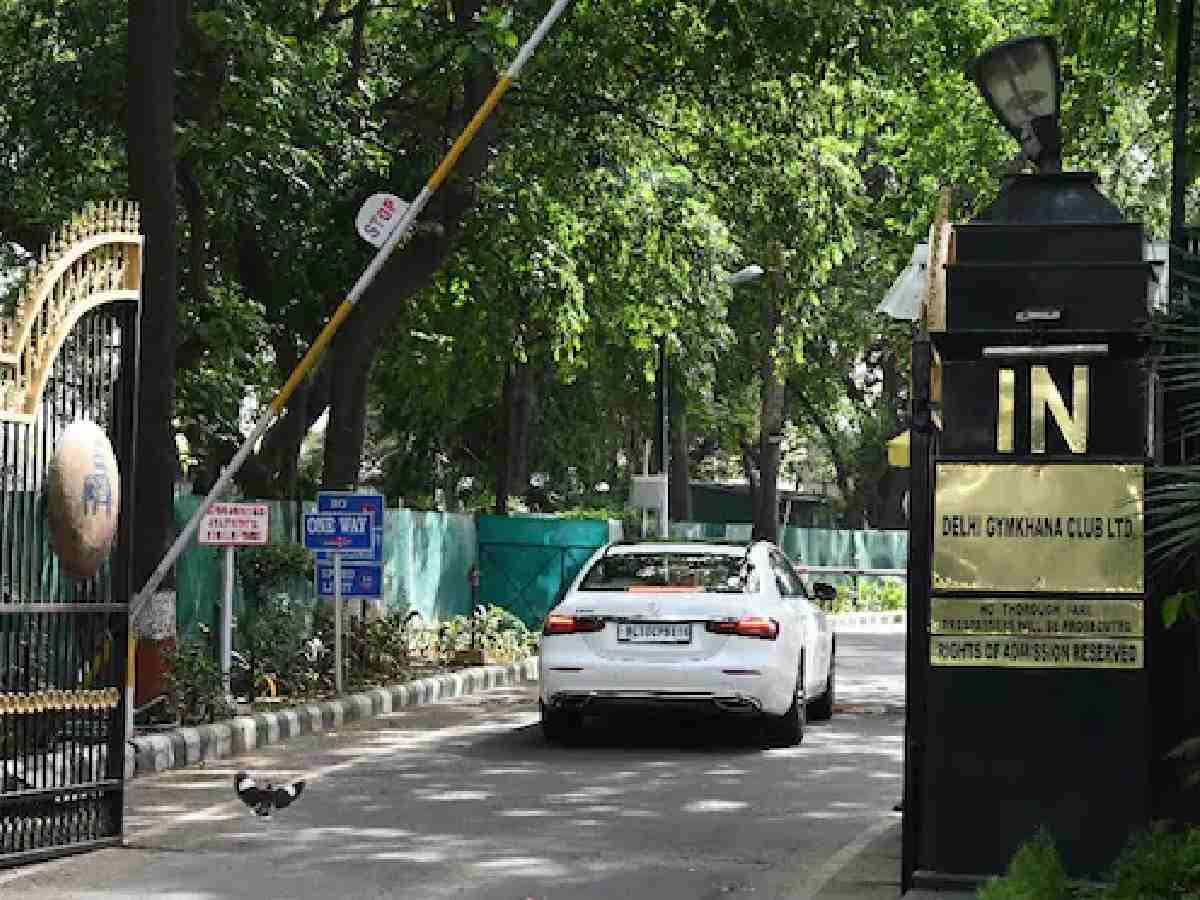
Delhi Gymkhana Club
With the Delhi Gymkhana Club making headlines after the Centre’s notice asking the management to vacate by June 5, it is worth revisiting many other landmark cultural and intellectual institutions in the Capital; historic and exclusive landmarks that have served as sanctuaries for intellectuals, bureaucrats, business leaders and sports enthusiasts for many decades, blending heritage, luxury and social prestige, although many have faced controversies over land use, exclusivity, governance, and alleged irregularities.
India International Centre
When Dr Sarvepalli Radhakrishnan was the Vice President of India, he envisioned a world-class club for Delhi. He wanted a peaceful space where thinkers, scholars, and intellectuals could engage in serious discussion. In 1958, Prime Minister Jawaharlal Nehru supported the idea, leading the Urban Development Ministry to select a prime plot next to Lodhi Gardens.
Renowned architect Joseph Allen Stein designed the IIC, harmoniously blending modern architecture with traditional Indian elements like jalis and chhajjas. The centre was inaugurated on January 22, 1962. Far more than a club, it functions as a vibrant hub for art, culture, science and intellectual discourse. “Its renowned library often hosts notable figures such as former Union Minister Dr Karan Singh, writer Ashok Vajpeyi, Satish Jacob and others,” says writer Sunil Dang, an Executive Member of the IIC.
Dang adds, “There was a time when noted jurist Soli Sorabjee and Jagmohan spent hours together there reading their favourite books.”
The IIC features a convention hall, art gallery, dining hall, and bar. Global leaders like Archbishop Desmond Tutu, Kofi Annan, and Sir Edmund Hillary have spoken here. Its dining hall is legendary for “power lunches”, where one might spot writer Chetan Bhagat alongside actor Naseeruddin Shah.
The club found itself at the centre of controversy when it rejected the membership of then-Railway Minister Lalu Prasad Yadav in 2006, prompting the resignation of a life trustee. Strict internal protocols (banning paan, restricting attire, etc.) have occasionally sparked debate about its elitist culture.
Delhi Golf Club
When Delhi became India’s Capital in 1912, British architect Edwin Lutyens’ committee identified land for a golf club after an elephant ride through the forests near what is now Zakir Hussain Marg. The course was ready by 1931. Before India’s Independence, the club was dominated largely by the British, although some Indians like Lala Bharat Ram had also joined. Since 1947, it has expanded rapidly and now boasts over 3,500 members, including top bureaucrats and businessmen.
The club offers a swimming pool and excellent Indian, Mughlai, and Continental cuisine. Its 220-acre course is a verdant oasis amid Delhi’s urban sprawl, and home to nearly 100 bird species.
In 2017, a Khasi woman alleged racial humiliation when staff asked her to leave for wearing traditional jainsem attire, likening it to a “maid’s uniform”. Critics have also questioned hereditary memberships, heavy subsidies on public land, and limited public access.
Roshanara Club
Established in 1922 and celebrating its centenary in recent years, the Roshanara Club hosted the first meeting of the Board of Control for Cricket in India (BCCI) in 1927. Named after Mughal Princess Roshanara Begum, the club features Mughal-style gardens, a lake, and thousands of trees. Initially, a British-era relaxation spot, it later welcomed Indian members. Today, it attracts successful businessmen, doctors, and lawyers.
“The club is renowned for its Indian, Mughlai, and Continental food. Spread over 22 acres, it offers a premier cricket ground (often hosting Ranji Trophy matches when the Arun Jaitley stadium is unavailable), plus tennis, swimming, chess, and bridge facilities,” informs Pawan Arora, a former Ranji Trophy player of Delhi.
Historic visitors include Presidents Rajendra Prasad, Jawaharlal Nehru, and VV Giri. Builder Sardar Sobha Singh contributed significantly to its development. It has around 4,300 members, requiring interviews and background checks for couples.
Controversies: In 2023, the Delhi Development Authority (DDA) sealed the club after its lease expired, accusing the management of illegally occupying additional land. The DDA disbanded the old management.
Civil Services Officers’ Institute
Located in the serene diplomatic enclave of Chanakyapuri on Vinay Marg (with another facility at Curzon Road), CSOI was established in 1998 as a prestigious members-only club for All India Services, Central Services officers, and eligible government officials. Its prime location near Nehru Park, Ashok Hotel, and the Prime Minister’s residence offers a tranquil escape in Lutyens’ Delhi.
The architecture combines modern functionality with classical charm. Facilities include tennis courts, a swimming pool, billiards, gym, indoor games, lawns for walks, and banquet halls. Dining options feature the Lutyens Bar, Pavilion and Conclave Restaurants, and a coffee shop. It also has a library, guest accommodation and hosts cultural events.
CSOI has come under fire for allegedly using funds from the National Sports Development Fund (NSDF) intended for athletes for upgrading facilities like temperature-controlled pools, tennis courts, and squash courts at its premises and related civil services sites.
National Sports Club of India
Founded after independence with patronage from leaders such as Dr Rajendra Prasad, Jawaharlal Nehru and Rajkumari Amrit Kaur, NSCI was inaugurated by Nehru in 1953. It promotes sports and elite social life, with strong national affiliations.
Situated on Mathura Road near Pragati Maidan and India Gate, it offers world-class facilities: tennis, badminton, basketball, Olympic-size pool, billiards, squash, gym, and more. Dining, bars (including a Rock Pub), banquets, guest rooms, and family events (Tambola, festivals) enhance its appeal.
It was said that NSCI is a club of people living in and around Daryaganj. Perhaps it got this tag because Subhash Chopra, a local Congress leader, was at the helm of affairs of it for many years.
India Habitat Centre
The India Habitat Centre, often referred to as IHC, stands as one of New Delhi’s most iconic architectural and cultural landmarks. Located on Lodhi Road, the nine-acre campus was inaugurated in 1993 as a visionary project initiated by the Housing and Urban Development Corporation (HUDCO) under Chairman Santosh Sharma. Designed by renowned architects Joseph Allen Stein, in collaboration with Doshi and Bhalla, it represents “ecology by design” and functions as a dynamic urban space that blends offices, cultural venues, and public facilities.
The IHC houses numerous non-profit organisations, think tanks, and fosters collaboration through shared infrastructure. The campus features state-of-the-art conference halls, auditoriums (like the Stein Auditorium and Gulmohar), art galleries, the Habitat Library and Research Centre, restaurants, and performance spaces. It regularly hosts exhibitions, film festivals (notably the Habitat Film Festival), music concerts, literary events, and policy discussions, making it a vibrant hub for Delhi’s cultural and intellectual life.
Several members of IHC say that under the dynamic leadership of Prof KG Suresh, activities at India Habitat Centre have significantly surged. Since taking over as Director in 2025, the iconic venue has witnessed vibrant cultural programmes, intellectual discourses, film festivals, infrastructure upgrades, and expanded public engagement, revitalising it as Delhi’s premier hub for dialogue and creativity.
Architecturally, the IHC is celebrated for its innovative design that integrates modern elements with Indian aesthetics. Multiple courtyards, lush landscaping, fountains, and an emphasis on natural light create a serene oasis amid the bustling capital.
Also Read: Delhi’s sweetest secret: 300 mango trees in Shalimar Bagh
The IHC has largely avoided negative press. Today, IHC remains a premier destination for thought leadership and arts in India, and sits at the intersection of policy, culture, and sustainability. Its ability to evolve while preserving its founding vision continues to define its relevance in the 21st century.
These clubs continue to occupy a prominent place in Delhi’s elite social circles even as they navigate debates over public land use, exclusivity, and governance in a changing India.
Over 130 volunteers, doctors and lawyers mobilised legal, medical and mental health aid for CJP…
Delhi Police released a video claiming Dipke was informed of his grandmother’s death in custody…
MCD acted against 1,046 properties over illegal construction and unsafe buildings in Delhi between September…
AAP accused Delhi Police of using force against protesters and vowed to continue the CEC…
Saffron-clad groups allegedly attacked Delhi protesters, with Hindu Raksha Dal chief claiming responsibility for the…
Delhi Police issued fresh notices to CJP leaders in a case involving allegedly morphed objectionable…



