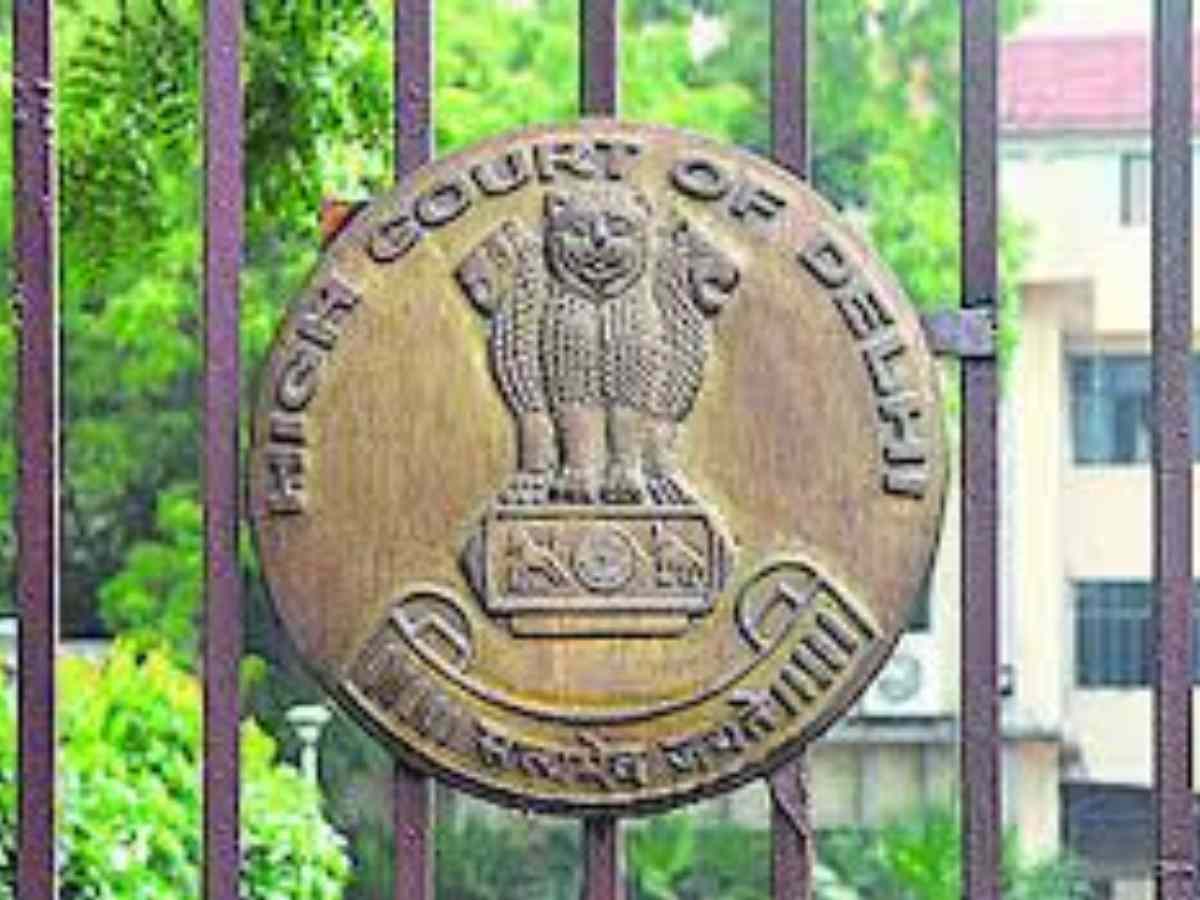
Amid severe pollution levels in the city, the Delhi High Court on Monday advised lawyers and parties-in-person to avail hybrid mode of appearance through video conferencing in their matters listed before it.
Delhi choked under a thick blanket of smog on Monday, with the Air Quality Index (AQI) settling at 498, which falls in the higher spectrum of ‘severe’ category
A circular issued by the registrar general of the high court said, “in view of the prevailing weather conditions, I have been directed to convey that if convenient, members of the bar/ parties-in-person may avail hybrid mode of appearance through video conferencing facility in their matters listed before the hon’ble courts”.
On Sunday, Chief Justice of India Surya Kant also advised members of the Bar and parties-in-person to avail hybrid mode of appearance through video conferencing in matters listed before the Supreme Court in view of the prevailing weather conditions.
Presently, the high court functions through a hybrid mode where proceedings are conducted through both physical and virtual modes.
On Monday, the air quality was ‘severe’ at 38 stations while it was ‘very poor’ at two stations in Delhi. Jahangirpuri, which recorded an AQI of 498, recorded the worst air quality amongst all 40 stations.
According to the Central Pollution Control Board (CPCB), an AQI between 0 and 50 is considered ‘good’, 51 to 100 ‘satisfactory’, 101 to 200 ‘moderate’, 201 to 300 ‘poor’, 301 to 400 ‘very poor’, and 401 to 500 ‘severe’.
Also Read: Delhi’s homeless face long nights of toxic air as winter pollution worsens
The air quality index (AQI) in Delhi had climbed to 461 on Sunday and marked the city’s most polluted day this winter and the second-worst December air quality day on record, as weak winds and low temperatures trapped pollutants close to the surface.
Health experts have warned of serious public health risks due to the prolonged exposure to hazardous air.