Delhi: Almost 250 of the 1,000 residents of the Pakistani Hindu refugee camp at Majnu Ka Tilla marked this Independence Day with particular anticipation. In 2024, they were granted Indian citizenship, while the rest of the community still waited for their applications to be processed.
For those who received their papers, the occasion was joyous but tinged with anxiety. “It was beautiful to experience the day of our freedom for the first time here. It was surreal, to say the least,” said Gomti, a resident. She added, however, that a lingering sense of alienation remains. “We have still not been accepted as residents of the country. Even the Delhi Development Authority officials have sent us a notice to vacate the place. We do not have anywhere to go.”
Celebrations dampened by uncertainty
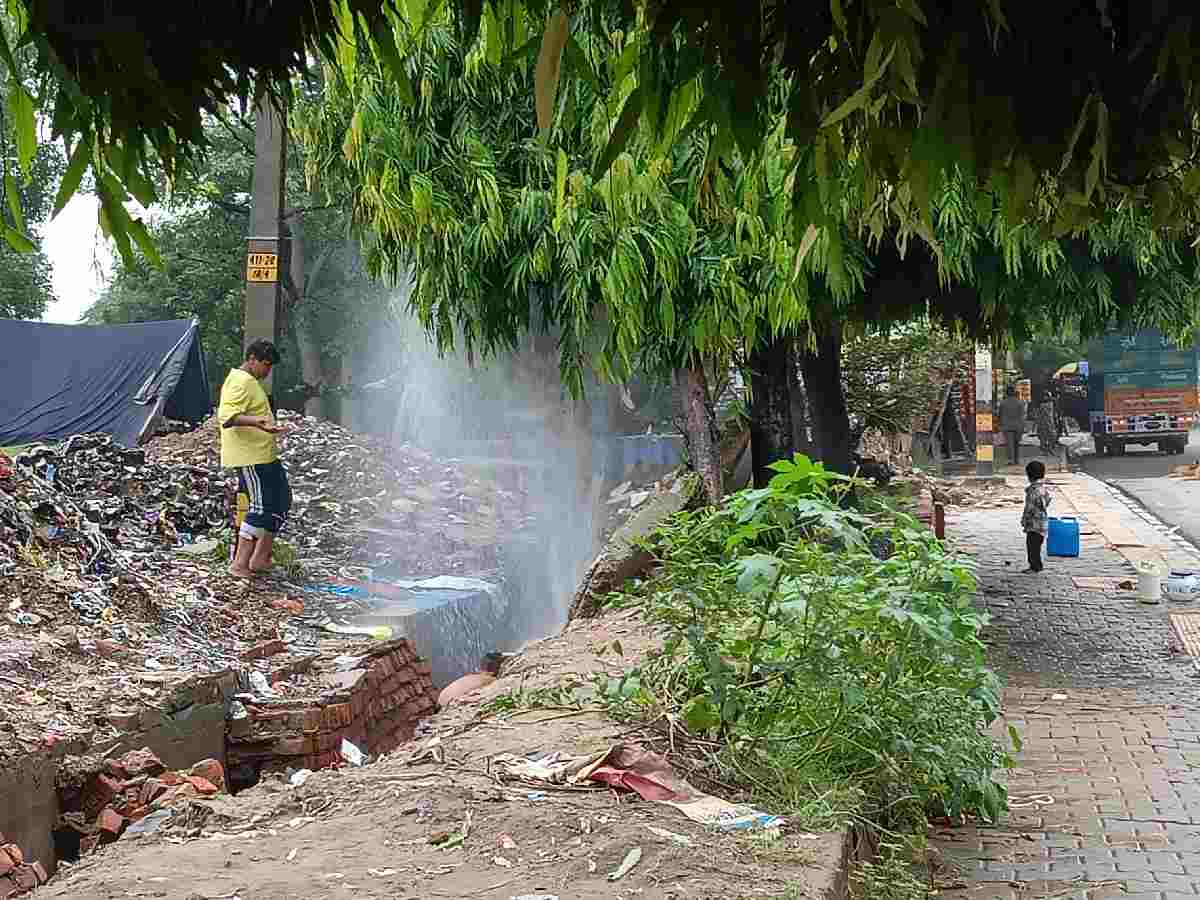
Across the camp, residents hoisted the Tricolour from their homes. Children, undeterred by the day’s heavy rain, played under a broken pipe gushing water, turning it into an impromptu neighbourhood water park. Adults, meanwhile, pressed on with appeals to the Foreign Regional Registration Office to upgrade their long-term visas (LTVs) into full citizenship.
“We had thought that within a year, my LTV would be upgraded to citizenship, and I would be celebrating my first Independence Day as a citizen,” said Krishan. “Unfortunately, that has not happened, and it’s still stuck with the administration.”
Dharamveer, the camp’s representative, said they had planned cultural programmes, including a flag-hoisting ceremony, but these were shelved due to a lack of funds, poor infrastructure, and relentless rain. “We had planned a lot of things like last year. This time around we have more residents who have become citizens, yet the looming threat of being displaced has kept us on our toes,” he said.
Despite the setback, residents were preparing for Janmashtami celebrations on August 16. “We are waiting for tomorrow. We will have a full-fledged Janmashtami celebration inside the local temple,” Dharamveer added.
Also read: From Nehru to now: Delhi’s Independence Day journey from simplicity to spectacle
Legal setbacks and eviction fears
On May 30, the Delhi High Court declined to stay an order for the demolition of the camp. “The petitioner and other similarly placed refugees have no right to continue to occupy the area in question,” the court observed.
Earlier, on February 6, the National Green Tribunal reprimanded the Delhi Development Authority for failing to comply with its 2019 directive to remove encroachments from the Yamuna floodplain. The tribunal noted that, despite orders from the NGT, Delhi High Court, and Supreme Court, encroachments along the river’s 22-km stretch in Delhi, including Majnu Ka Tilla, remain uncleared.
An October 15, 2024, NGT order sought detailed information on such encroachments. Refugee camps had initially been exempt from eviction, but in its latest ruling the bench said compliance had been delayed, prompting concern that the exemption could now be revoked.
For many, this raises the spectre of a second displacement—this time from a country they had hoped to call home.
Impact of the Pahalgam tragedy
Following the Pahalgam tragedy earlier this year, all citizenship processes for Pakistani nationals have been put on hold.
The Ministry of Home Affairs has clarified that Pakistani nationals in India on valid LTVs are not required to leave. This has offered relief to many families worried about their legal status. In Jodhpur, those with expired LTVs have been told to visit the local FRRO office to extend their visas after completing necessary formalities.
Pakistani nationals who have applied for LTVs and are awaiting processing will not face deportation, though delays are expected due to the time needed for background verification. Eligible Pakistani citizens who have not yet applied are being encouraged to submit the proper documentation. Those with expired passports who have not registered with Indian authorities have been advised to approach their local Foreigners Registration Office for guidance from the state government and the MHA.
Also Read: Remembering the Partition’s scars on the eve of Independence Day
Gauri remains stranded across the border
One family, however, has already been separated. Gauri was deported before the MHA’s directive came into effect, and her return now appears remote.
“I barely earn enough to arrange her return to Delhi. My circumstances prevent me from travelling to the Attari border to collect her myself. I’ve requested government assistance, but nothing has come of it,” said Gupta, her husband. While his LTV remains valid, his application for citizenship is still unresolved.
Gupta runs a small grocery shop serving the Majnu Ka Tilla shanty town. Occasionally, a passer-by from the monastery market will stop to buy a bottle of water, but such sales are rare and insufficient for a steady income.
“This was technically supposed to be my Independence Day as well,” he said. “But with Gauri not being here, and without any citizenship, there is no cause for celebration.”
The wait continues
On March 11 last year, the Indian government granted citizenship to 186 Pakistani Hindus under the Citizenship (Amendment) Act, 2019. Many in Majnu Ka Tilla hope their names will be on the next list, but with legal orders pending and official processes stalled, Independence Day continues to be a reminder of both newfound hope and enduring uncertainty.