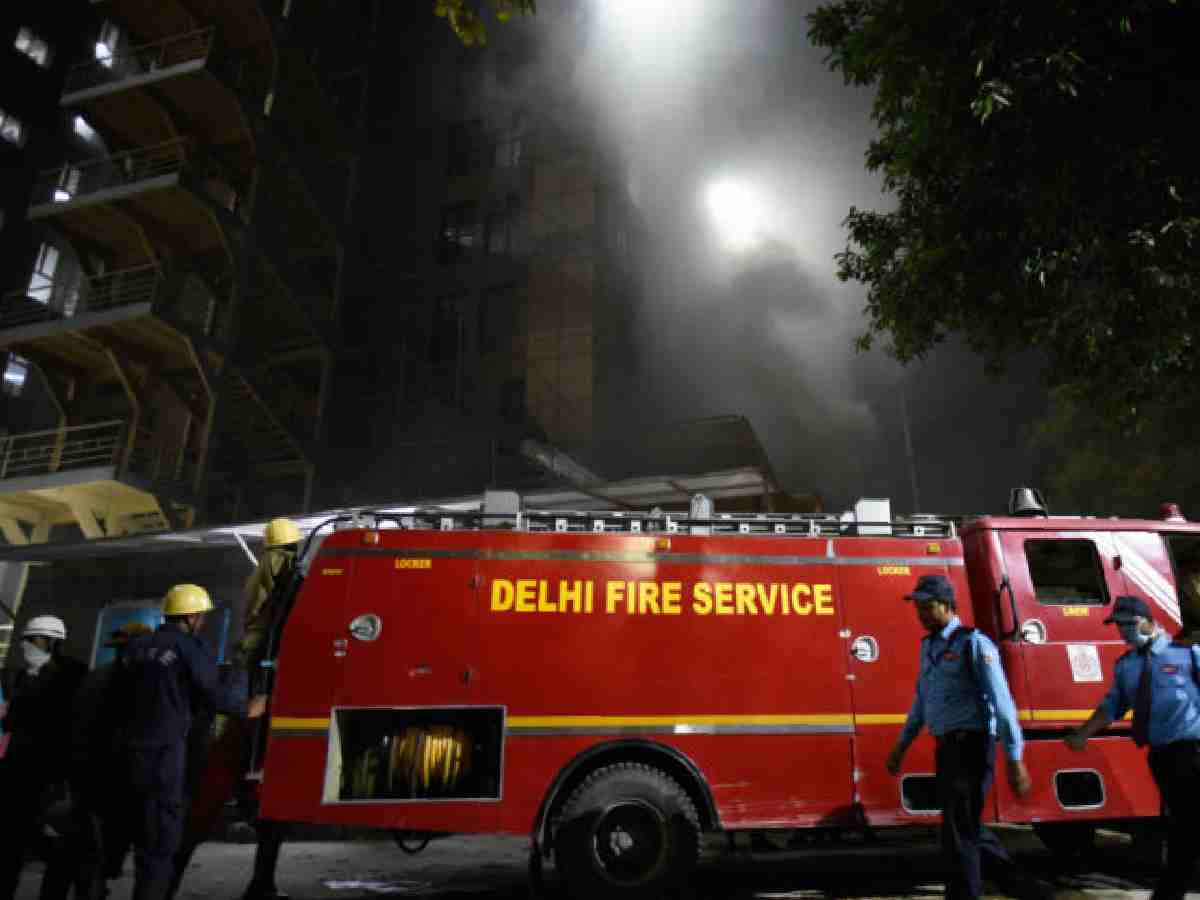
Multiple fire emergencies across the national capital—particularly in 2024—caught the Delhi Fire Services (DFS) on the back foot. With limited resources and a severe shortage of manpower, the department is clinging to its last morsels of hope as temperatures continue to soar.
Are there enough personnel in the DFS?
On April 25, Chief Minister Rekha Gupta highlighted that the DFS currently has 3,000 firefighters operating across 86 fire stations. “DFS operates 86 fire stations with over 3,000 firefighters, handling more than 36,000 emergencies yearly—surpassing any other Indian metropolitan city,” she said.
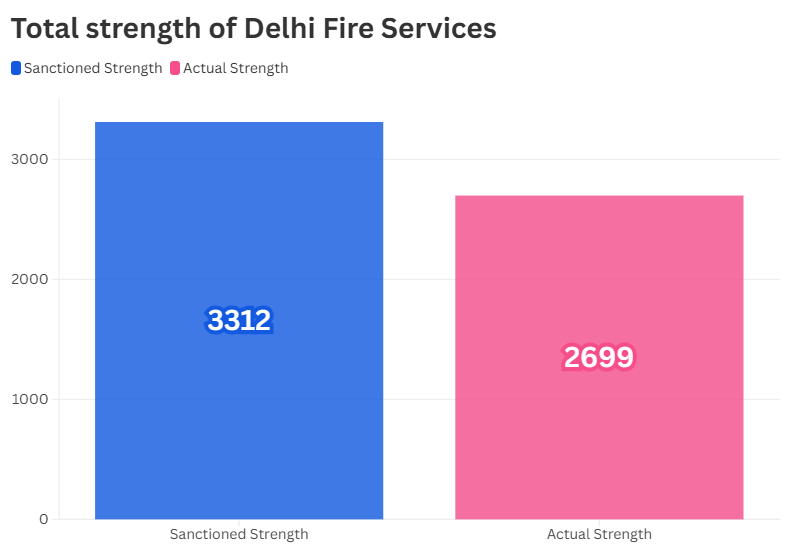
However, according to official DFS data accessed by Patriot, Delhi’s fire services face a significant shortfall of over 600 firefighters. While the total sanctioned strength is 3,312 personnel, the actual strength stands at just 2,699, Patriot found. There are around 200 fire engines in service and approximately 50 other peripheral vehicles, but these figures have not increased in over a decade—even as the number of fire incidents has more than doubled during the same period.
How are Delhi’s firefighters coping?
A senior official admitted that the reduced personnel strength has hampered the department’s ability to manage fire emergencies. “We have stopped giving the firefighters and fire operators any unscheduled leaves, especially during the three peak months of April, May, and June. They will be able to take their leaves from June 13,” he said, on condition of anonymity.
Currently, all fire operators work 24-hour shifts followed by 24 hours of rest. Due to the manpower crunch, they are also unable to attend regular training sessions.
With rising temperatures, the city has recorded a 10% increase in fire incidents, with residential properties being the most affected. Data from January 1 to April 6 shows a rise from 4,026 fire incidents in 2024 to 4,432 in 2025. Month-wise, January 2025 saw 938 incidents, February 1,076, and March peaked at 1,809. In April, 609 incidents were reported. By contrast, in the same period of 2024, there were 1,204 fires in January, 1,032 in February, 1,328 in March, and 462 up to April 6.
Despite the uptick, fatalities dropped from 46 in 2024 to 20 in 2025. Injuries also declined—141 in 2025 compared to 166 the previous year—indicating possible improvements in fire response or public safety awareness.
Residential areas worst affected
A detailed breakdown of 2025 data reveals that residential areas were hit the hardest, accounting for 1,045 incidents. Other areas included 87 fires in industrial zones, 49 in warehouses (godowns), and 35 in informal settlements (JJ clusters). Educational institutions and healthcare facilities reported 18 and 3 incidents, respectively.
Most alarmingly, 1,404 incidents involved garbage fires, highlighting the urgent need for better waste management.
Atul Garg, Director of Delhi Fire Services, pointed to outdated electrical wiring in residential buildings as a key risk factor.
“Many households fail to upgrade their wiring when introducing new electrical equipment, leading to overloading and short circuits. This problem is exacerbated by the presence of combustible materials—such as gas cylinders, curtains, plastic items, and other flammable substances—which can transform a minor spark into a devastating blaze,” he said.
Garg also noted that gas cylinder explosions pose a significant risk to firefighters, making operations more dangerous and complicated.
Rising temperatures, ageing systems fuel summer fires
Officials cited multiple factors behind the seasonal spike in fire incidents. Beyond the effect of extreme heat, the end of winter typically sees an increase in the use of electrical equipment. Many households and industrial units install new appliances or machinery without upgrading the supporting infrastructure, leading to electrical faults.
Poor maintenance of wiring and equipment further exacerbates the problem, as neglected systems are more prone to malfunctions that can start fires.
Summer conditions also intensify fire behaviour. “Fires spread more rapidly in hot, dry weather, making them harder to control,” said a fire official. By contrast, winter conditions tend to slow fire propagation, making containment easier.
Incidents rise, but staffing remains unchanged
Even as fire incidents rise across the capital, the DFS’s strength has remained stagnant. While the current administration has announced plans to build more fire stations and introduce modern equipment, the issue of staffing continues to be overlooked.
A string of recent fire emergencies has exposed gaps in safety preparedness across public, commercial, and residential buildings.
Major fire incidents in 2025
On May 15, a fire broke out at Sri Guru Gobind Singh College of Commerce in Pitampura. Eleven fire engines were deployed to douse the flames. Although no casualties were reported, the incident underscored the vulnerability of educational institutions and the need for regular fire safety audits.
Two days earlier, on May 13, a blaze erupted on the second and third floors of the dental wing at BM Gupta Hospital in Uttam Nagar. Ten fire tenders were dispatched and the situation was brought under control with no reported injuries or fatalities. The incident drew attention to fire hazards in healthcare facilities, where oxygen supplies and complex electrical systems pose serious risks.
 On April 30, Dilli Haat in South Delhi’s INA area was engulfed in a major fire at around 8:55 PM. The blaze destroyed nearly 30 food and craft stalls, causing crores in damages and wiping out decades of artisans’ work. Fourteen fire engines were deployed. A short circuit is believed to have caused the fire, raising concerns over safety protocols at one of the city’s prominent cultural hubs. No casualties were reported.
Also Read: Delhi: Madrasi Camp residents count down to demolition of their 50-year-old colony
On April 27, a slum near Shri Niketan Apartment in Sector 17, Rohini, was gutted in a devastating fire. At least two toddlers lost their lives, and around 800 jhuggis were destroyed, leaving residents in despair.
Delhi government announces modernisation push
On May 16, Chief Minister Gupta unveiled plans to modernise the DFS, introducing new technologies to enhance firefighting capabilities. During an inspection at the Delhi Secretariat with Home Minister Ashish Sood, she reviewed a range of advanced tools, including firefighting robots, the ARMOUR (Automated Robotic Mist Omni Utility Rakshak) unit, and portable high-pressure water mist systems. These are designed to improve access and efficiency in congested areas.
Gupta criticised the outdated infrastructure left behind by previous administrations and reaffirmed the government’s commitment to developing a world-class fire service.
To support the modernisation drive, the Delhi government has allocated Rs 110 crore this year for procurement of new vehicles and equipment, with a total allocation of Rs 504 crore for the entire initiative.