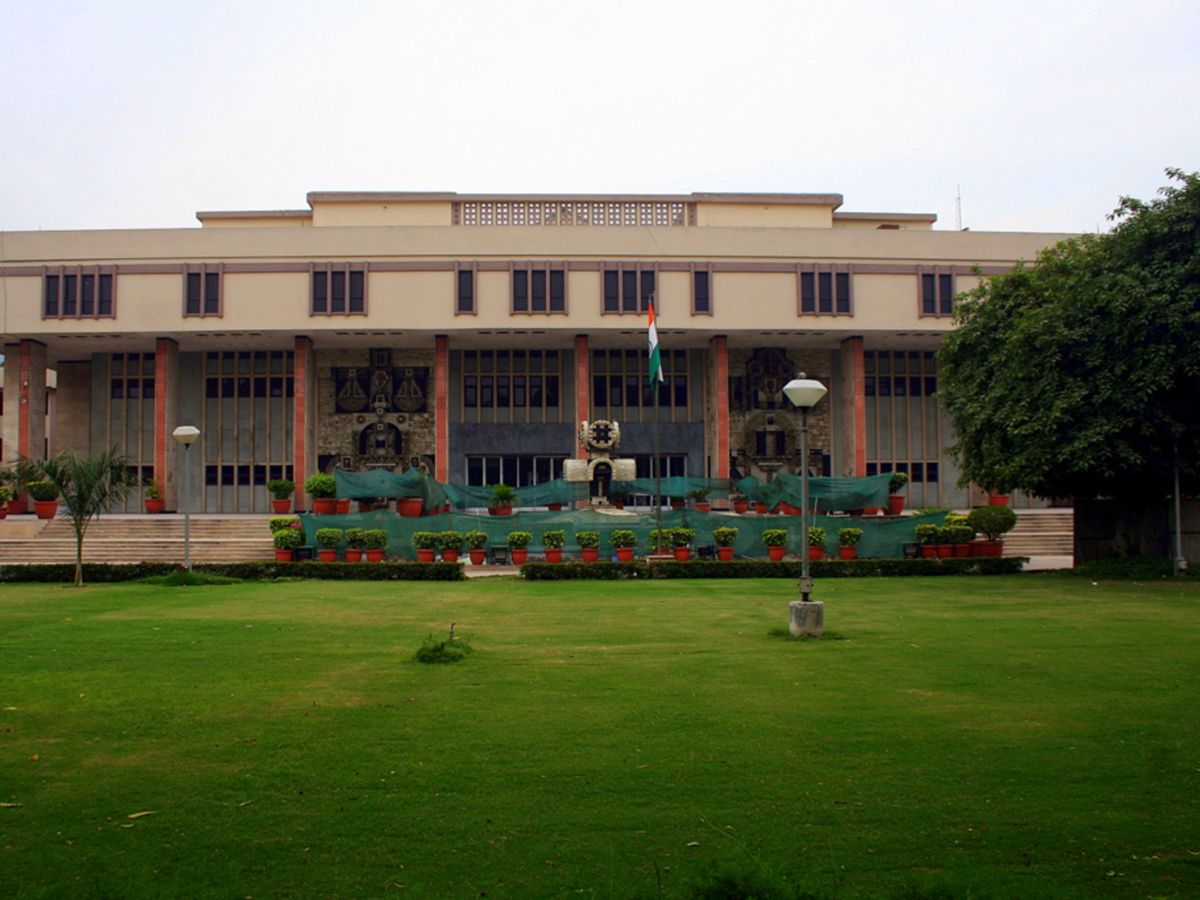
The Delhi High Court on Friday sought the response of the Directorate of Education (DoE) and the Lieutenant Governor (LG) on a batch of pleas by several minority schools challenging the constitutional validity of a law mandating government approval for fee hikes.
A bench of Chief Justice Devendra Kumar Upadhyaya and Justice Tejas Karia issued notice to the Delhi government’s DoE and the LG and asked them to file their replies within six weeks.
The court listed the matter for further hearing on March 12.
Also Read: Yamuna in 2025: A year of scrutiny without recovery
The petitions challenge the Delhi School Education (Transparency in Fixation and Regulation of Fees) Act, 2025, and its subsequent rules.
The court extended the time from January 10 to January 20 for the constitution of such committees. It also said the last date for submission of the fee proposed by the school managements to the committees should also be extended from January 25 to February 5.
The new Act mandates that all fee hikes in private schools must be approved through a transparent, three-tier committee system involving parents, school management and government representatives.
Under the new framework, every private school will have to constitute a School Level Fee Regulation Committee (SLFRC). This committee will include representatives from the school management, the principal, three teachers, five parents and one nominee from the DoE. Members would be selected through a lottery system in the presence of observers to maintain transparency.
The SLFRC will examine fee proposals submitted by school managements and decide within 30 days.
The move marks the implementation of a new law to regulate and bring transparency to the fixation of private school fees from the current academic session. The Act will be implemented through a two-tier mechanism comprising school-level committees and district-level appellate bodies.
The petitioners’ counsel contended that the composition of committees entrusted with the right of administration cannot be dictated by the state and added that the statutory committees touching the administration of minority institutions cannot have any outsider in it as it would violate Article 30 (Right of minorities to establish and administer educational institutions) of the Constitution.
“Petitioner schools have the fundamental right under Article 30 (1) of the Constitution to establish and administer the educational institution in question and that the same cannot be taken away by any legislation… No prior permission of the state can be insisted for the exercise of right under Article 30 (1) of the Constitution,” the petition said.
On Thursday, the court passed a similar order on a batch of petitions filed by several private schools.
Senior advocate S V Raju, representing the DoE, submitted that there was nothing wrong in the Act and referred to several Supreme Court judgments interpreting Article 30 and said it permits regulatory measures by the government.