
Earlier in October, the Delhi Police had arrested and deported 10 Bangladeshi immigrants residing, purportedly, illegally in the capital. They were identified as transgender persons who had travelled to Delhi, where they were mostly engaged in begging and, according to officials, in other activities at night.
During their investigation, the police found a lack of documented proof of Indian citizenship. Their suspicions deepened after examining the individuals’ digital footprint, which led to further interrogation. The detainees eventually disclosed that they had come from Bangladesh.
“It was also uncovered that they had undergone Gender-Affirming Surgery (GAS) to alter their physical appearance to resemble women. To conceal their true identities, they regularly used heavy makeup, sarees or salwar suits, wigs, and other feminine accessories. They had also adapted their voice and body language to mimic female mannerisms,” the police statement noted.
While the case highlighted a pattern that police described as a modus operandi, it also brought attention to a contrasting reality: transgender persons residing in Delhi often lack accessible mechanisms to report harassment or seek help from law enforcement.
SPUWAC’s transgender cell
In 2021, then Delhi Police Commissioner SN Shrivastava ordered the establishment of a monitoring cell to oversee cases involving offences against transgender persons. The unit was created to ensure prompt registration, investigation, and prosecution of such crimes.
The move followed directives to enforce the Transgender Persons (Protection of Rights) Act, 2019, along with the Rules notified on September 25, 2020. These provisions mandate welfare measures, rescue, and rehabilitation for transgender individuals.
Under Section 18 of the Act, harming or endangering a transgender person through physical, sexual, verbal, emotional, or economic abuse is punishable with imprisonment ranging from six months to two years, along with a fine. Prohibited acts include forced labour, denial of access to public places, and forcing individuals to leave their homes or villages.
To meet these legal requirements, the Commissioner directed the Special Police Unit for Women and Children (SPUWAC) to establish and manage the monitoring cell. The SPUWAC Transgender Cell was thus set up.
Also Read: Delhi govt approves free bus travel for transgender passengers: Rekha Gupta
How the cell functions
Initiated as a monitoring unit, the cell has largely remained limited to that role. It lacks a dedicated helpline, and even basic communication infrastructure is unreliable.
“All of the landline connections in the office have been disconnected for the past couple of months owing to some work MTNL (service provider) has undertaken,” an official said.
Despite this, officials say their work continues to focus on data collection, research, sensitisation, and monitoring investigations into crimes against transgender persons. According to an official, 16 such incidents were recorded between January 1 and March 30 this year.
“These cases are listed on a per district basis. We, as a unit, do not register these cases ourselves. Sometimes transgender persons or other stakeholders inform us about any complaint that has been filed by them whose investigation needs more sensitivity and better monitoring — that is when we involve ourselves on a more hands-on basis,” said a senior police official associated with SPUWAC.
Sensitisation sessions
Officials say a significant portion of the unit’s work involves training police personnel.
“We take a lot of training sessions with police personnel. We ensure that they understand how people from the transgender community expect to be treated, and the many factors that should be taken into account. There is a lot of learning and unlearning that happens in these sessions,” she said.
According to police personnel, while SPUWAC officials oversee these sessions, much of the training is conducted by stakeholders and transgender activists.
“Lived experiences go a long way. A lot of transgender people conduct these sessions, and through that police officers actually start understanding the kind of terminologies to use and not use, how to behave with members of the community while ensuring not to appear discriminatory. It has helped in educating a lot of police officers on how inclusivity works,” she said.
Concerns over new amendments
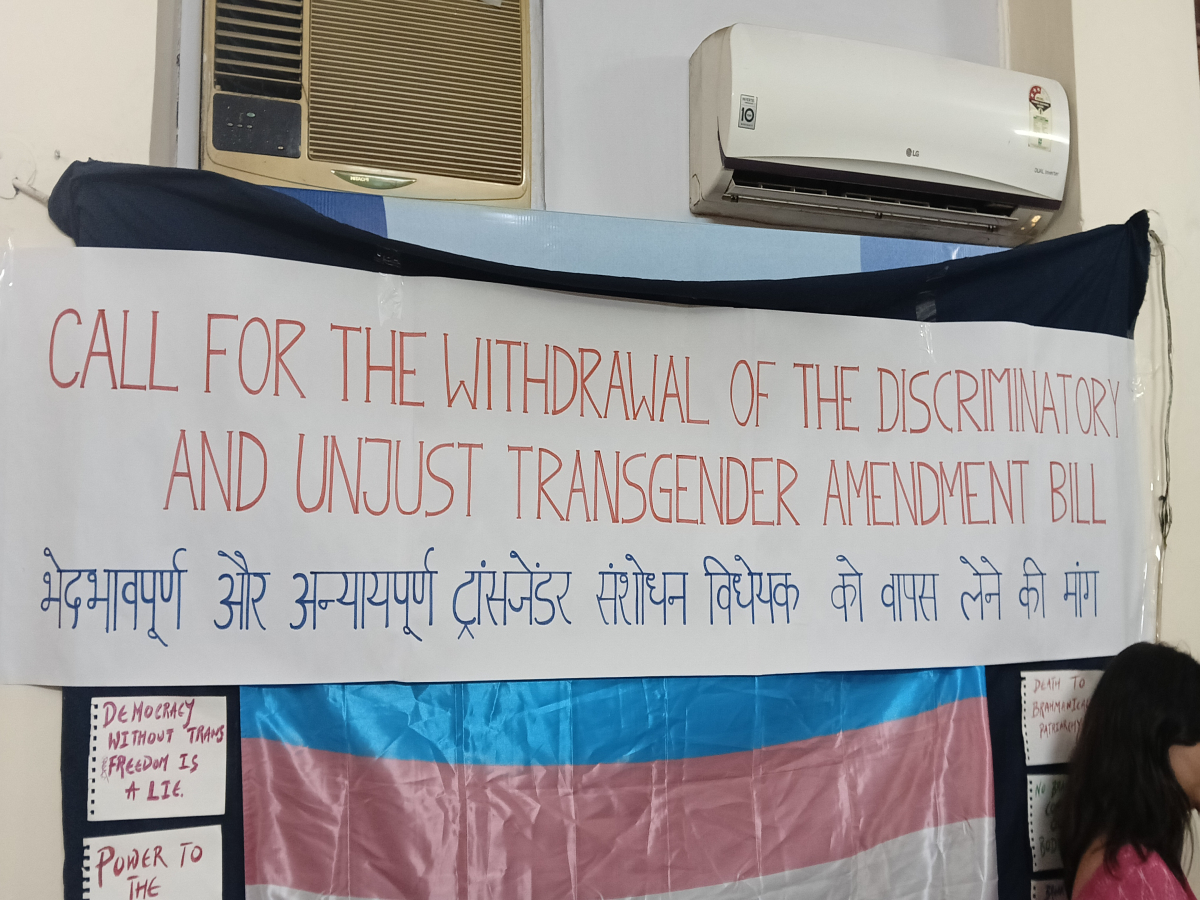
However, officials expressed concern that recent changes to the Transgender Persons (Protection of Rights) framework may dilute earlier safeguards.
Under the 2019 Act, self-identification was recognised, and a broader spectrum of gender identities was acknowledged. Officials said that under newer guidelines, individuals who do not fall within predefined categories such as transwomen (hijra, jogta, aravani, kinner) or intersex persons risk being excluded.
“It was only recently that we conducted a session where we sensitised other officials regarding who a transgender man is. A lot of our personnel, including me, actually came to know about the existence of a transgender man right then. But with the new guidelines, they might be pushed to the sidelines again,” a senior police official said.
Even within the police, there is concern about the future of transgender communities and the possibility of marginalisation after years of advocacy and legal progress.
A question remains — even if a helpline is set up, how many would it actually serve?
Read More: Living on the edge: Transgender community fears exclusion under amendment Bill