
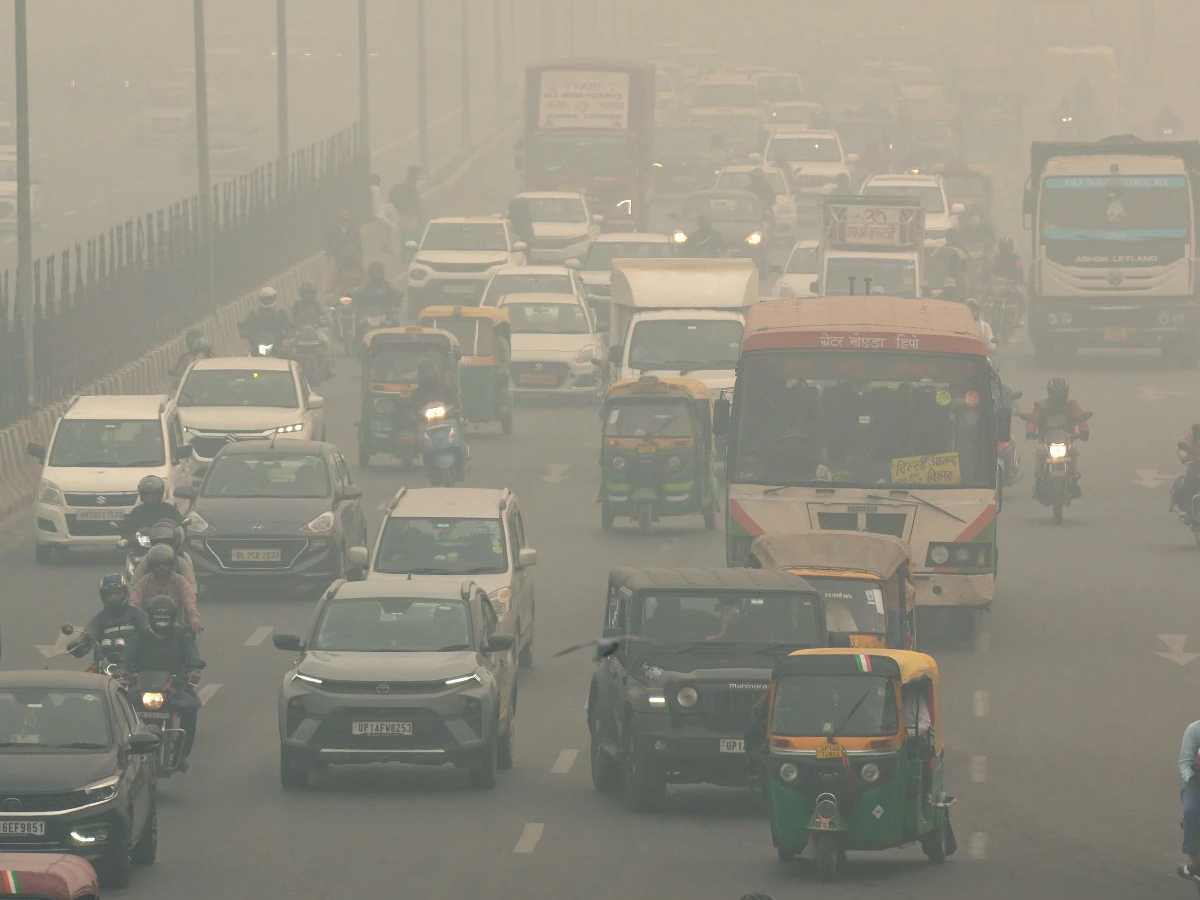
Delhi has recorded its poorest February air quality in three years, with the average Air Quality Index (AQI) at 234 till February 26, according to an analysis by the Centre for Research on Energy and Clean Air (CREA).
The data showed that February 2026 has been the worst since 2023, when the monthly average AQI stood at 237.
In comparison, the average February AQI was 218 in 2024 and 214 in 2025, while in 2022 it was 225.
In terms of daily air quality categories, the capital witnessed 20 ‘poor’ air quality days and two ‘very poor’ air days this February, while four days fell in the ‘moderate’ category.
According to the Central Pollution Control Board (CPCB), an AQI between zero and 50 is classified as ‘good’, 51 to 100 as ‘satisfactory’, 101 to 200 ‘moderate’, 201 to 300 ‘poor’, 301 to 400 ‘very poor’, and 401 to 500 ‘severe’.
Data from the SAMEER app’s AQI calendar indicated that ozone was the most prominent pollutant for most of the month, emerging as the leading pollutant on 21 out of 27 days.
PM10 was dominant on four days, while nitrogen dioxide emerged on top on one day.
The highest AQI of the month was recorded on February 4 at 339, in the ‘very poor’ category, with ozone identified as the primary pollutant.
Experts attributed the dominance of ozone to its nature as a secondary pollutant formed when nitrogen oxides and other gases react in the presence of sunlight.
The Indian standard for ozone is set at 100 micrograms per cubic metre as an eight-hour average, as prescribed in the World Health Organization guideline.
Exposure at or above this level can cause chest tightness, throat irritation, coughing and difficulty in breathing. It may also reduce lung function and inflame the airways, particularly affecting people with asthma and other respiratory conditions.
On Friday, the 24-hour average AQI stood at 200, placing it in the ‘moderate’ category.