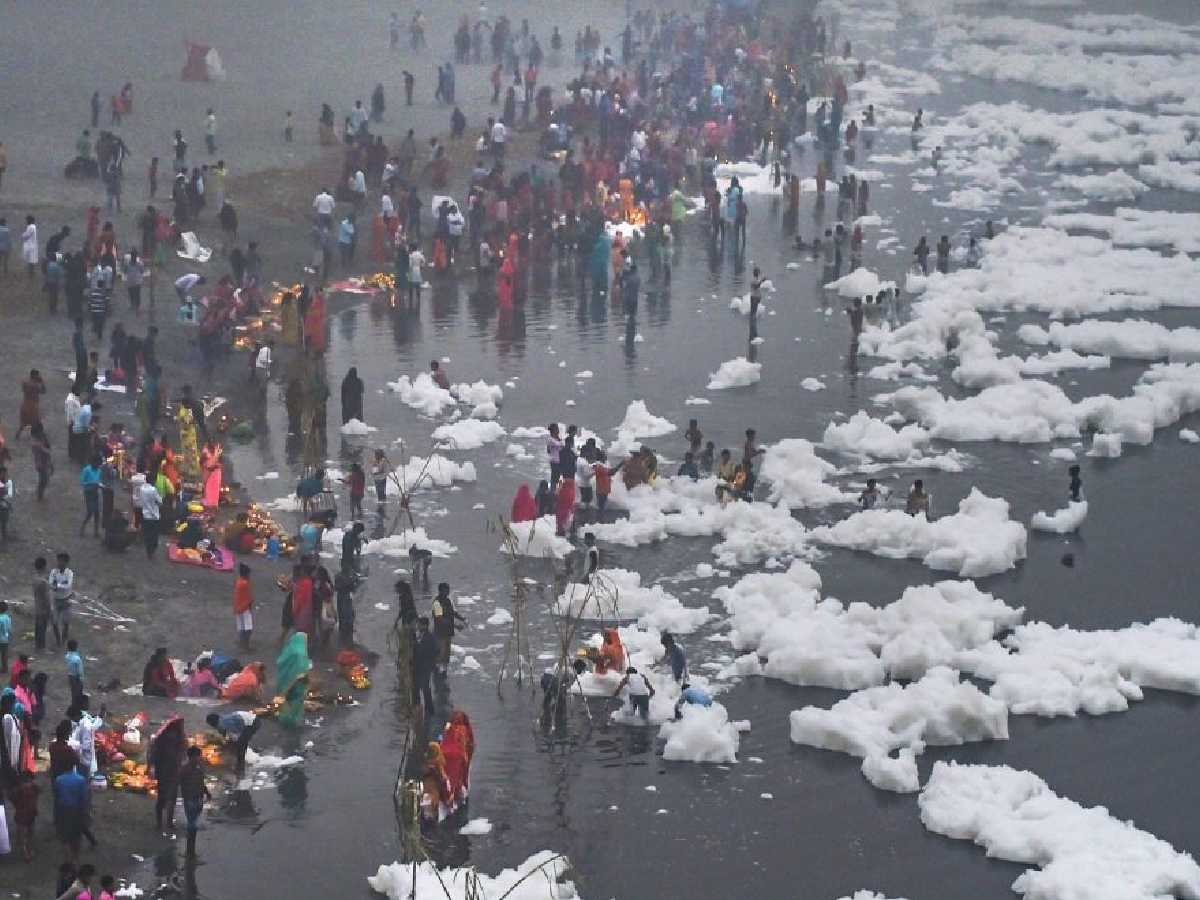
It was the year 1956. Sarojini Nagar in South Delhi was just beginning to take shape as a new settlement. It was home to central government employees, with a few flats still vacant. Shrikant Dubey, a railway employee, lived with his family in Flat C-155. He was a highly sociable person.
One evening, some of his neighbours from eastern India gathered outside his flat, engaging in casual conversations about various topics. At that time, Jharkhand was still years away from being formed. Someone suggested that they should celebrate Chhath right there in Sarojini Nagar. The idea was well received, and it was decided that the festival would be celebrated in the locality. With about one and a half months left for Chhath, preparations began.
Around a dozen families from Purvanchal — the region in North-Central India that primarily includes the eastern part of Uttar Pradesh and the western part of Bihar — living in and around Sarojini Nagar, started organising the first-ever Chhath celebration in Delhi. They built an artificial pond in their area and performed the rituals.
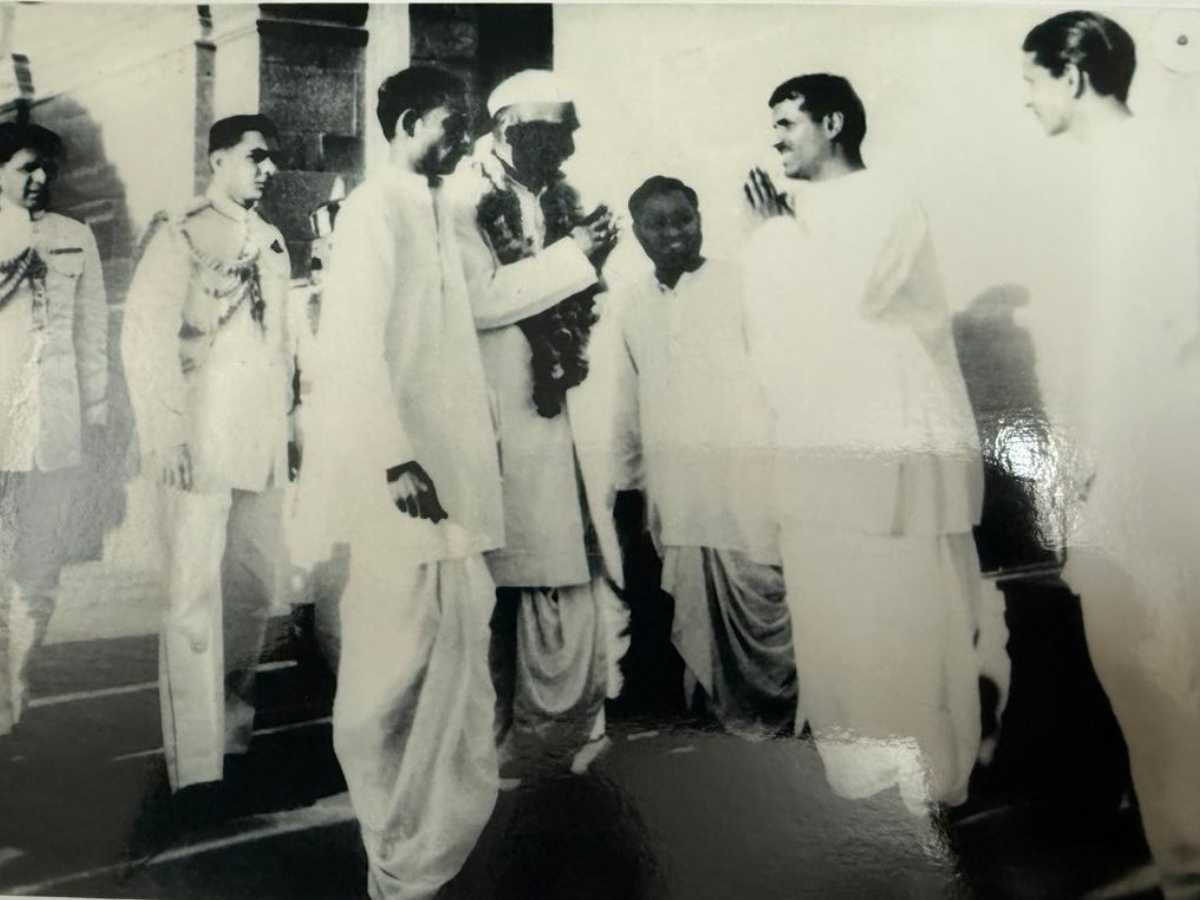
Subsequently, the Delhi Bhojpuri Samaj was formed. Its members even visited Rashtrapati Bhavan to invite President Dr Rajendra Prasad to participate in the Chhath festivities on their cycles. Although he couldn’t attend due to various reasons, his wife, Rajvanshi Devi, graced the inaugural Chhath Mahaparv event in Sarojini Nagar.
She continued to attend in the following years, mingling warmly with everyone. According to Ajit Dubey, president of the Delhi Bhojpuri Samaj, Rajvanshi Deviji also used to visit the flat of her relative, Vishweshar Narayan. Dubey’s father, Shrikant Dubey, is credited with initiating the Chhath celebrations in Delhi.
Early 1980s
Until the early 1980s, Chhath was not celebrated collectively at many places in Delhi. Meanwhile, far from the Capital, in West Bengal, the CPM government had come to power, and jute mills began shutting down, leaving many workers — mostly from Bihar — jobless. This led to an influx of people from Bihar to Delhi in search of livelihood, a migration unintentionally facilitated by then Union Railway Minister Lalit Narayan Mishra. He introduced several trains between Delhi and Patna, making travel easier for families from Bihar. Over the years, Delhi started to resemble Bihar itself.
As time passed, labourers, students, traders, teachers, and others from Bihar began arriving in Delhi-NCR in large numbers by train. The year 1982 was a watershed moment for the capital, as a very large number of people from Bihar came here for jobs during the Asian Games. They started celebrating Chhath in the capital.
Senior writer and journalist Arun Kumar notes that the closure of jute mills proved to be a blessing in disguise for workers from Bihar. Unlike their home state, Delhi was not plagued by caste divisions. In Delhi’s open environment, the Bihar community worked hard, utilised their earnings wisely, and built homes here. Today, they are relatively prosperous. After the Partition, lakhs of Punjabi refugees arrived in Delhi, changing the city’s demographic character. Then came the era of the Bihar-origin population. Their numbers in Delhi-NCR are now estimated to be around 40 lakh.
Gwyer Hall to JNU
People from Bihar’s flood-ravaged districts like Supaul, Araria, Saharsa, Madhepura, Purnia, and Katihar have also migrated to Delhi in large numbers. Since the 1960s, students from Bihar started enrolling in Delhi University, with Gwyer Hall being their stronghold. In the 1970s, with the establishment of JNU, their numbers grew exponentially. Many from the Mithila region — primarily Brahmins and Kayasths from Patna, Gaya, and Darbhanga — arrived in Delhi. Yadavs and Muslims from Bihar also came in significant numbers, seeking work. Once they arrived, they rarely returned.
Also Read: Delhi: Floods expose cracks in Yamuna rejuvenation projects
Splendour of Chhath
Around 1985, Chhath celebrations began along the banks of the Yamuna in Delhi. Although Chhath is an ancient festival of Bihar, 25 to 30 years ago, most people in Delhi were unaware of it. Dushyant Sinha, a Noida-based founder and head of a public relations company, says that the enthusiasm with which Chhath is celebrated in Delhi-NCR, starting with the rituals of Nahay-Khay, reminds every Bihar-origin family of home. During this time, devotees in Delhi-NCR, standing by the Yamuna, feel as if they are dipping into the Bagmati, Gandak, Burhi Gandak, Son, Ghaghra, or Ganga rivers. Sinha, who originally hails from Ranchi, says that now Chhath is celebrated at about 90 small and large ghats along the Yamuna in Delhi.
Actor-turned-politician Shatrughan Sinha once remarked that due to the growing Bihar-origin population, Chhath feels like a Delhi festival now. The scenes at Wazirabad Ghat, Ram Ghat, Kudesia Ghat, and Kalindi Kunj Ghat resemble those along the Ganga in Patna. Political parties in Delhi put up large hoardings and banners at these ghats to woo voters from Bihar during Chhath. Media professional Sandeep Dwivedi emphasises the need to keep Chhath free from politics, as the festival transcends caste barriers. However, it seems unlikely that politics around Chhath will cease anytime soon.
Chhath dishes
Despite their significant presence, Chhath cuisine is conspicuously absent in Delhi-NCR. Pramod Somani, a cloth merchant in Gandhi Nagar originally from Purnia, expresses surprise that quality litti-chokha is still unavailable in Delhi-NCR. While litti-chokha is available in areas like Laxmi Nagar, Shahpur Jat, and Kirari village, it is not considered up to standard.
Someone aptly remarked that while Patna may be the capital of Bihar, Delhi has become the capital for people from Bihar. They have embraced Delhi as their own. For Delhiites, “Purvanchali” has become synonymous with Bihar-origin residents. Women from Bihar now find Punjabi salwar-kameez convenient to wear, and the taunt “Oye Bihari” is no longer heard in Delhi.