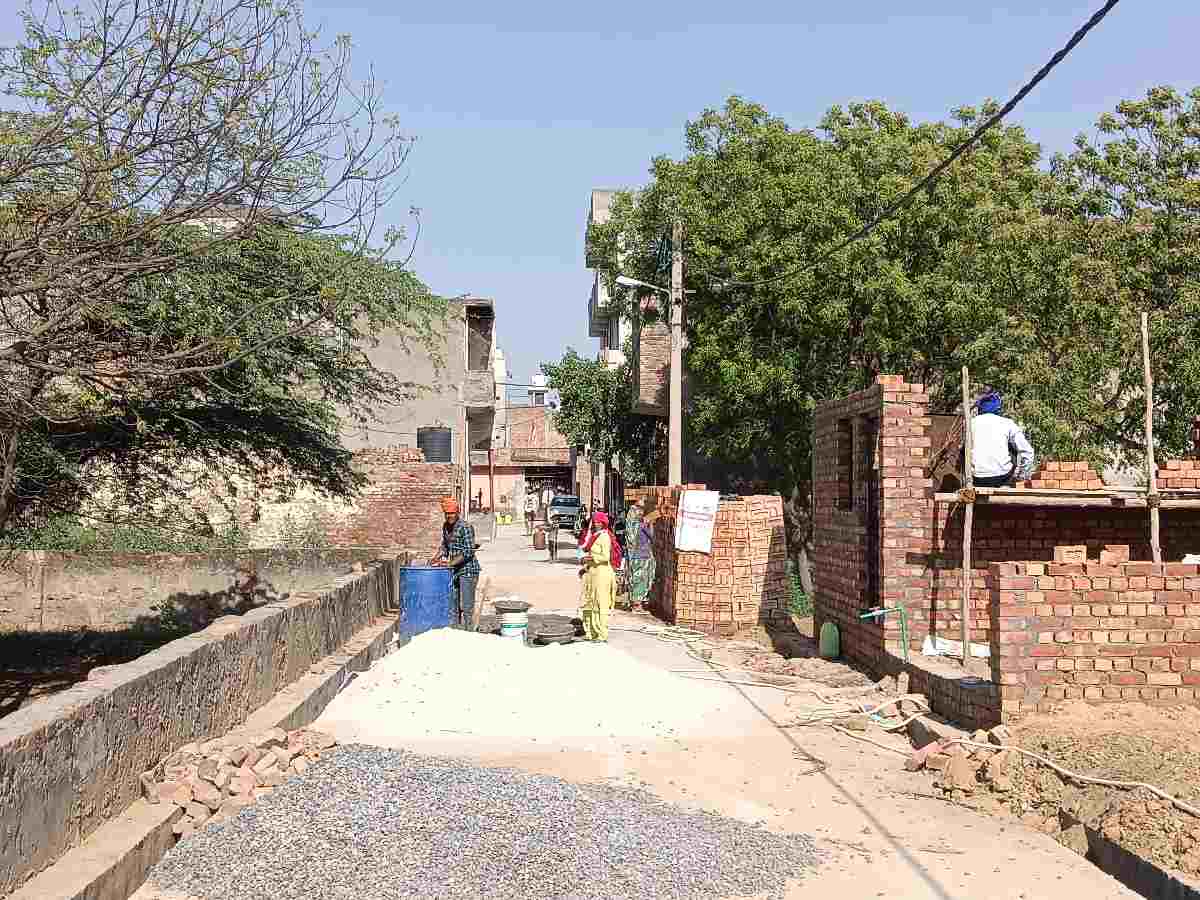
Under the sweltering Delhi summer sun, construction activity continues despite the rising mercury. For lakhs of workers across the national capital, missing even a single day of work can determine whether their families sleep on a full stomach or an empty one.
For labourers such as Ramesh Kumar, a 34-year-old steel fixer working at a residential construction site in Punjabi Bagh, the ongoing heatwave has become a daily battle.
Wrapping a towel around his head, Kumar relies on constant sweat and repeated breaks to cope with the heat, though he says it offers little relief. After laying each set of bricks, he pauses to wipe his face before returning to work again.
“The iron rods become so hot by midday that you can feel the heat through thick work gloves. If you touch them bare-handed, your skin burns,” Kumar says, wiping sweat from his eyes. “But if I sit down for too long, my family back home doesn’t eat. The heat breaks your body, but poverty breaks your will.”
According to the Delhi Building and Other Construction Workers Welfare Board dashboard, 2,80,249 workers were registered as of May 22. However, labourers and activists say a significant number of construction workers remain outside the formal registration system.
Working through heat
Across construction sites in Delhi, workers say conditions have become increasingly difficult as temperatures continue crossing 45 degrees Celsius in several areas.
Most labourers continue working through peak afternoon hours despite the risks of heatstroke and dehydration.
To reduce exposure, some contractors have begun arranging basic relief measures such as temporary tarp shades, ice-filled water dispensers, and packets of Oral Rehydration Salts (ORS).
At a residential site in Dwarka, Sunita Devi carries a bowl of wet cement on her head while navigating narrow scaffolding in the afternoon heat. She says traditional methods often become the only available coping mechanism.
“I always carry ice-cold water with me. By the time I drink it, the water becomes normal enough to consume. If I carry regular water, surviving the day becomes much harder,” Sunita says.
“By evening, even that water becomes hot. The fans inside our temporary tin sheds only blow hot air at night, so we hardly sleep properly. We begin the day exhausted, but the work cannot stop because of the weather.”
Medical professionals warn that prolonged physical labour under extreme heat significantly increases the risk of severe dehydration, heatstroke, and kidney-related illnesses.
Despite the risks, Delhi’s construction activity has shown little sign of slowing, driven largely by workers who say they cannot afford to stop working.
Sattu and gamcha
The Delhi government has announced plans to distribute specialised summer relief kits to registered construction workers and has initiated the process of empanelling a public sector unit for procurement and distribution.
Each summer kit will contain nine items intended to help workers cope with extreme weather conditions. These include 250 grams of glucose, 1 kg of sattu (roasted gram flour), 30 ORS sachets, a cotton gamcha, a sun-protection cap, prickly heat powder, a one-litre water bottle, and 250 ml of sherbet concentrate, packed inside a utility backpack.
According to the Delhi government’s request for proposal document, construction workers remain especially vulnerable because of prolonged outdoor exposure and labour-intensive work conditions.
The document noted that workers face occupational risks such as dehydration, heat stress, fatigue, and associated health complications during summer.
The government said the primary objective of the initiative was to ensure timely distribution of relief kits to support workers’ health, safety, and working conditions, with priority being given to labourers currently engaged at active construction sites.
Limited coverage
Taking into account worker mobility, seasonal migration, budgetary constraints, and implementation timelines, the board has proposed covering approximately 25% of the active and renewed worker base.
Officials said the number of beneficiaries remains tentative and may change depending on field verification, worker availability, and final administrative approvals.