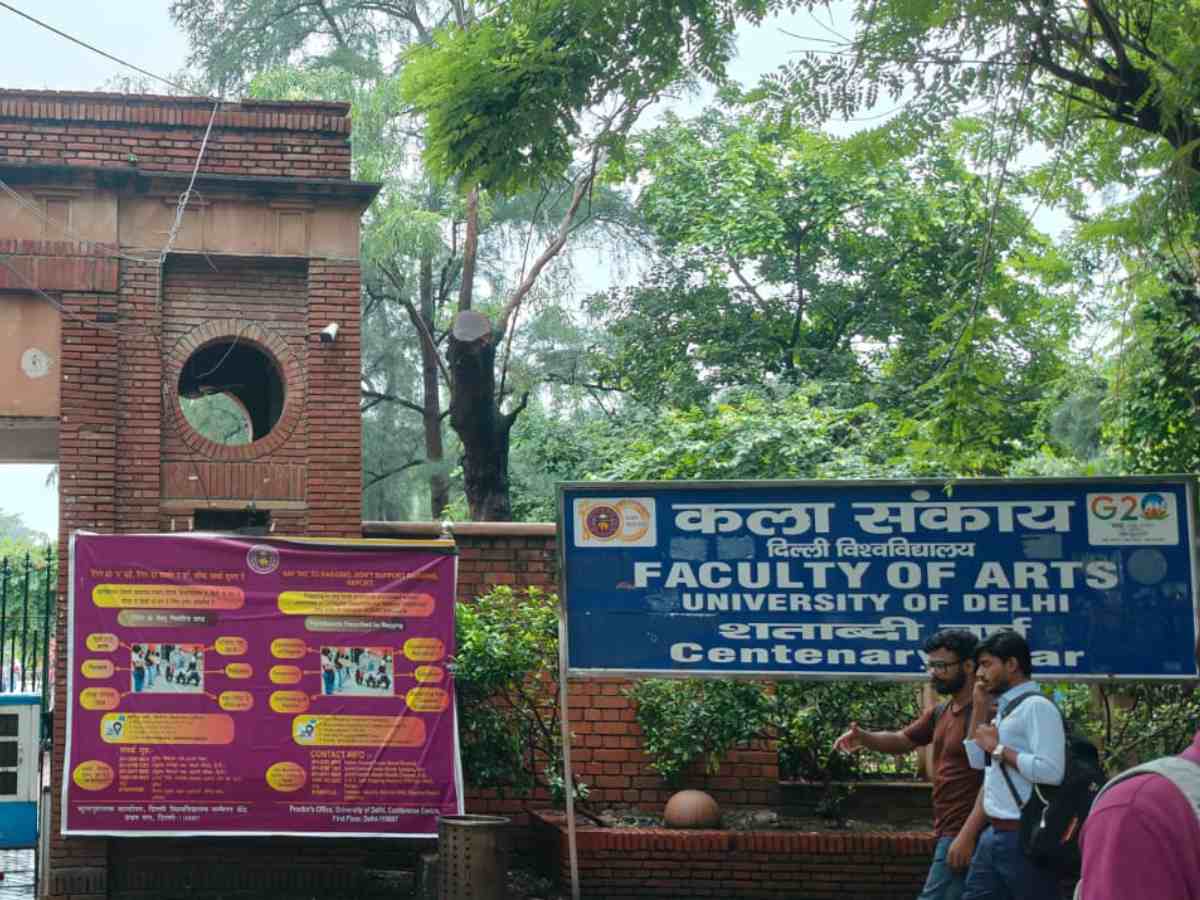
Delhi University’s School of Open Learning (SOL) will introduce one-year postgraduate programmes for graduates of the Four-Year Undergraduate Programme (FYUP) from the 2026–27 academic session. The announcement comes amid complaints from current students about shortcomings in classroom teaching and academic facilities.
The one-year master’s programmes will be offered in commerce, political science, history, Hindi and Sanskrit to students who have completed a four-year undergraduate degree and meet the prescribed eligibility criteria.
SOL Director Payal Mago said the courses would run alongside the existing two-year postgraduate programmes.
“The one-year master’s programme is an additional option for eligible graduates. It will not affect our existing two-year postgraduate programmes, which will continue to admit students through the same process,” Mago reportedly said.
According to news reports, university officials linked the decision to the shortage of seats in Delhi University’s regular colleges. They said SOL allowed eligible students to continue their studies when seats in regular colleges were unavailable.
Limited classes and delayed study material
Pushpendra Kashyap, a BA (Honours) Political Science student, said a low score in the Common University Entrance Test (CUET) had left him with a choice between SOL and the Indira Gandhi National Open University (IGNOU).
“With a low CUET score, I was left with two choices: either IGNOU or SOL. SOL was closer to home and seemed simpler, so that’s what I chose,” he said.
“IGNOU holds classes even on weekends. SOL, by comparison, offers barely 10 classes in an entire semester,” he added.
Kashyap said study material often reached students after their examinations were over, while notices about the beginning of a semester frequently arrived weeks after classes had started.
“My books for the first semester arrived only after my first exam. By then, there was nothing left to do with them,” he said.
“Classes had started a month earlier, but I received a message almost one-and-a-half months later saying that my classes had started on a particular date. By then, around five classes had already taken place,” he added.
“If five classes are already gone, how am I supposed to study a 190-day course in the remaining five classes?” he said.
Kashyap also alleged that he was treated poorly when he approached the administration.
“I went to the SOL administration with my problems, but I was treated very badly. I was not even allowed to meet the principal and was sent back from the gate,” he said.
Anmol, 19, a BA History student at SOL, said students faced delayed results and received far fewer classes than those enrolled in regular colleges.
“Our situation isn’t equal to that of regular college students; in many ways, it’s worse,” he said.
According to Anmol, SOL students are still awaiting their second-semester results, while students in regular colleges have already begun the new academic session. He said SOL students received only around 18–20 classes during an entire academic year, which he attributed to a shortage of teaching staff.
Long journeys and limited library access
Kashyap said SOL students were not assigned permanent study centres and had to attend classes at a different college each semester.
“I attended my fourth-semester classes at Shivaji College, but the centre keeps changing every semester,” he said.
He alleged that the distance between study centres made it difficult for students to meet and raise their concerns collectively.
“They do not even let students meet and unite. If we want to raise our issues, they place our centres at such distant locations that we sometimes have to travel nearly 30 kilometres to attend classes,” he said.
“If you do not meet the other person face-to-face, you will not know their problems. How will you raise your voice then?” he added.
Anmol also complained of limited library access.
“The study centre library is barely stocked, and it’s shut on Sundays, the only day most SOL classes are actually held. If a professor doesn’t show up, there’s nowhere for us to study instead,” he said.
He alleged that SOL students were denied access to the libraries of the colleges hosting their study centres, even though they attended classes on those campuses.
“A regular student at Shivaji College can walk into its library. An SOL student attending classes at the same college cannot,” he said, citing a friend’s experience.
Anmol’s study centre operates from the XL Centre in Keshav Puram.
Higher fees and inadequate academic support
Anmol, who is from Gonda in Uttar Pradesh, lives away from his family to attend SOL. He said his monthly living expenses were around Rs 10,000 and his semester fee had increased from approximately Rs 10,120 to Rs 12,000.
He said SOL students did not receive the same facilities as students in regular colleges.
“Regular students get bus passes. SOL students, despite being enrolled through the same university, get nothing,” he said.
According to Anmol, examination centres were sometimes changed more than once during a semester and could be located up to 20 km from the study centre.
Students have also raised concerns about the academic support available to those pursuing the fourth year of an undergraduate degree through SOL. Kashyap said one of his friends had not been assigned a research guide and had struggled to receive responses from faculty members.
“She was never assigned a research guide, and the faculty simply didn’t respond. Even when she was given contact numbers for two or three teachers, none of them got back to her,” he said.
Students completing four-year undergraduate degrees through SOL may apply for the newly introduced one-year postgraduate programmes.
Kashyap linked the problems faced by SOL students to the shortage of colleges and seats at Delhi University.
“This goes back to what I said after CUET because we simply don’t have enough seats or colleges. If we did, this level of competition wouldn’t exist,” he said.
He also questioned why students who had passed Class 12 had to take another entrance examination for admission to higher education.
“If our Class 12 certificates already say we’ve passed, why must we sit another exam to prove it? That’s disrespectful. Education is our right; we simply want to study,” he said.
Kashyap said his current semester fee was around Rs 9,200, approximately Rs 2,000 more than the previous year.
Alongside the postgraduate programmes, SOL has introduced data analytics as a minor elective for students enrolled in Bachelor of Business Administration (Financial Investment Analysis), Bachelor of Management Studies, Bachelor of Arts (Honours) Economics and Bachelor of Commerce (Honours).
According to the university, the course has been introduced in line with the National Education Policy 2020 to promote multidisciplinary learning and develop students’ skills.
While SOL has described the one-year programmes as an additional postgraduate option, current students say it must first address delayed results, inadequate classes, limited library access, insufficient faculty support and unequal facilities.
SOL, Delhi University yet to respond
Patriot contacted SOL seeking a response to the students’ concerns about the number of classes, delayed results, library access, changes in examination centres and fee increases. SOL had not responded by the time of publication.
Patriot also sought a meeting with the Office of the Delhi University Registrar to discuss the broader concerns raised by students, including the shortage of seats in regular colleges. No response had been received by the time of publication. The online version of this report will be updated if responses are received.